• 文献检索
  • 文档翻译
  • 深度研究
  • 学术资讯
  • Suppr Zotero 插件Zotero 插件
  • 邀请有礼
  • 套餐&价格
  • 历史记录
应用&插件
Suppr Zotero 插件Zotero 插件浏览器插件Mac 客户端Windows 客户端微信小程序
定价
高级版会员购买积分包购买API积分包
服务
文献检索文档翻译深度研究API 文档MCP 服务
关于我们
关于 Suppr公司介绍联系我们用户协议隐私条款
关注我们

Suppr 超能文献

核心技术专利:CN118964589B侵权必究
粤ICP备2023148730 号-1Suppr @ 2026

文献检索

告别复杂PubMed语法,用中文像聊天一样搜索,搜遍4000万医学文献。AI智能推荐,让科研检索更轻松。

立即免费搜索

文件翻译

保留排版,准确专业,支持PDF/Word/PPT等文件格式,支持 12+语言互译。

免费翻译文档

深度研究

AI帮你快速写综述,25分钟生成高质量综述,智能提取关键信息,辅助科研写作。

立即免费体验

无假设的深度生存学习在胃癌肿瘤微环境中的应用。

Hypothesis-free deep survival learning applied to the tumour microenvironment in gastric cancer.

机构信息

Image Data Sciences, Definiens GmbH, Munich, Germany.

Department of Pathology, GROW School for Oncology and Developmental Biology, Maastricht University Medical Center+, Maastricht, The Netherlands.

出版信息

J Pathol Clin Res. 2020 Oct;6(4):273-282. doi: 10.1002/cjp2.170. Epub 2020 Jun 27.

DOI:10.1002/cjp2.170
PMID:32592447
原文链接:https://pmc.ncbi.nlm.nih.gov/articles/PMC7578283/
Abstract

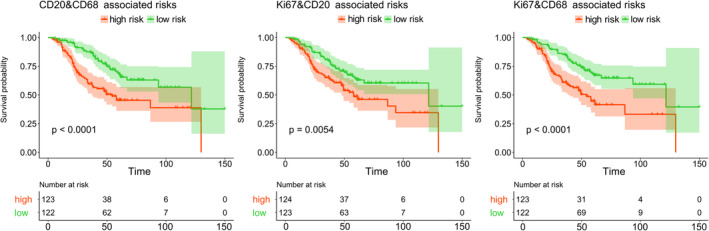
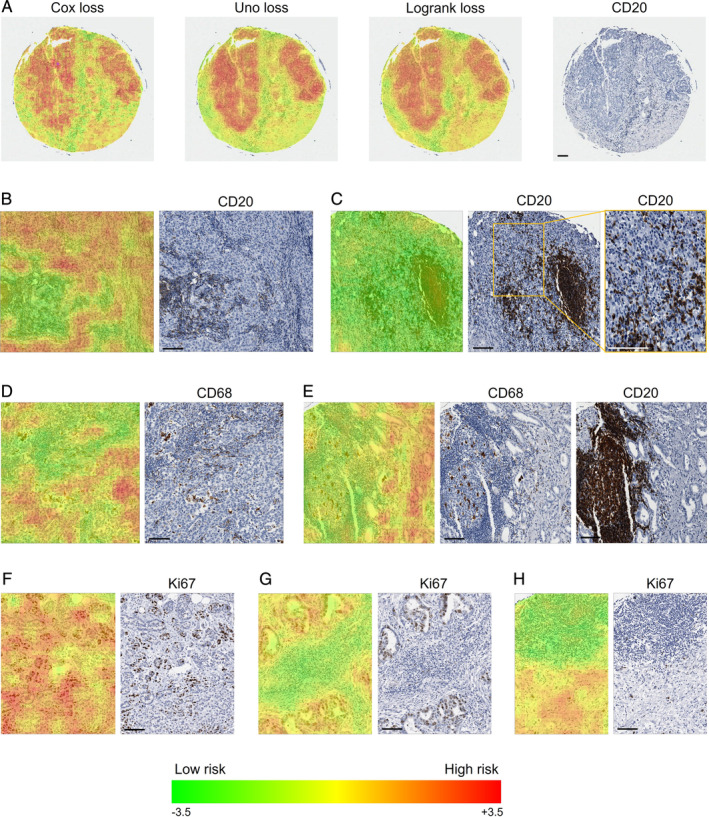
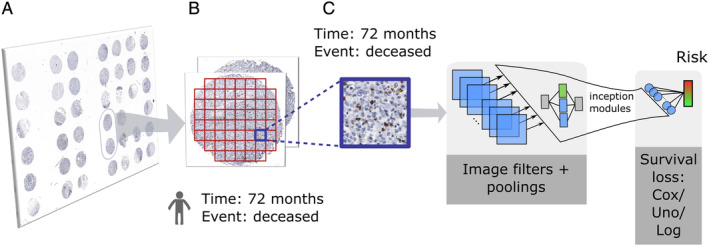
The biological complexity reflected in histology images requires advanced approaches for unbiased prognostication. Machine learning and particularly deep learning methods are increasingly applied in the field of digital pathology. In this study, we propose new ways to predict risk for cancer-specific death from digital images of immunohistochemically (IHC) stained tissue microarrays (TMAs). Specifically, we evaluated a cohort of 248 gastric cancer patients using convolutional neural networks (CNNs) in an end-to-end weakly supervised scheme independent of subjective pathologist input. To account for the time-to-event characteristic of the outcome data, we developed new survival models to guide the network training. In addition to the standard H&E staining, we investigated the prognostic value of a panel of immune cell markers (CD8, CD20, CD68) and a proliferation marker (Ki67). Our CNN-derived risk scores provided additional prognostic value when compared to the gold standard prognostic tool TNM stage. The CNN-derived risk scores were also shown to be superior when systematically compared to cell density measurements or a CNN score derived from binary 5-year survival classification, which ignores time-to-event. To better understand the underlying biological mechanisms, we qualitatively investigated risk heat maps for each marker which visualised the network output. We identified patterns of biological interest that were related to low risk of cancer-specific death such as the presence of B-cell predominated clusters and Ki67 positive sub-regions and showed that the corresponding risk scores had prognostic value in multivariate Cox regression analyses (Ki67&CD20 risks: hazard ratio (HR) = 1.47, 95% confidence interval (CI) = 1.15-1.89, p = 0.002; CD20&CD68 risks: HR = 1.33, 95% CI = 1.07-1.67, p = 0.009). Our study demonstrates the potential additional value that deep learning in combination with a panel of IHC markers can bring to the field of precision oncology.

摘要

组织学图像中反映的生物学复杂性需要采用先进的方法进行无偏预后预测。机器学习,特别是深度学习方法,在数字病理学领域得到了越来越多的应用。在这项研究中,我们提出了从免疫组织化学(IHC)染色组织微阵列(TMA)的数字图像预测癌症特异性死亡风险的新方法。具体来说,我们使用卷积神经网络(CNN)在无需主观病理学家输入的端到端弱监督方案中评估了 248 例胃癌患者队列。为了说明结果数据的时变特征,我们开发了新的生存模型来指导网络训练。除了标准的 H&E 染色外,我们还研究了一组免疫细胞标志物(CD8、CD20、CD68)和增殖标志物(Ki67)的预后价值。与金标准预后工具 TNM 分期相比,我们的 CNN 衍生风险评分提供了额外的预后价值。当系统地与细胞密度测量或源自二元 5 年生存分类的 CNN 评分进行比较时,CNN 衍生风险评分也显示出优越性,而后者忽略了时变。为了更好地了解潜在的生物学机制,我们对每个标志物的风险热图进行了定性研究,这些热图可视化了网络输出。我们确定了与癌症特异性死亡风险低相关的感兴趣的生物学模式,例如 B 细胞为主的簇和 Ki67 阳性亚区的存在,并表明相应的风险评分在多变量 Cox 回归分析中具有预后价值(Ki67&CD20 风险:风险比(HR)= 1.47,95%置信区间(CI)= 1.15-1.89,p = 0.002;CD20&CD68 风险:HR = 1.33,95% CI = 1.07-1.67,p = 0.009)。我们的研究表明,深度学习与一组 IHC 标志物相结合可以为精准肿瘤学领域带来潜在的附加价值。
https://cdn.ncbi.nlm.nih.gov/pmc/blobs/12b1/7578283/f57a6f45d727/CJP2-6-273-g003.jpg
https://cdn.ncbi.nlm.nih.gov/pmc/blobs/12b1/7578283/325e52737347/CJP2-6-273-g001.jpg
https://cdn.ncbi.nlm.nih.gov/pmc/blobs/12b1/7578283/d643b10942d2/CJP2-6-273-g002.jpg
https://cdn.ncbi.nlm.nih.gov/pmc/blobs/12b1/7578283/f57a6f45d727/CJP2-6-273-g003.jpg
https://cdn.ncbi.nlm.nih.gov/pmc/blobs/12b1/7578283/325e52737347/CJP2-6-273-g001.jpg
https://cdn.ncbi.nlm.nih.gov/pmc/blobs/12b1/7578283/d643b10942d2/CJP2-6-273-g002.jpg
https://cdn.ncbi.nlm.nih.gov/pmc/blobs/12b1/7578283/f57a6f45d727/CJP2-6-273-g003.jpg

相似文献

1
Hypothesis-free deep survival learning applied to the tumour microenvironment in gastric cancer.无假设的深度生存学习在胃癌肿瘤微环境中的应用。
J Pathol Clin Res. 2020 Oct;6(4):273-282. doi: 10.1002/cjp2.170. Epub 2020 Jun 27.
2
Digital image analysis in pathologist-selected regions of interest predicts survival more accurately than whole-slide analysis: a direct comparison study in 153 gastric carcinomas.基于病理学家选择的感兴趣区域的数字图像分析比全切片分析更能准确预测生存:153 例胃癌的直接比较研究。
J Pathol Clin Res. 2021 Jan;7(1):42-51. doi: 10.1002/cjp2.179. Epub 2020 Sep 4.
3
Ki67--An unsuitable marker of gastric cancer prognosis unmasks intratumoral heterogeneity.Ki67--一种不适合作为胃癌预后标志物的蛋白,揭示了肿瘤内异质性。
J Surg Oncol. 2016 Jan;113(1):46-54. doi: 10.1002/jso.24104. Epub 2015 Dec 28.
4
Radiographical assessment of tumour stroma and treatment outcomes using deep learning: a retrospective, multicohort study.利用深度学习对肿瘤基质进行放射学评估和治疗结果:一项回顾性、多队列研究。
Lancet Digit Health. 2021 Jun;3(6):e371-e382. doi: 10.1016/S2589-7500(21)00065-0.
5
Basal Ki67 expression measured by digital image analysis is optimal for prognostication in oral squamous cell carcinoma.采用数字图像分析测量的基底 Ki67 表达是预测口腔鳞状细胞癌预后的最佳指标。
Eur J Cancer. 2012 Sep;48(14):2166-74. doi: 10.1016/j.ejca.2012.04.010. Epub 2012 Aug 12.
6
Quantification of diverse subcellular immunohistochemical markers with clinicobiological relevancies: validation of a new computer-assisted image analysis procedure.具有临床生物学相关性的多种亚细胞免疫组化标志物的定量分析:一种新型计算机辅助图像分析程序的验证
J Anat. 2008 Jun;212(6):868-78. doi: 10.1111/j.1469-7580.2008.00910.x.
7
Deep learning-based subtyping of gastric cancer histology predicts clinical outcome: a multi-institutional retrospective study.基于深度学习的胃癌组织学分型可预测临床结局:一项多机构回顾性研究。
Gastric Cancer. 2023 Sep;26(5):708-720. doi: 10.1007/s10120-023-01398-x. Epub 2023 Jun 3.
8
Low density of CD204-positive M2-type tumor-associated macrophages in Epstein-Barr virus-associated gastric cancer: a clinicopathologic study with digital image analysis.爱泼斯坦-巴尔病毒相关胃癌中CD204阳性M2型肿瘤相关巨噬细胞的低密度:一项采用数字图像分析的临床病理研究
Hum Pathol. 2016 Oct;56:74-80. doi: 10.1016/j.humpath.2016.06.002. Epub 2016 Jun 21.
9
Deep learning-based image analysis methods for brightfield-acquired multiplex immunohistochemistry images.基于深度学习的明场获取多重免疫组化图像的图像分析方法。
Diagn Pathol. 2020 Jul 28;15(1):100. doi: 10.1186/s13000-020-01003-0.
10
High Ki67 Expression has Prognostic Value in Surgically-Resected T3 Gastric Adenocarcinoma.高Ki67表达在手术切除的T3期胃腺癌中具有预后价值。
Clin Lab. 2016;62(1-2):141-53. doi: 10.7754/clin.lab.2015.150610.

引用本文的文献

1
Artificial intelligence in gastric cancer: a systematic review of machine learning and deep learning applications.人工智能在胃癌中的应用:机器学习和深度学习应用的系统综述
Abdom Radiol (NY). 2025 Sep 11. doi: 10.1007/s00261-025-05181-7.
2
Current status and trends of machine learning applied in clinical research of gastric cancer from 2004 to 2023: global bibliometric and visual analysis.2004年至2023年机器学习在胃癌临床研究中的应用现状与趋势:全球文献计量与可视化分析
Front Oncol. 2025 May 6;15:1420517. doi: 10.3389/fonc.2025.1420517. eCollection 2025.
3
Pretrained transformers applied to clinical studies improve predictions of treatment efficacy and associated biomarkers.

本文引用的文献

1
Deep Semi Supervised Generative Learning for Automated Tumor Proportion Scoring on NSCLC Tissue Needle Biopsies.深度半监督生成式学习在非小细胞肺癌组织穿刺活检肿瘤比例评分中的应用。
Sci Rep. 2018 Nov 26;8(1):17343. doi: 10.1038/s41598-018-35501-5.
2
Predicting cancer outcomes from histology and genomics using convolutional networks.使用卷积网络从组织学和基因组学预测癌症结局。
Proc Natl Acad Sci U S A. 2018 Mar 27;115(13):E2970-E2979. doi: 10.1073/pnas.1717139115. Epub 2018 Mar 12.
3
Deep learning based tissue analysis predicts outcome in colorectal cancer.
应用于临床研究的预训练变压器可改善对治疗效果及相关生物标志物的预测。
Nat Commun. 2025 Mar 1;16(1):2101. doi: 10.1038/s41467-025-57181-2.
4
Spatial organization of B lymphocytes and prognosis prediction in patients with gastric cancer.胃癌患者B淋巴细胞的空间组织与预后预测
Gastric Cancer. 2025 May;28(3):384-396. doi: 10.1007/s10120-025-01593-y. Epub 2025 Feb 19.
5
Deep learning based analysis of G3BP1 protein expression to predict the prognosis of nasopharyngeal carcinoma.基于深度学习分析G3BP1蛋白表达以预测鼻咽癌的预后
PLoS One. 2025 Jan 27;20(1):e0315893. doi: 10.1371/journal.pone.0315893. eCollection 2025.
6
Radiomics analysis in predicting vascular invasion in gastric cancer based on enhanced CT: a preliminary study.基于增强 CT 的胃癌血管侵犯预测的影像组学分析:一项初步研究。
BMC Cancer. 2024 Aug 16;24(1):1020. doi: 10.1186/s12885-024-12793-7.
7
Deep learning based digital pathology for predicting treatment response to first-line PD-1 blockade in advanced gastric cancer.基于深度学习的数字病理学预测晚期胃癌一线 PD-1 阻断治疗反应
J Transl Med. 2024 May 8;22(1):438. doi: 10.1186/s12967-024-05262-z.
8
Toward next-generation endoscopes integrating biomimetic video systems, nonlinear optical microscopy, and deep learning.迈向集成仿生视频系统、非线性光学显微镜和深度学习的下一代内窥镜。
Biophys Rev (Melville). 2023 Jun 29;4(2):021307. doi: 10.1063/5.0133027. eCollection 2023 Jun.
9
Closing the loop - the role of pathologists in digital and computational pathology research.闭环——病理学家在数字和计算病理学研究中的作用。
J Pathol Clin Res. 2024 Mar;10(2):e12366. doi: 10.1002/2056-4538.12366.
10
Big Data and Artificial Intelligence in Drug Discovery for Gastric Cancer: Current Applications and Future Perspectives.大数据与人工智能在胃癌药物研发中的应用现状与未来展望
Curr Med Chem. 2025;32(10):1968-1986. doi: 10.2174/0929867331666230913105829.
基于深度学习的组织分析预测结直肠癌的预后。
Sci Rep. 2018 Feb 21;8(1):3395. doi: 10.1038/s41598-018-21758-3.
4
Predicting clinical outcomes from large scale cancer genomic profiles with deep survival models.利用深度生存模型从大规模癌症基因组谱预测临床结局。
Sci Rep. 2017 Sep 15;7(1):11707. doi: 10.1038/s41598-017-11817-6.
5
Prognostic role of tumor-infiltrating lymphocytes in gastric cancer: a meta-analysis.肿瘤浸润淋巴细胞在胃癌中的预后作用:一项荟萃分析。
Oncotarget. 2017 May 22;8(34):57386-57398. doi: 10.18632/oncotarget.18065. eCollection 2017 Aug 22.
6
B cells in tertiary lymphoid structures are associated with favorable prognosis in gastric cancer.三级淋巴结构中的B细胞与胃癌的良好预后相关。
J Surg Res. 2017 Jul;215:74-82. doi: 10.1016/j.jss.2017.03.033. Epub 2017 Apr 1.
7
A Deep Convolutional Neural Network for segmenting and classifying epithelial and stromal regions in histopathological images.一种用于在组织病理学图像中分割和分类上皮和基质区域的深度卷积神经网络。
Neurocomputing (Amst). 2016 May 26;191:214-223. doi: 10.1016/j.neucom.2016.01.034. Epub 2016 Feb 17.
8
The Prognostic and Clinicopathological Significance of Tumor-Associated Macrophages in Patients with Gastric Cancer: A Meta-Analysis.肿瘤相关巨噬细胞在胃癌患者中的预后及临床病理意义:一项Meta分析
PLoS One. 2017 Jan 12;12(1):e0170042. doi: 10.1371/journal.pone.0170042. eCollection 2017.
9
Systematic pan-cancer analysis of tumour purity.肿瘤纯度的系统性泛癌分析。
Nat Commun. 2015 Dec 4;6:8971. doi: 10.1038/ncomms9971.
10
High Ki67 expression is an independent good prognostic marker in colorectal cancer.高Ki67表达是结直肠癌中一个独立的良好预后标志物。
J Clin Pathol. 2016 Mar;69(3):209-14. doi: 10.1136/jclinpath-2015-202985. Epub 2015 Aug 17.