Drozdova Polina, Saranchina Alexandra, Morgunova Mariya, Kizenko Alena, Lubyaga Yulia, Baduev Boris, Timofeyev Maxim
Institute of Biology, Irkutsk State University, Irkutsk, Russia.
Baikal Research Centre, Irkutsk, Russia.
PeerJ. 2020 Jun 19;8:e9387. doi: 10.7717/peerj.9387. eCollection 2020.
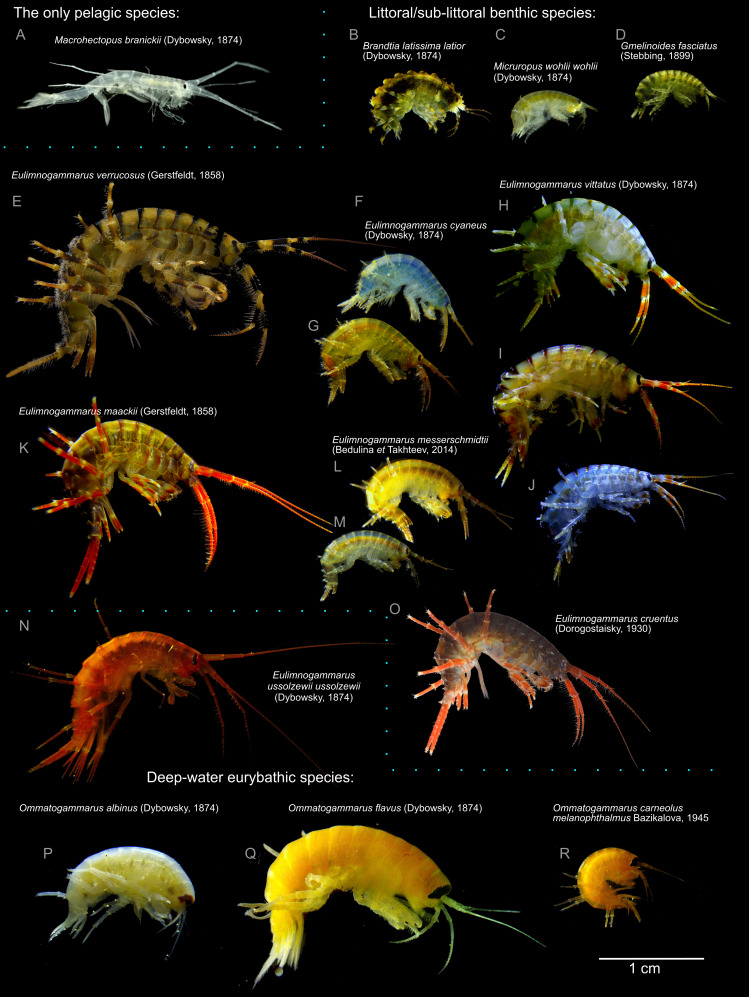
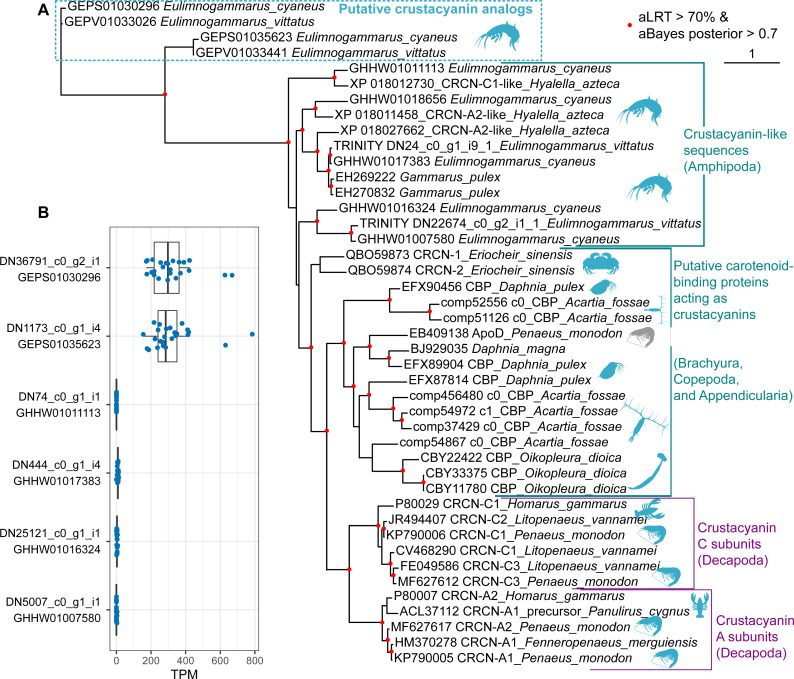
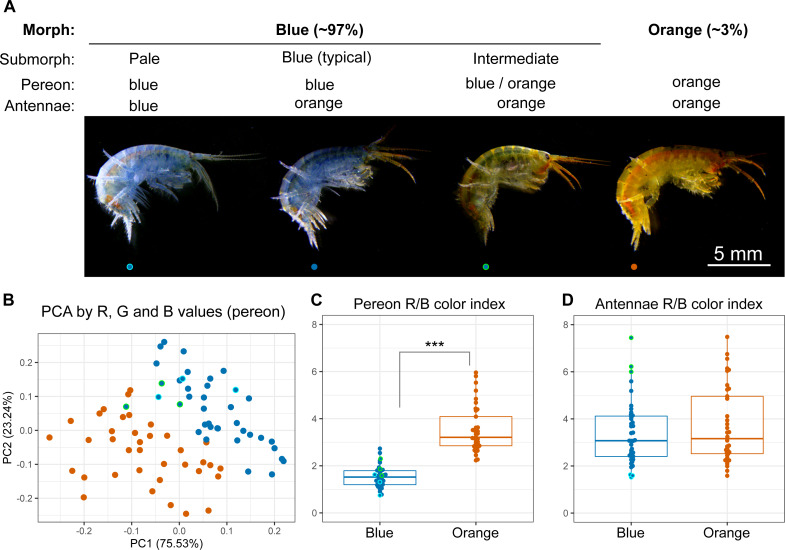
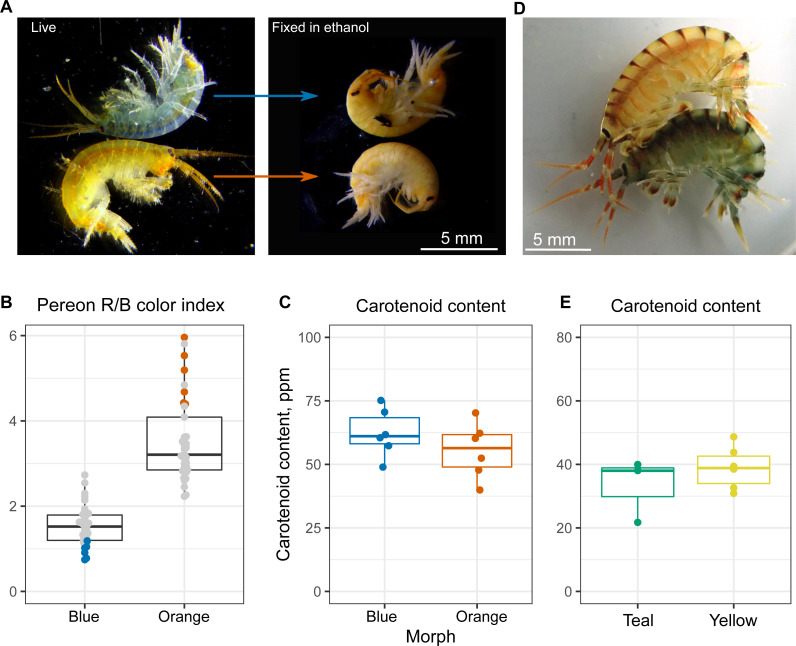
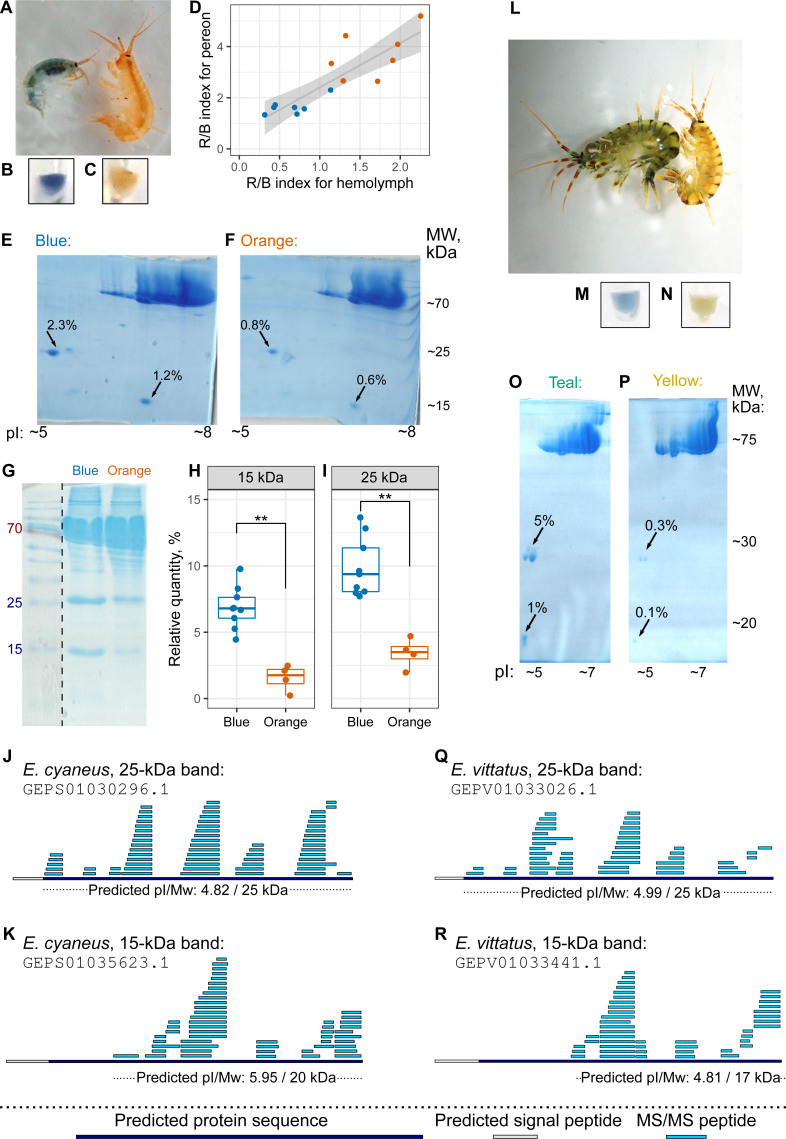
Color is an essential clue for intra- and interspecies communication, playing a role in selection and speciation. Coloration can be based on nanostructures and pigments; carotenoids and carotenoproteins are among the most widespread pigments in animals. Over 350 species and subspecies of amphipods (Crustacea: Amphipoda) endemic to Lake Baikal exhibit an impressive variability of colors and coloration patterns, including intraspecific color morphs. However, the mechanisms forming this diversity are underexplored, as while the carotenoid composition of several transparent, green, and red species was investigated, there have been no reports on the corresponding carotenoid-binding proteins. In this work, we analyze the coloration of two brightly colored Baikal amphipods characterized by intraspecific color variability, and . We showed that the color of either species is defined by the level of putative carotenoid-binding proteins similar to the pheromone/odorant-binding protein family, as the concentration of these putative crustacyanin analogs was higher in blue or teal-colored animals than in the orange- or yellow-colored ones. At the same time, the color did not depend on the total carotenoid content, as it was similar between animals of contrasting color morphs. By exploring the diversity of these sequences within a larger phylogeny of invertebrate crustacyanins, we show that amphipods lack orthologs of the well-studied crustacyanins A and C, even though they possess some crustacyanin-like sequences. The analysis of expression levels in showed that the transcripts encoding crustacyanin analogs had much higher expression than the crustacyanin-like sequences, suggesting that the former indeed contribute to the color of these brightly colored animals. The crustacyanin analogs seem to act in a similar way to the well-studied crustacyanins in body color formation, but the details of their action are still to be revealed.
颜色是种内和种间交流的重要线索,在选择和物种形成中发挥作用。颜色可以基于纳米结构和色素;类胡萝卜素和类胡萝卜素蛋白是动物中分布最广泛的色素之一。贝加尔湖特有的350多种和亚种的十足目动物(甲壳纲:十足目)呈现出令人印象深刻的颜色和着色模式变化,包括种内颜色变体。然而,形成这种多样性的机制尚未得到充分探索,虽然对几种透明、绿色和红色物种的类胡萝卜素组成进行了研究,但尚未有关于相应类胡萝卜素结合蛋白的报道。在这项工作中,我们分析了两种颜色鲜艳的贝加尔湖十足目动物的着色情况,它们具有种内颜色变异性。我们发现,这两个物种的颜色都由类似于信息素/气味结合蛋白家族的假定类胡萝卜素结合蛋白水平决定,因为这些假定的虾青素类似物在蓝色或蓝绿色动物中的浓度高于橙色或黄色动物。同时,颜色并不取决于总类胡萝卜素含量,因为对比颜色变体的动物之间的总类胡萝卜素含量相似。通过在更大的无脊椎动物虾青素系统发育中探索这些序列的多样性,我们发现十足目动物缺乏经过充分研究的虾青素A和C的直系同源物,尽管它们拥有一些类似虾青素的序列。对[具体物种]表达水平的分析表明,编码虾青素类似物的转录本的表达远高于类似虾青素的序列,这表明前者确实对这些颜色鲜艳的动物的颜色有贡献。虾青素类似物在体色形成中的作用方式似乎与经过充分研究的虾青素相似,但其作用细节仍有待揭示。