Yaniv Dan, Soudry Ethan, Strenov Yulia, Cohen Marc A, Mizrachi Aviram
Department of Otolaryngology- Head and Neck Surgery, Rabin Medical Center, Petah Tikva and Sackler Faculty of Medicine, Tel Aviv University, Tel Aviv, Israel.
Department of Pathology, Rabin Medical Center, Petah Tikva and Sackler Faculty of Medicine, Tel Aviv University, Tel Aviv, Israel.
World J Otorhinolaryngol Head Neck Surg. 2020 Apr 18;6(2):125-131. doi: 10.1016/j.wjorl.2020.01.008. eCollection 2020 Jun.
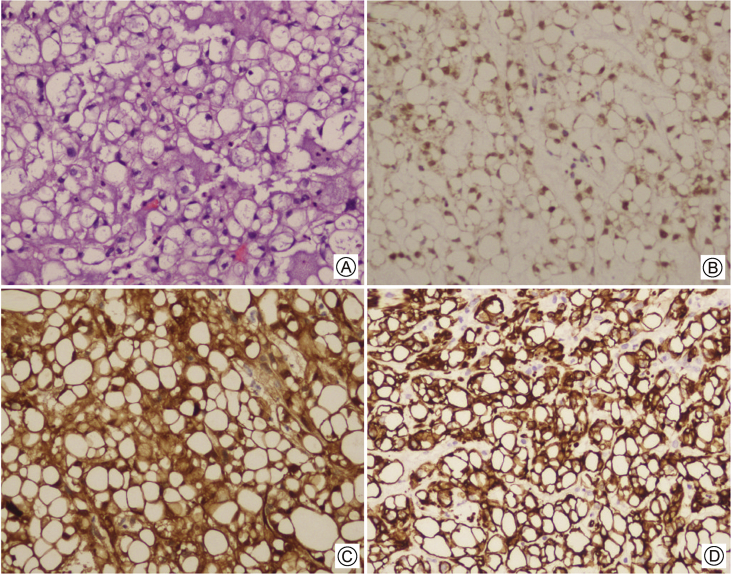
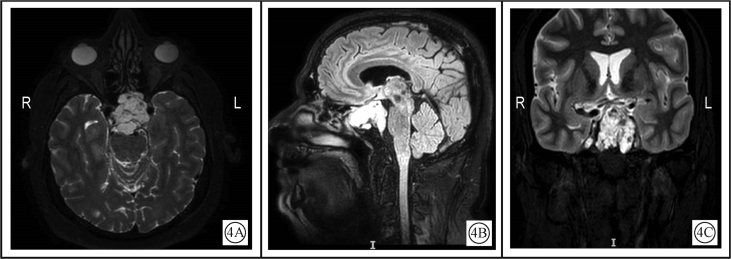
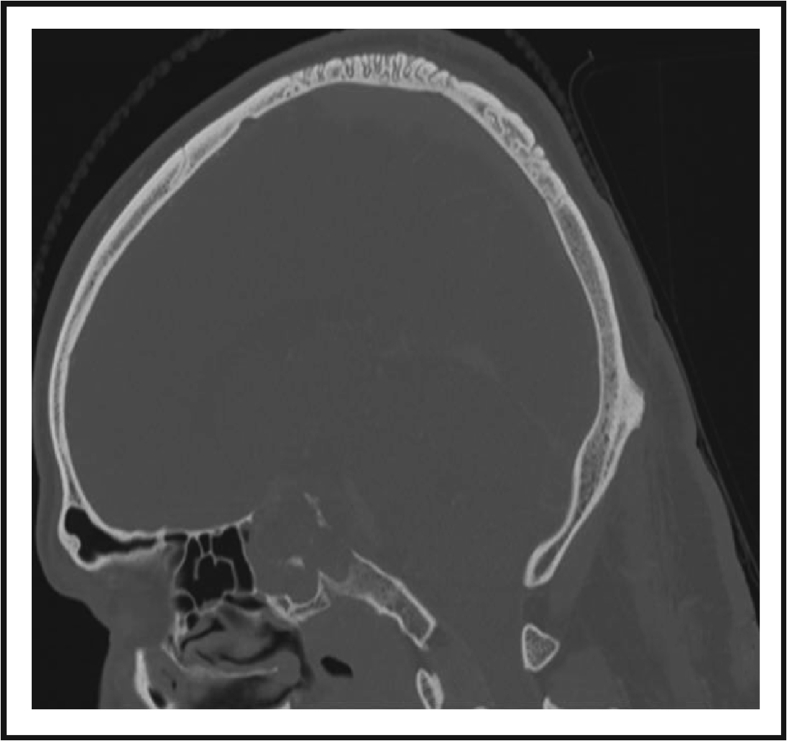
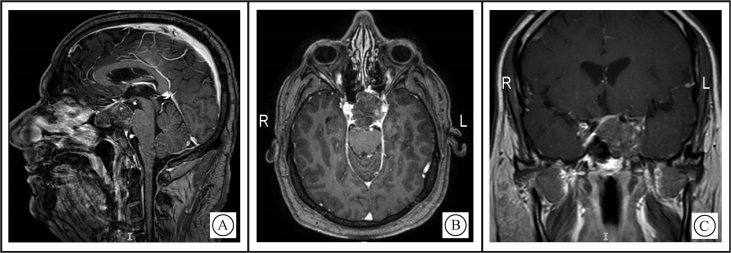
Chordomas are locally invasive neoplasms, arising from notochordal remnants and can appear anywhere along the axial skeleton. Local recurrences are common, and distant metastases may occur years after the initial presentation.
Literature review of current treatment strategies for chordomas of the skull base.
Surgery is the mainstay of treatment and complete resection has paramount importance for prognosis.When complete resection is not achieved recurrent disease is common. The anatomical complexity of the skull base makes resection complex. Endonasal endoscopic approaches to the clivus has become increasingly favored in recent years although addressing reconstruction of the skull base to prevent CSF leak may be challenging.Evidence suggests that radiotherapy should not be considered as a primary single modality when trying to achieve cure of the disease. Nonetheless, immediate post-operative radiotherapy improves survival. Many strategies have been suggested to preserve sensitive vital structures in the skull base during treatment but as for survival there is no evidence of advantage when comparing adjuvant therapy with photon radiotherapy, gamma knife surgery, proton beam therapy, and carbon ion radiation therapy.There is no evidence to support cytotoxic chemotherapy in the treatment of chordomas but targeted therapies have started to show promise. Several optional molecular targets exist. Brachyury is overexpressed in 95% of chordomas but not in other mesenchymal neoplasms. However, its precise role in chordoma pathogenesis is currently unclear, and its cellular location in the nucleus makes it difficult to target. The inhibition of brachyury in chordoma cell lines induces growth arrest and apoptosis. This does not have clinical application to date. There are retrospective results with different molecular targeted therapies for advanced chordomas with some effectiveness.
Despite improvements made in the past 10 years in our knowledge of chordoma biology, available therapies still offer a limited benefit. There is an unmet need for new therapeutic options for patients with advanced disease. Therefore, patients with advanced disease should be encouraged to participate in clinical trials when and where available.
脊索瘤是起源于脊索残余组织的局部侵袭性肿瘤,可出现在轴向骨骼的任何部位。局部复发很常见,远处转移可能在初次发病数年之后出现。
对头颈部脊索瘤当前治疗策略进行文献综述。
手术是主要治疗手段,完整切除对预后至关重要。若未实现完整切除,复发性疾病很常见。颅底的解剖复杂性使切除手术复杂。近年来,经鼻内镜入路治疗斜坡脊索瘤越来越受到青睐,尽管处理颅底重建以防止脑脊液漏可能具有挑战性。有证据表明,在试图治愈该疾病时,不应将放疗视为主要单一治疗方式。尽管如此,术后立即放疗可提高生存率。在治疗过程中,已提出许多策略来保护颅底敏感的重要结构,但就生存率而言,在比较辅助治疗与光子放疗、伽玛刀手术、质子束治疗和碳离子放射治疗时,没有证据表明存在优势。没有证据支持细胞毒性化疗用于治疗脊索瘤,但靶向治疗已开始显示出前景。存在几种可选的分子靶点。95%的脊索瘤中brachyury过度表达,但在其他间叶性肿瘤中不表达。然而,其在脊索瘤发病机制中的精确作用目前尚不清楚,且其在细胞核中的细胞定位使其难以成为靶点。在脊索瘤细胞系中抑制brachyury可诱导生长停滞和凋亡。这在目前尚无临床应用。对于晚期脊索瘤,不同分子靶向治疗有回顾性结果,有一定疗效。
尽管在过去10年里我们对脊索瘤生物学的认识有所进步,但现有治疗方法的益处仍然有限。对于晚期疾病患者,对新治疗选择仍有未满足的需求。因此,应鼓励晚期疾病患者在有条件时参加临床试验。