Department of Respiratory Medicine, The Affiliated Wuxi No.2 People's Hospital of Nanjing Medical University, No.68 Zhongshan Road, Liangxi District, Wuxi, 214002, Jiangsu, China.
Department of Critical Care Medicine, The Affiliated Wuxi No.2 People's Hospital of Nanjing Medical University, No.68 Zhongshan Road, Liangxi District, Wuxi, 214002, Jiangsu, China.
Mol Med. 2020 Jun 29;26(1):65. doi: 10.1186/s10020-020-00191-1.
microRNA-146a has been reported to be a regulator in the process of attenuating asthma by inhibiting Toll-like receptor 2 (TLR2) pathway. This study aimed to investigate how miR146a-inhibitor affect the symptom of asthma and the underlying mechanisms.
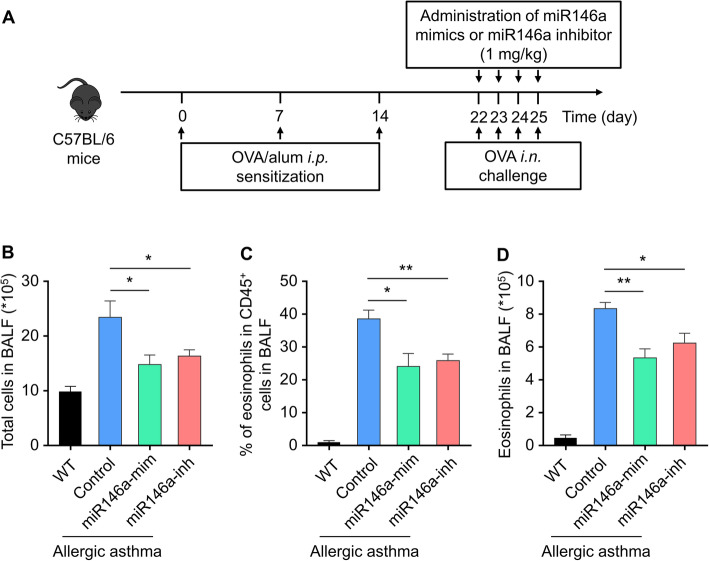
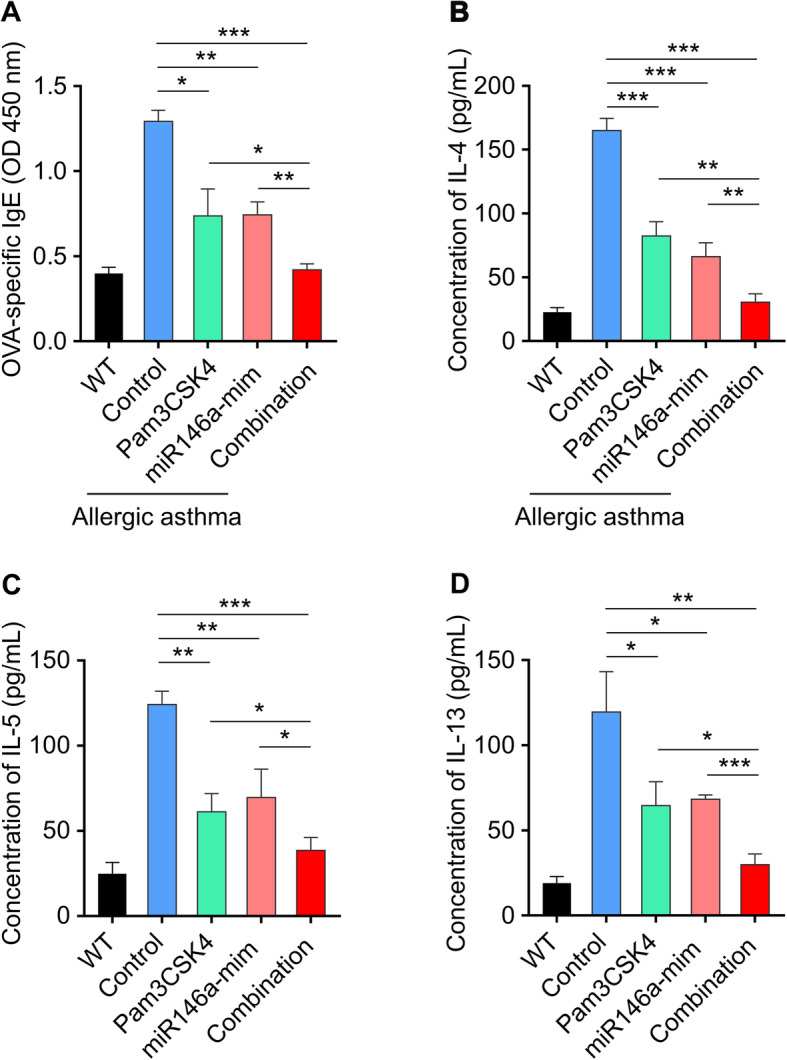
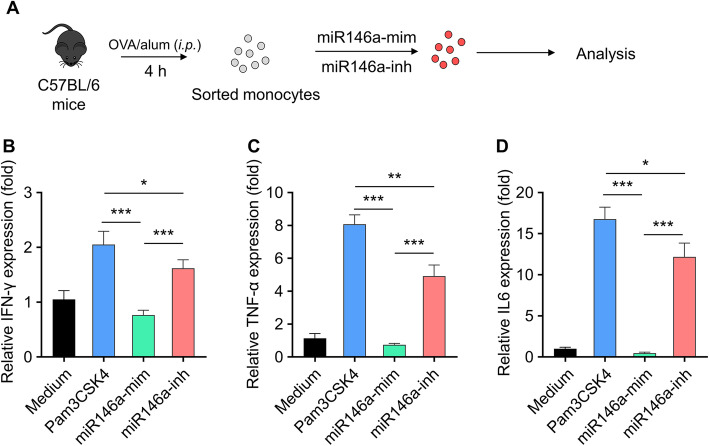
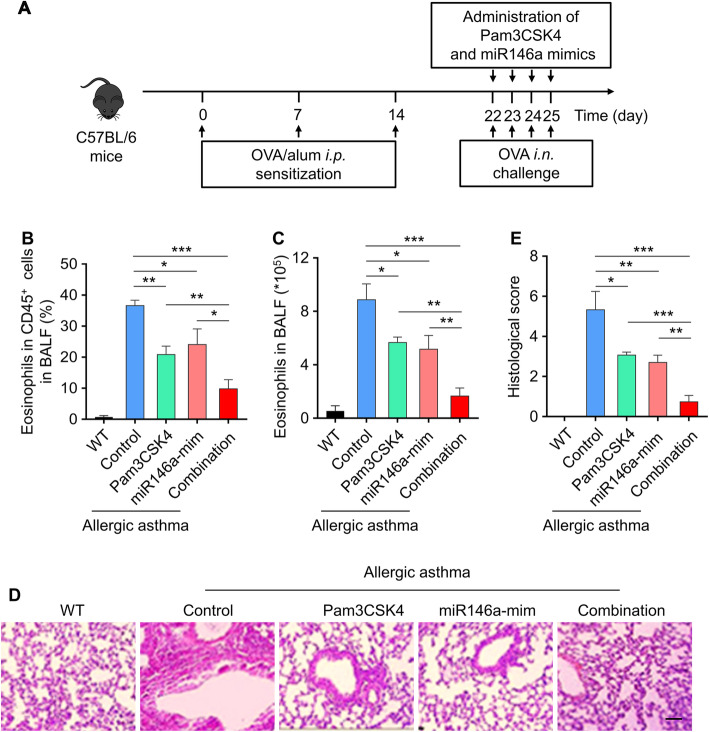
Ovalbumin (OVA)-induced allergic asthma mice model was established by intraperitoneal injection with 20 μg of OVA. Total cells and differential inflammatory cells in bronchoalveolar lavage fluid were counted by flow cytometry. The expression levels of molecules and cytokines in TLR2 signaling pathway were detected by Q-PCR and ELISA.
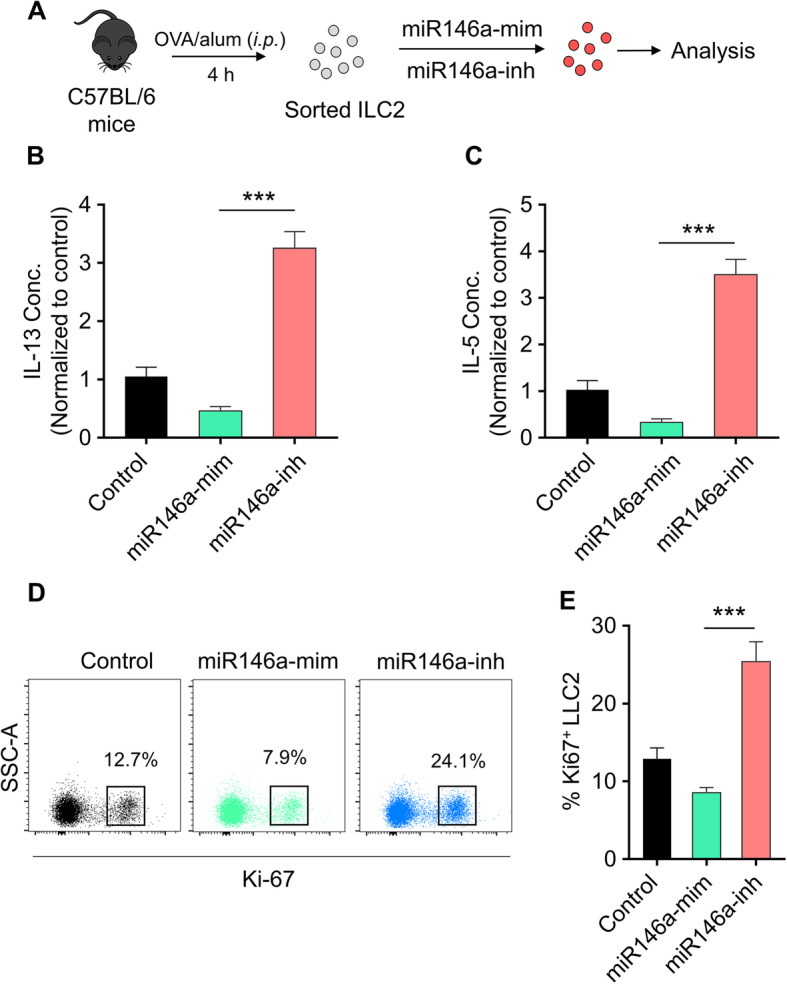
miR146a-inhibitor attenuated OVA-induced allergic asthma by increasing Th1 cytokines in OVA-induced allergic asthma model, and the treatment of miR146a-inhibitor can reduce the inflammation caused by asthma, followed by the down-regulation of IL-5 and IL-13 in sorted ILC2. The inhibition of miR-146a significantly reduced symptoms of asthma model with TLR2-related molecules being up-regulated.
It was found that miR-146a is an important regulator in OVA-induced allergic asthma model, which can relieve symptoms of asthma through regulating TLR2 pathway. These findings provide a theoretical basis for solving asthma in clinical treatment.
microRNA-146a 通过抑制 Toll 样受体 2(TLR2)通路,被报道在减轻哮喘的过程中起调节作用。本研究旨在探讨 miR146a 抑制剂如何影响哮喘症状及其潜在机制。
通过腹腔注射 20μg 的卵清蛋白(OVA)建立卵清蛋白(OVA)诱导的过敏性哮喘小鼠模型。通过流式细胞术计数支气管肺泡灌洗液中的总细胞和差异炎性细胞。通过 Q-PCR 和 ELISA 检测 TLR2 信号通路中分子和细胞因子的表达水平。
miR146a 抑制剂通过增加 OVA 诱导的过敏性哮喘模型中的 Th1 细胞因子来减轻 OVA 诱导的过敏性哮喘,miR146a 抑制剂的治疗可以减轻哮喘引起的炎症,随后下调分选的 ILC2 中的 IL-5 和 IL-13。miR-146a 的抑制显著降低了 TLR2 相关分子上调的哮喘模型的症状。
研究发现 miR-146a 是 OVA 诱导的过敏性哮喘模型中的一个重要调节因子,它可以通过调节 TLR2 通路来缓解哮喘症状。这些发现为解决临床治疗中的哮喘问题提供了理论依据。