Lewis T S, Kennedy J A, Price G J, Mee T, Woolf D K, Bayman N A, Chan C, Coote J H, Faivre-Finn C, Harris M A, Hudson A M, Pemberton L S, Salem A, Sheikh H Y, Mistry H B, Cobben D C P
Department of Radiotherapy Related Research, The Christie NHS Foundation Trust, Manchester, UK.
Department of Radiotherapy Related Research, The Christie NHS Foundation Trust, Manchester, UK; Manchester Academic Health Science Centre, University of Manchester, Manchester, UK.
Clin Oncol (R Coll Radiol). 2020 Oct;32(10):674-684. doi: 10.1016/j.clon.2020.05.003. Epub 2020 Jun 26.
Choosing the optimal palliative lung radiotherapy regimen is challenging. Guidance from The Royal College of Radiologists recommends treatment stratification based on performance status, but evidence suggests that higher radiotherapy doses may be associated with survival benefits. The aim of this study was to investigate the effects of fractionation regimen and additional factors on the survival of palliative lung cancer radiotherapy patients.
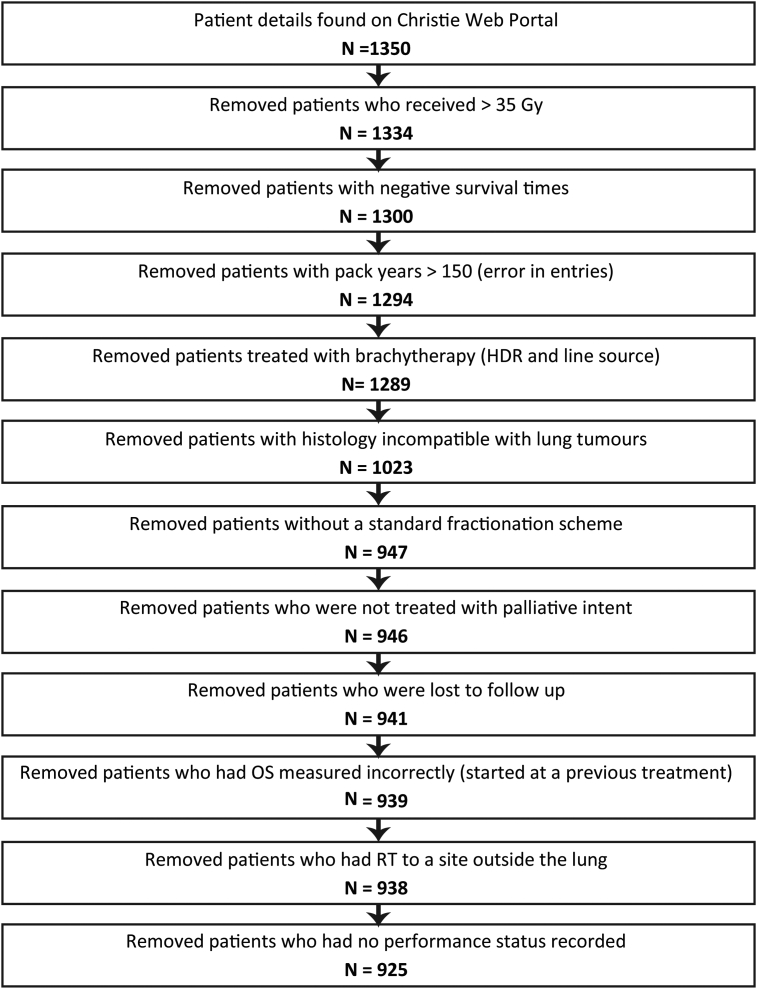
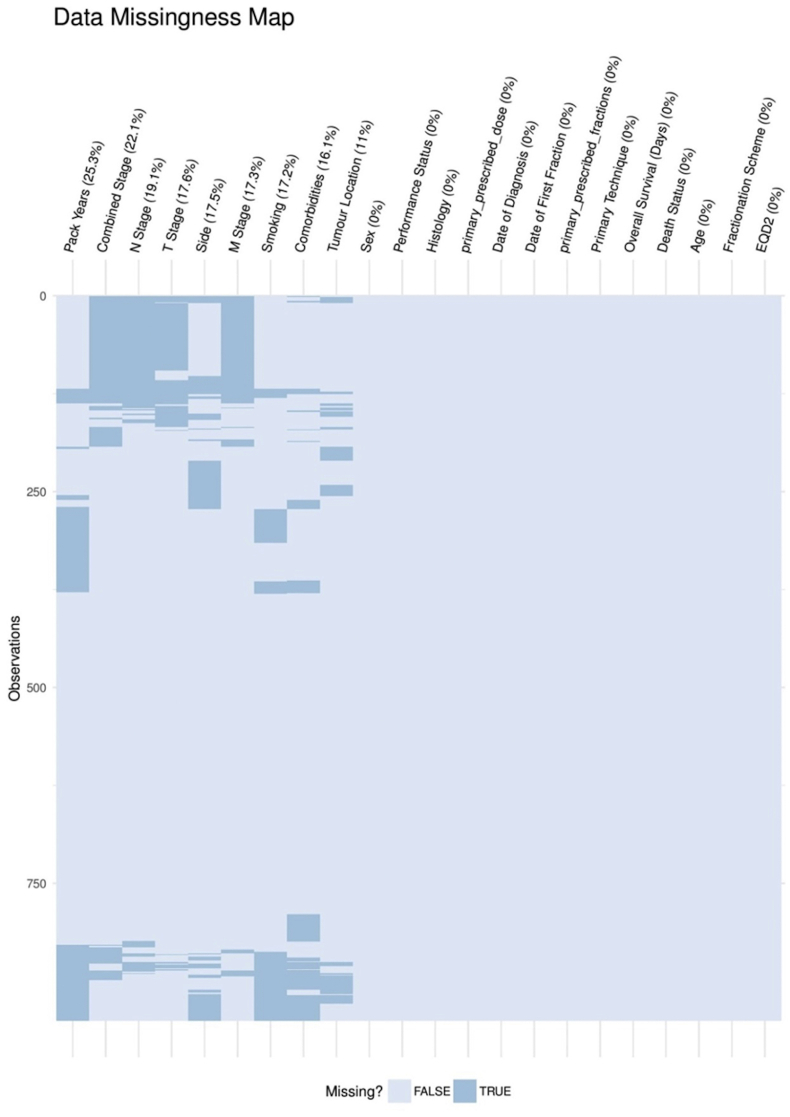
A retrospective univariable (n = 925) and multivariable (n = 422) survival analysis of the prognostic significance of baseline patient characteristics and treatment prescription was carried out on patients with non-small cell and small cell lung cancer treated with palliative lung radiotherapy. The covariates investigated included: gender, age, performance status, histology, comorbidities, stage, tumour location, tumour side, smoking status, pack year history, primary radiotherapy technique and fractionation scheme. The overall mortality rate at 30 and 90 days of treatment was calculated.
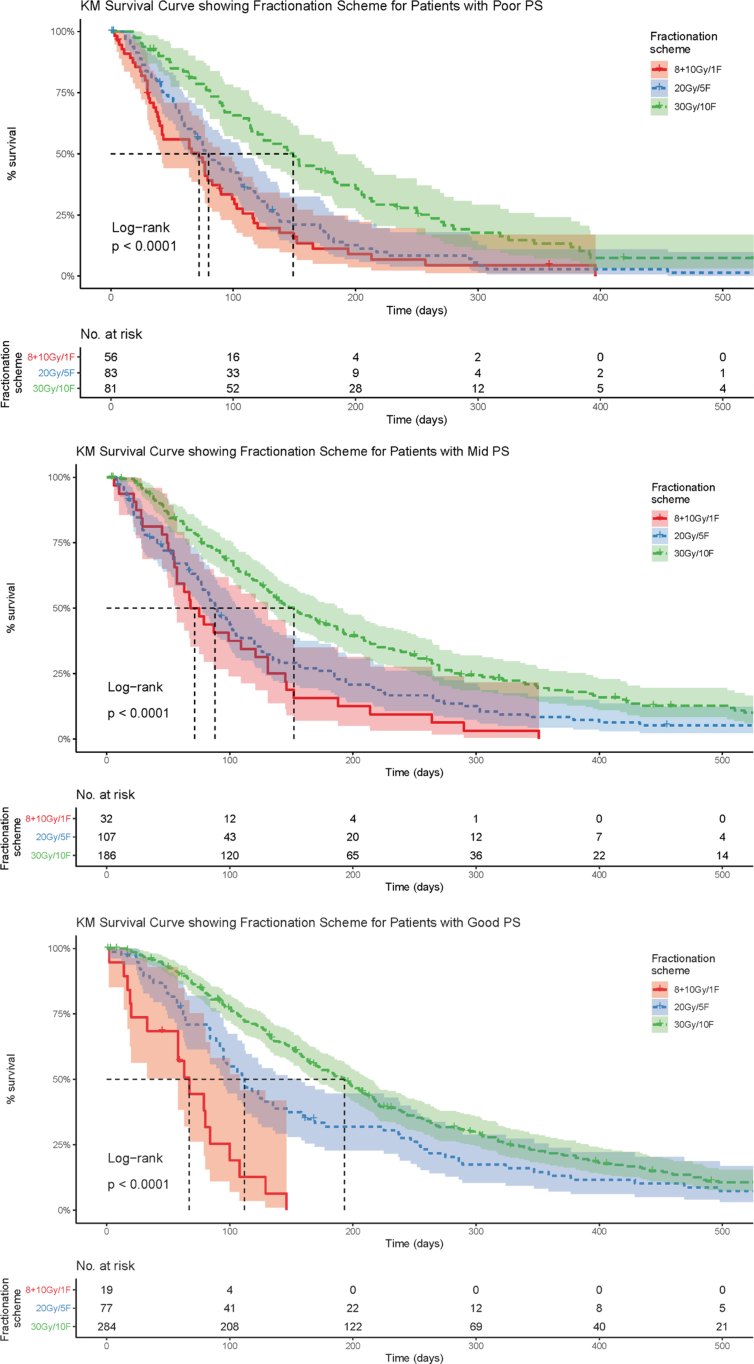
Univariable analysis revealed that performance status (P < 0.001), fractionation scheme (P < 0.001), comorbidities (P = 0.02), small cell histology (P = 0.02), 'lifelong never' smoking status (P = 0.01) and gender (P = 0.06) were associated with survival. Upon multivariable analysis, only better performance status (P = 0.01) and increased dose/fractionation regimens of up to 30 Gy/10 fractions (P < 0.001) were associated with increased survival. Eighty-five (9.2%) and 316 patients (34%) died within 30 and 90 days of treatment, respectively.
In this retrospective single-centre analysis of palliative lung radiotherapy, increased total dose (up to and including 30 Gy/10 fractions) was associated with better survival regardless of performance status.
选择最佳的姑息性肺部放疗方案具有挑战性。英国皇家放射科医师学院的指南建议根据体能状态进行治疗分层,但有证据表明,较高的放疗剂量可能与生存获益相关。本研究的目的是探讨分割方案及其他因素对姑息性肺癌放疗患者生存的影响。
对接受姑息性肺部放疗的非小细胞肺癌和小细胞肺癌患者进行回顾性单变量(n = 925)和多变量(n = 422)生存分析,以评估基线患者特征和治疗方案的预后意义。研究的协变量包括:性别、年龄、体能状态、组织学类型、合并症、分期、肿瘤位置、肿瘤侧别、吸烟状态、吸烟包年史、初次放疗技术和分割方案。计算治疗30天和90天的总死亡率。
单变量分析显示,体能状态(P < 0.001)、分割方案(P < 0.