Neonatology, Children's National Hospital, Washington, D.C, US.
Center for the Developing Brain, Children's National Hospital, Washington, D.C, US.
Sci Rep. 2020 Jun 29;10(1):10549. doi: 10.1038/s41598-020-67188-y.
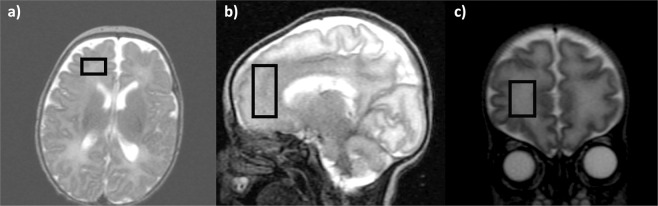
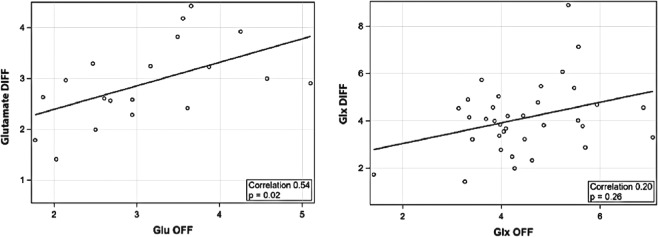
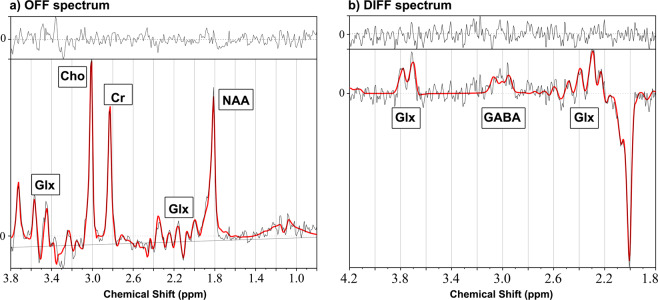
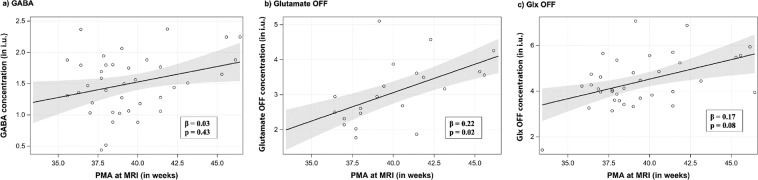
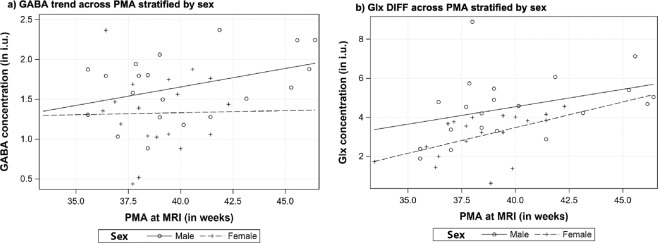
Gamma-aminobutyric acid (GABA) and glutamate are principal neurotransmitters essential for late gestational brain development and may play an important role in prematurity-related brain injury. In vivo investigation of GABA in the preterm infant with standard proton magnetic resonance spectroscopy (H-MRS) has been limited due to its low concentrations in the developing brain, and overlap in the spectrum by other dominant metabolites. We describe early postnatal profiles of in vivo GABA and glutamate concentrations in the developing preterm brain measured by using the J-difference editing technique, Mescher-Garwood point resolved spectroscopy. We prospectively enrolled very preterm infants born ≤32 weeks gestational age and non-sedated H-MRS (echo time 68 ms, relaxation time 2000 ms, 256 signal averages) was acquired on a 3 Tesla magnetic resonance imaging scanner from a right frontal lobe voxel. Concentrations of GABA + (with macromolecules) was measured from the J-difference spectra; whereas glutamate and composite glutamate + glutamine (Glx) were measured from the unedited (OFF) spectra and reported in institutional units. We acquired 42 reliable spectra from 38 preterm infants without structural brain injury [median gestational age at birth of 28.0 (IQR 26.0, 28.9) weeks; 19 males (50%)] at a median postmenstrual age of 38.4 (range 33.4 to 46.4) weeks. With advancing post-menstrual age, the concentrations of glutamate OFF increased significantly, adjusted for co-variates (generalized estimating equation β = 0.22, p = 0.02). Advancing postnatal weeks of life at the time of imaging positively correlated with GABA + (β = 0.06, p = 0.02), glutamate OFF (β = 0.11, p = 0.02) and Glx OFF (β = 0.12, p = 0.04). Male infants had higher GABA + (1.66 ± 0.07 vs. 1.33 ± 0.11, p = 0.01) concentrations compared with female infants. For the first time, we report the early ex-utero developmental profile of in vivo GABA and glutamate stratified by age and sex in the developing brain of very preterm infants. This data may provide novel insights into the pathophysiology of neurodevelopmental disabilities reported in preterm infants even in the absence of structural brain injury.
γ-氨基丁酸(GABA)和谷氨酸是胎儿晚期大脑发育所必需的主要神经递质,可能在与早产相关的脑损伤中发挥重要作用。由于其在发育中的大脑中的浓度较低,以及其他主要代谢物在光谱上的重叠,标准质子磁共振波谱(H-MRS)对早产儿中 GABA 的体内研究受到限制。我们使用 J-差异编辑技术(Mescher-Garwood 点分辨波谱)描述了早产儿大脑发育过程中 GABA 和谷氨酸浓度的早期产后特征。我们前瞻性地招募了胎龄≤32 周的极早产儿,在 3T 磁共振成像扫描仪上采集非镇静 H-MRS(回波时间 68ms,弛豫时间 2000ms,256 个信号平均),来自右额叶体素。从 J-差异光谱中测量 GABA+(与大分子)的浓度;而谷氨酸和复合谷氨酸+谷氨酰胺(Glx)则从未编辑(OFF)光谱中测量,并以机构单位报告。我们从 38 名无结构性脑损伤的早产儿(中位胎龄为 28.0 周(IQR 26.0,28.9);男性 19 名(50%))获得了 42 个可靠的光谱,在中位孕龄为 38.4 周(范围 33.4 至 46.4 周)。随着孕龄的增加,谷氨酸 OFF 的浓度显著增加,调整协变量后(广义估计方程β=0.22,p=0.02)。成像时出生后周龄的增加与 GABA+(β=0.06,p=0.02)、谷氨酸 OFF(β=0.11,p=0.02)和 Glx OFF(β=0.12,p=0.04)呈正相关。男性婴儿的 GABA+浓度(1.66±0.07 与 1.33±0.11,p=0.01)高于女性婴儿。这是首次报道在没有结构性脑损伤的情况下,非常早产儿脑发育过程中 GABA 和谷氨酸的早期体外发育情况,按年龄和性别分层。这些数据可能为早产儿神经发育障碍的病理生理学提供新的见解,即使在没有结构性脑损伤的情况下也是如此。