Altamia Marvin A, Lin Zhenjian, Trindade-Silva Amaro E, Uy Iris Diana, Shipway J Reuben, Wilke Diego Veras, Concepcion Gisela P, Distel Daniel L, Schmidt Eric W, Haygood Margo G
Ocean Genome Legacy Center, Department of Marine and Environmental Science, Northeastern University, Nahant, Massachusetts, USA.
The Marine Science Institute, University of the Philippines Diliman, Quezon City, Philippines.
mSystems. 2020 Jun 30;5(3):e00261-20. doi: 10.1128/mSystems.00261-20.
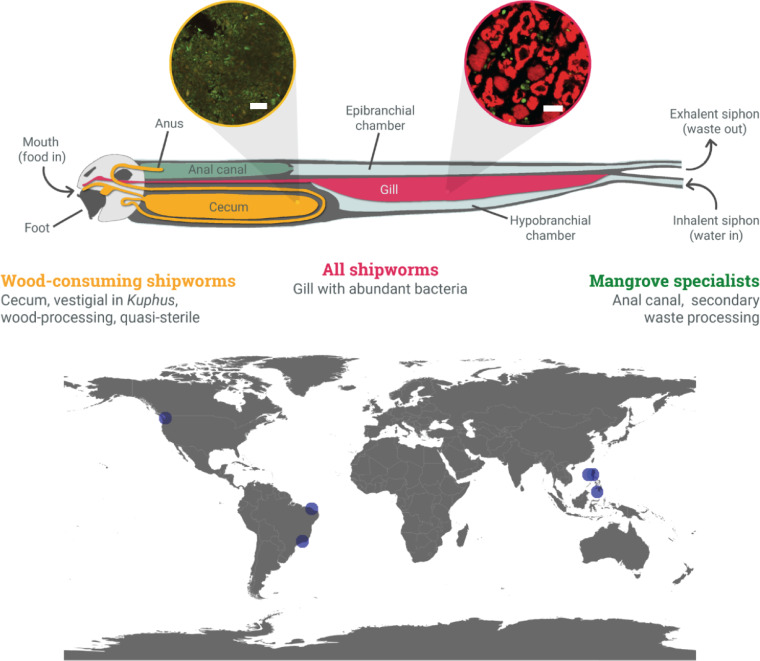
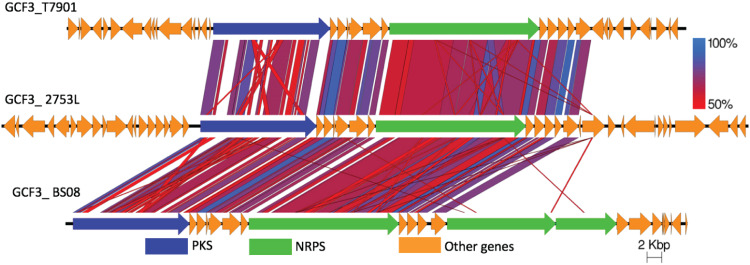
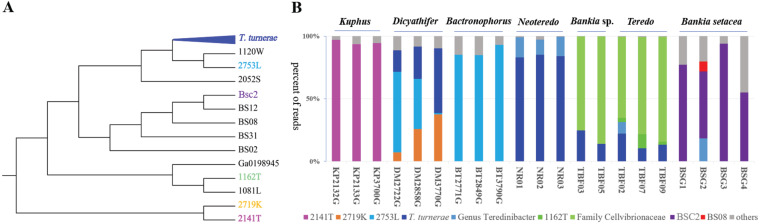
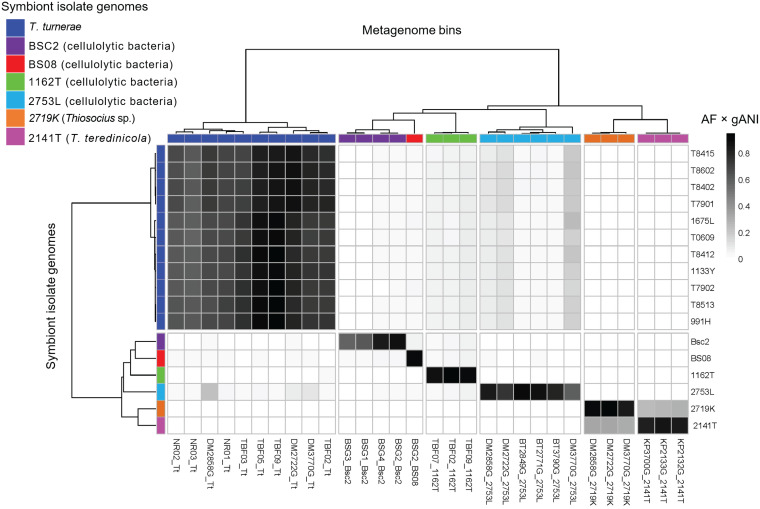
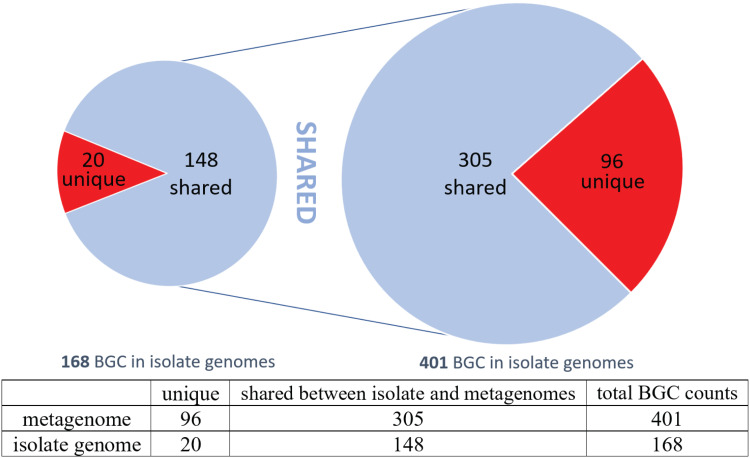
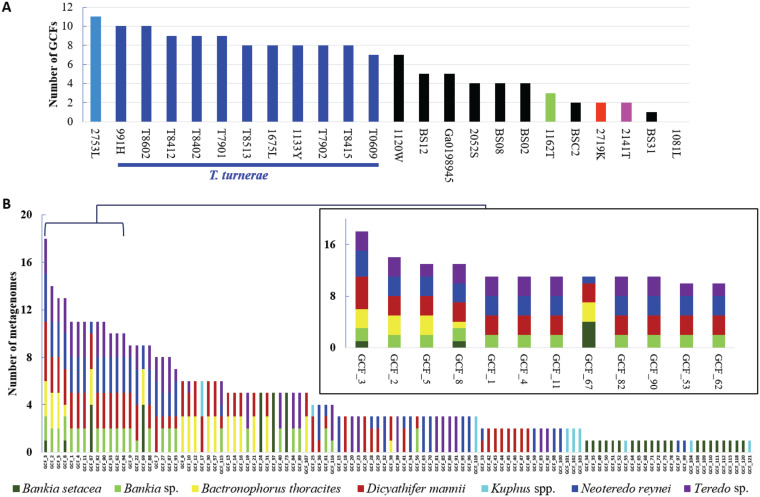
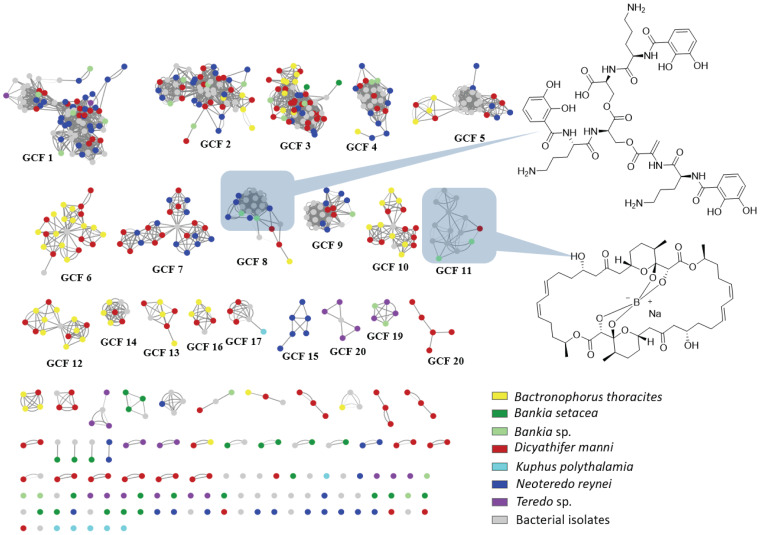
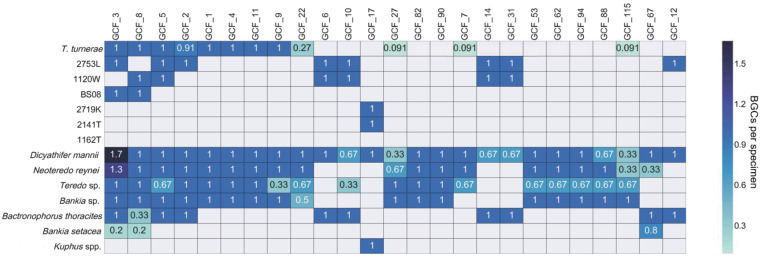
Shipworms play critical roles in recycling wood in the sea. Symbiotic bacteria supply enzymes that the organisms need for nutrition and wood degradation. Some of these bacteria have been grown in pure culture and have the capacity to make many secondary metabolites. However, little is known about whether such secondary metabolite pathways are represented in the symbiont communities within their hosts. In addition, little has been reported about the patterns of host-symbiont co-occurrence. Here, we collected shipworms from the United States, the Philippines, and Brazil and cultivated symbiotic bacteria from their gills. We analyzed sequences from 22 shipworm gill metagenomes from seven shipworm species and from 23 cultivated symbiont isolates. Using (meta)genome sequencing, we demonstrate that the cultivated isolates represent all the major bacterial symbiont species and strains in shipworm gills. We show that the bacterial symbionts are distributed among shipworm hosts in consistent, predictable patterns. The symbiotic bacteria harbor many gene cluster families (GCFs) for biosynthesis of bioactive secondary metabolites, only <5% of which match previously described biosynthetic pathways. Because we were able to cultivate the symbionts and to sequence their genomes, we can definitively enumerate the biosynthetic pathways in these symbiont communities, showing that ∼150 of ∼200 total biosynthetic gene clusters (BGCs) present in the animal gill metagenomes are represented in our culture collection. Shipworm symbionts occur in suites that differ predictably across a wide taxonomic and geographic range of host species and collectively constitute an immense resource for the discovery of new biosynthetic pathways corresponding to bioactive secondary metabolites. We define a system in which the major symbionts that are important to host biology and to the production of secondary metabolites can be cultivated. We show that symbiotic bacteria that are critical to host nutrition and lifestyle also have an immense capacity to produce a multitude of diverse and likely novel bioactive secondary metabolites that could lead to the discovery of drugs and that these pathways are found within shipworm gills. We propose that, by shaping associated microbial communities within the host, the compounds support the ability of shipworms to degrade wood in marine environments. Because these symbionts can be cultivated and genetically manipulated, they provide a powerful model for understanding how secondary metabolism impacts microbial symbiosis.
船蛆在海洋中的木材循环利用过程中发挥着关键作用。共生细菌提供了这些生物获取营养及降解木材所需的酶。其中一些细菌已在纯培养物中生长,并且有能力产生多种次生代谢产物。然而,对于这些次生代谢产物途径在其宿主内的共生菌群落中是否存在,我们知之甚少。此外,关于宿主 - 共生菌共现模式的报道也很少。在此,我们从美国、菲律宾和巴西采集了船蛆,并从它们的鳃中培养共生细菌。我们分析了来自7种船蛆的22个船蛆鳃宏基因组以及23个培养的共生菌分离株的序列。通过(宏)基因组测序,我们证明培养的分离株代表了船蛆鳃中所有主要的细菌共生菌种和菌株。我们表明,细菌共生菌以一致、可预测的模式分布在船蛆宿主之间。共生细菌拥有许多用于生物活性次生代谢产物生物合成的基因簇家族(GCFs),其中只有不到5%与先前描述的生物合成途径相匹配。由于我们能够培养共生菌并对其基因组进行测序,我们可以明确列举这些共生菌群落中的生物合成途径,表明在动物鳃宏基因组中存在的约200个总生物合成基因簇(BGCs)中,约150个在我们的培养物集合中有所体现。船蛆共生菌以不同的组合形式出现,这些组合在广泛的宿主物种分类和地理范围内呈现出可预测的差异,共同构成了发现与生物活性次生代谢产物相对应的新生物合成途径的巨大资源。我们定义了一个系统,在这个系统中,对宿主生物学和次生代谢产物产生至关重要的主要共生菌能够被培养。我们表明,对宿主营养和生活方式至关重要的共生细菌也具有产生多种多样且可能是新型生物活性次生代谢产物的巨大能力,这些次生代谢产物可能会促成药物的发现,并且这些途径存在于船蛆鳃中。我们提出,通过塑造宿主内相关的微生物群落,这些化合物支持了船蛆在海洋环境中降解木材的能力。由于这些共生菌可以被培养和进行基因操作,它们为理解次生代谢如何影响微生物共生提供了一个强大的模型。