Cholangiocarcinoma Screening and Care Program (CASCAP), Faculty of Medicine, Khon Kaen University, Khon Kaen 40002, Thailand.
Cholangiocarcinoma Research Institute, Khon Kaen University, Khon Kaen 40002, Thailand.
Drug Des Devel Ther. 2020 Jun 11;14:2319-2334. doi: 10.2147/DDDT.S250061. eCollection 2020.
Cholangiocarcinoma (CCA) is a slowly progressing but highly aggressive malignancy. Targeting the HER protein family represents a potential therapeutic strategy for CCA treatment. The pan-HER inhibitor varlitinib is being developed for the treatment of breast cancer, gastric cancer, and biliary tract cancer, which includes CCA. This study aims to evaluate the anti-tumor effect of varlitinib on CCA using both in vitro and in vivo models.
HER family expression profiles and the cytotoxic activity of varlitinib were determined in CCA cell lines (KKU-214, KKU-213, KKU-156 and KKU-100) and cholangiocyte (MMNK-1). Anti-proliferation and apoptosis induction were examined in KKU-214 and KKU-100 cell lines. A combination of varlitinib with PI3K inhibitor, BKM-120, was explored for efficacy in the KKU-100 cell line. In addition, the anti-tumor activity of varlitinib on CCA and the key metabolites were evaluated in tumor tissues from CCA xenograft model.
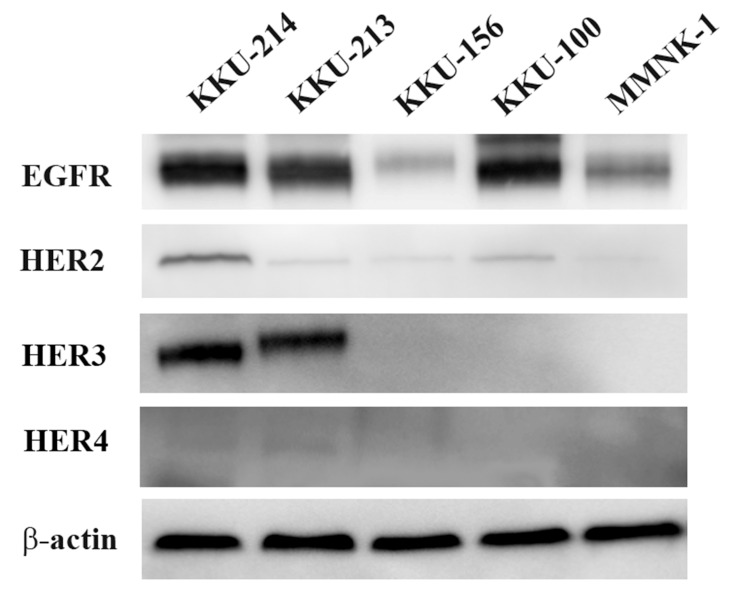
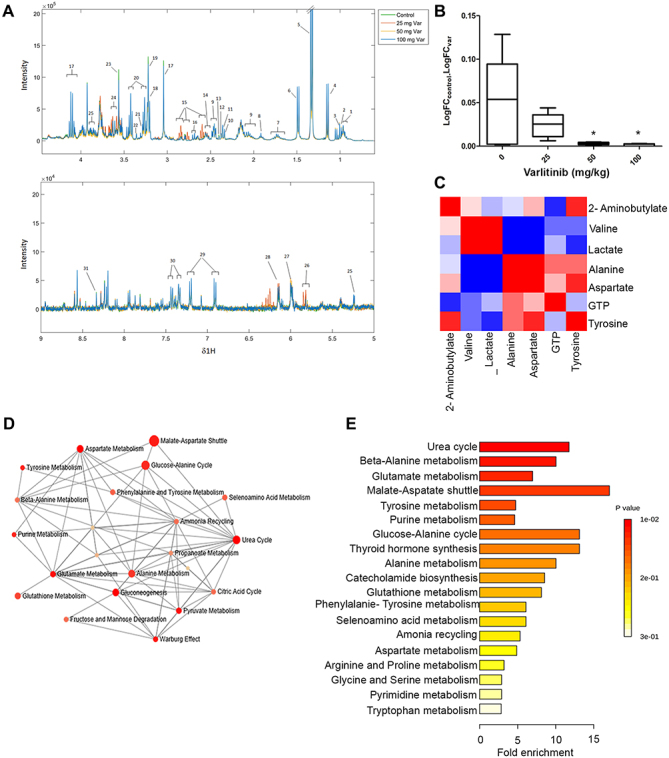
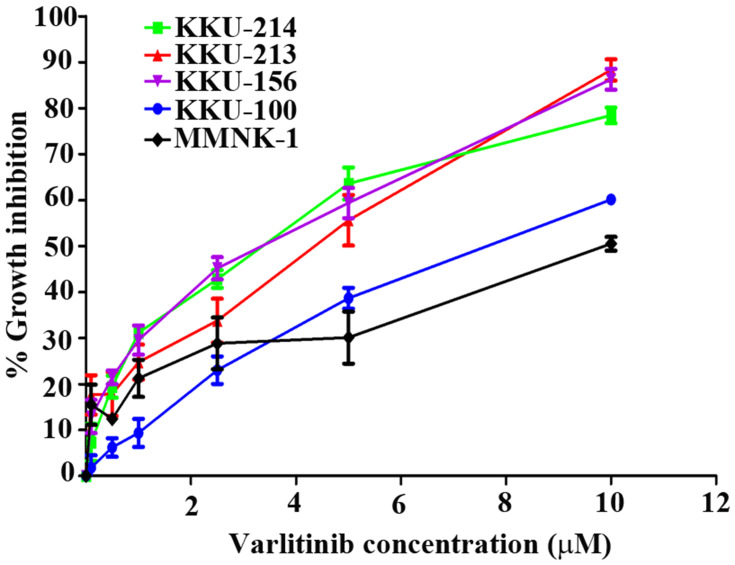
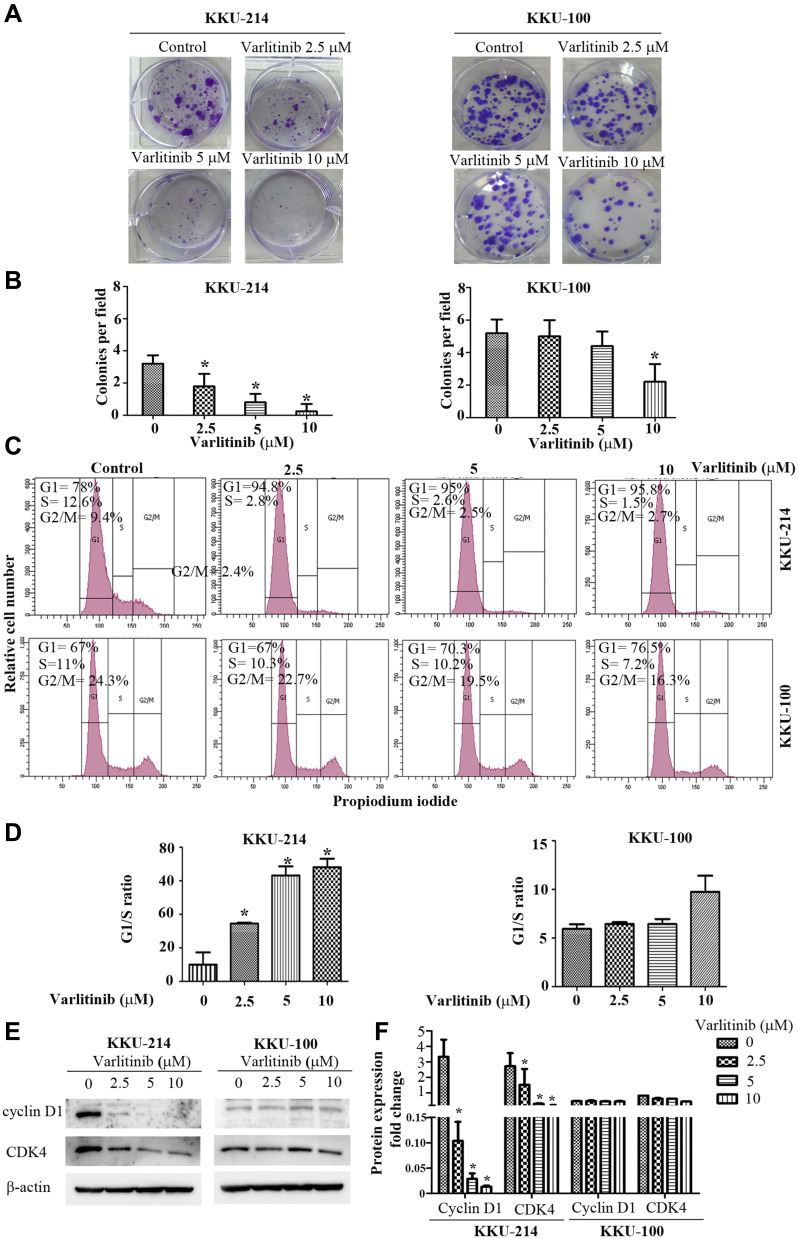
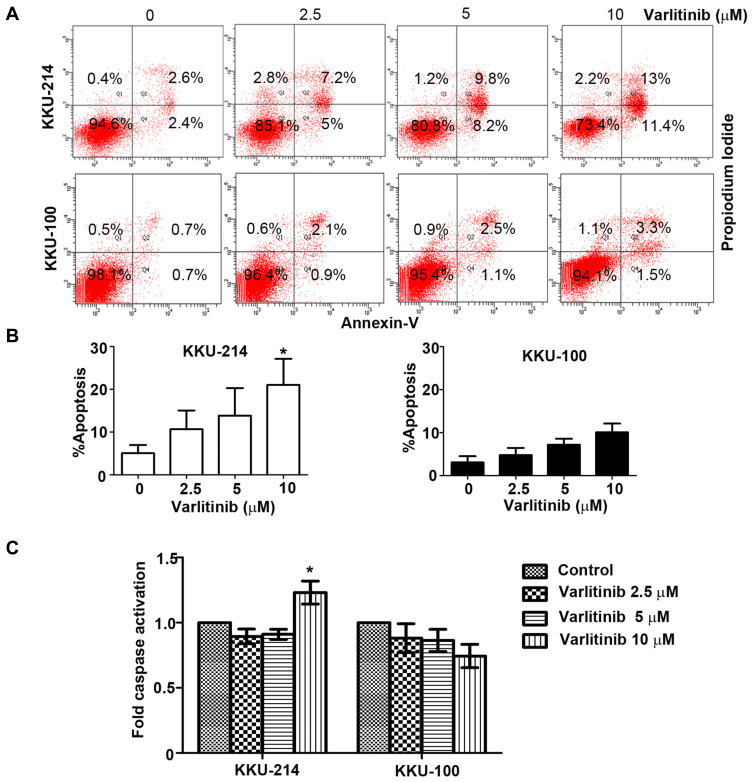
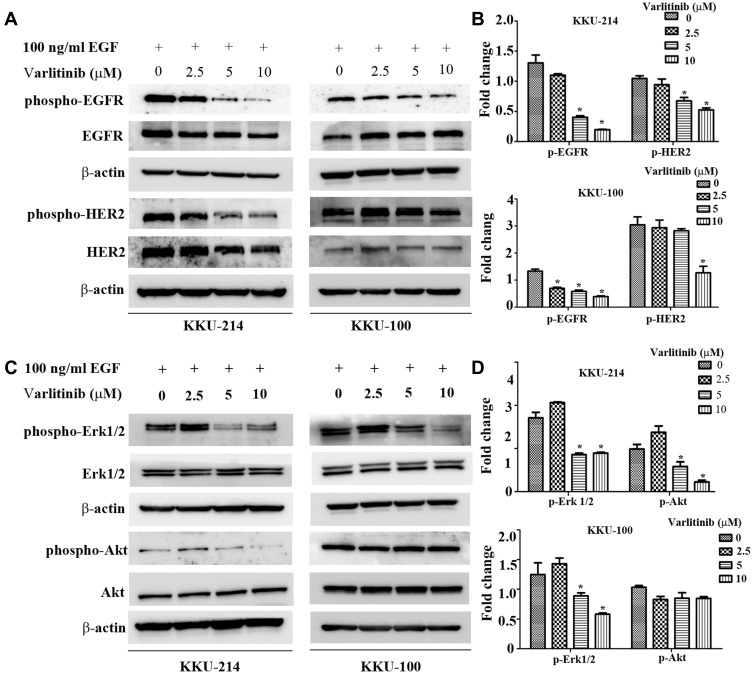
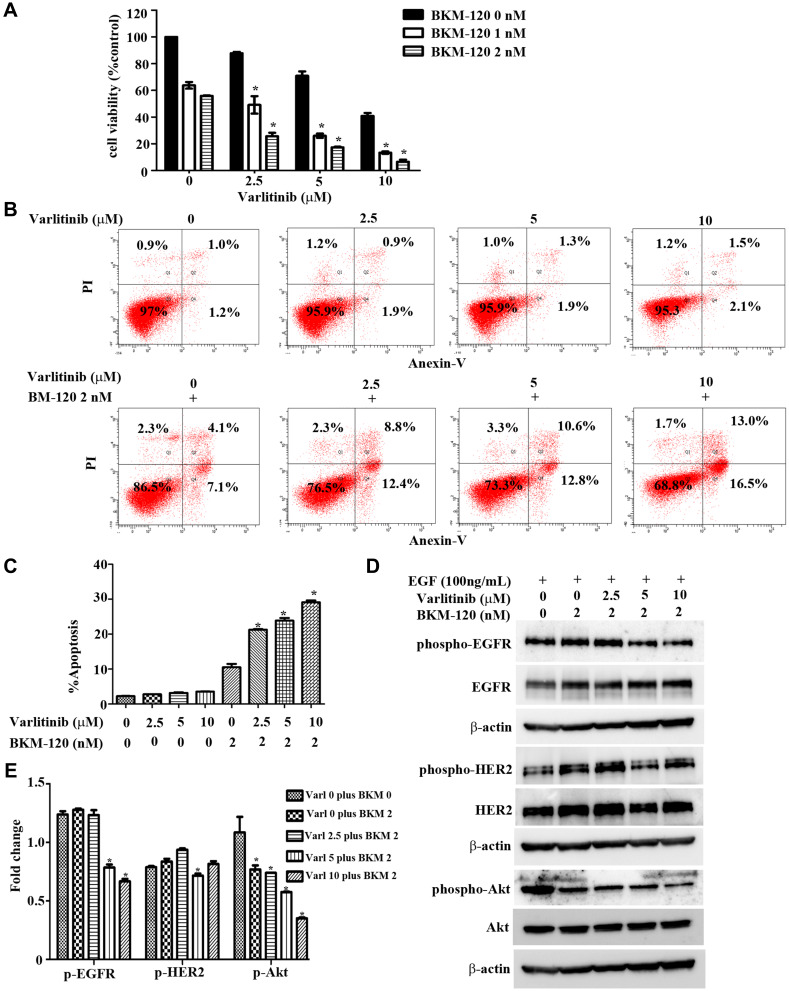
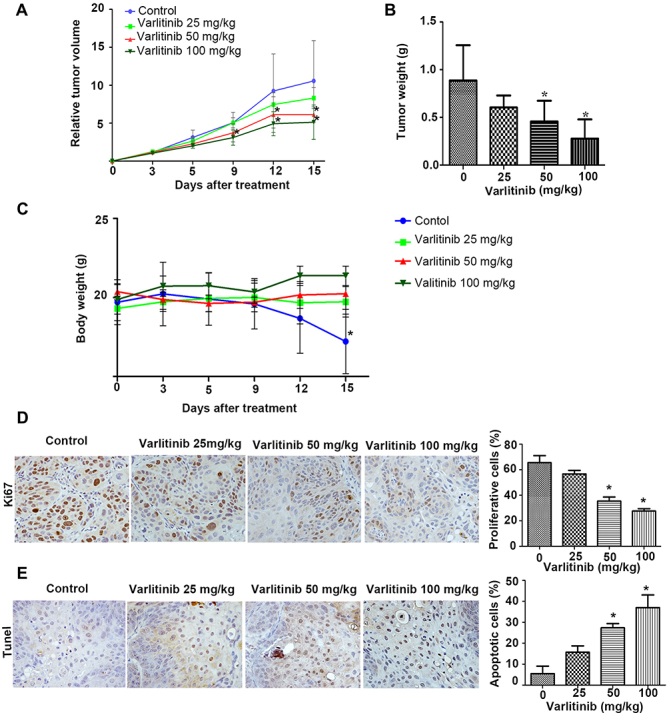
Elevated expressions of EGFR and HER2 were observed in KKU-214 and KKU-100 cells and varlitinib can suppress CCA cell growth in the micromolar range. Varlitinib inhibits cell proliferation and enhances cell death via the suppression of Akt and Erk1/2 activity in the KKU-214 cell line. While KKU-100 cells showed a poor response to varlitinib, a combination of varlitinib with BKM-120 improved anti-tumor activity. Varlitinib can significantly suppress tumor growth in the CCA xenograft model after oral administration for 15 days without noticeable toxicity, and aspartate can be the key metabolite to correlate with varlitinib response.
Our study indicates that varlitinib is a promising therapeutic agent for CCA treatment via the inhibition of EGFR/HER2. The anti-tumor effect of varlitinib on CCA also showed synergism in combination with PI3K inhibition. Aspartate metabolite level was correlated with varlitinib response. Combination of varlitinib with targeted drug or cytotoxic drug was recommended.
胆管癌(CCA)是一种进展缓慢但高度侵袭性的恶性肿瘤。针对 HER 蛋白家族的靶向治疗代表了治疗 CCA 的一种潜在治疗策略。泛 HER 抑制剂瓦立替尼正在开发用于治疗乳腺癌、胃癌和胆道癌,包括 CCA。本研究旨在使用体外和体内模型评估瓦立替尼对 CCA 的抗肿瘤作用。
在 CCA 细胞系(KKU-214、KKU-213、KKU-156 和 KKU-100)和胆管细胞(MMNK-1)中确定了 HER 家族表达谱和瓦立替尼的细胞毒性。在 KKU-214 和 KKU-100 细胞系中检测了抗增殖和凋亡诱导作用。探讨了瓦立替尼与 PI3K 抑制剂 BKM-120 联合应用对 KKU-100 细胞系的疗效。此外,还评估了瓦立替尼在 CCA 异种移植模型肿瘤组织中的抗肿瘤活性及其关键代谢物。
在 KKU-214 和 KKU-100 细胞中观察到 EGFR 和 HER2 的高表达,瓦立替尼可以在微摩尔范围内抑制 CCA 细胞的生长。瓦立替尼通过抑制 Akt 和 Erk1/2 活性抑制 KKU-214 细胞的增殖并增强细胞死亡。虽然 KKU-100 细胞对瓦立替尼反应不佳,但瓦立替尼与 BKM-120 的联合应用改善了抗肿瘤活性。瓦立替尼在口服给药 15 天后可显著抑制 CCA 异种移植模型中的肿瘤生长,且无明显毒性,天冬氨酸可作为与瓦立替尼反应相关的关键代谢物。
我们的研究表明,瓦立替尼通过抑制 EGFR/HER2 是治疗 CCA 的一种很有前途的治疗药物。瓦立替尼对 CCA 的抗肿瘤作用与 PI3K 抑制联合也表现出协同作用。天冬氨酸代谢物水平与瓦立替尼的反应相关。建议联合使用瓦立替尼与靶向药物或细胞毒性药物。