Peretz David, Grubert Van Iderstine Micah, Bernstein Matthew, Minuk Gerald Y
Section of Hepatology, Department of Medicine, Rady College of Medicine, University of Manitoba, Winnipeg, MB, Canada.
Department of Pharmacology and Therapeutics, Rady College of Medicine, University of Manitoba, Winnipeg, MB, Canada.
Transplant Direct. 2020 May 22;6(6):e558. doi: 10.1097/TXD.0000000000001005. eCollection 2020 Jun.
Patients who travel long distances to undergo liver transplantation have limited opportunities to develop confidence in their new healthcare providers and experience fewer support visits from family and friends at the transplant site. The objectives of this study were to document the psychological and financial impact of having to travel long distances for liver transplantation in adult liver disease patients.
This was a single-center, prospective study that used a 7-question survey, including Likert scales, patient recall, and administrative databases.
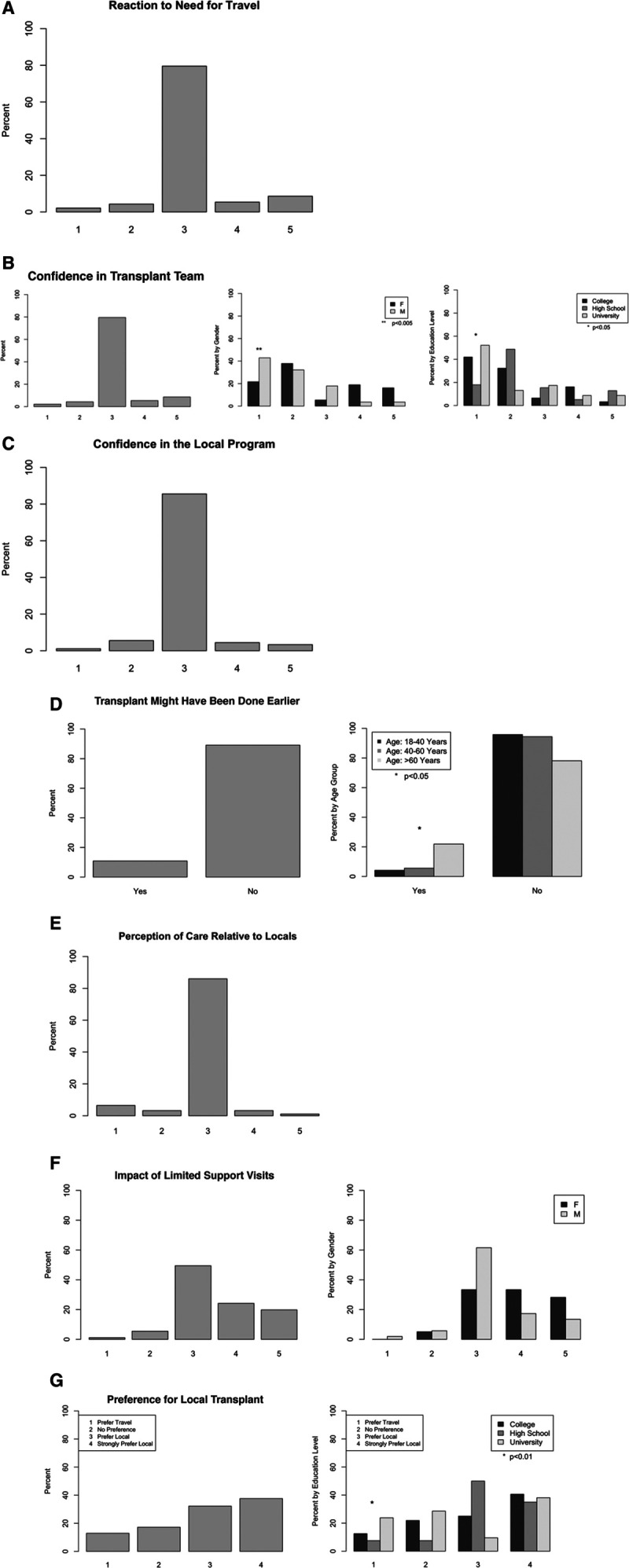
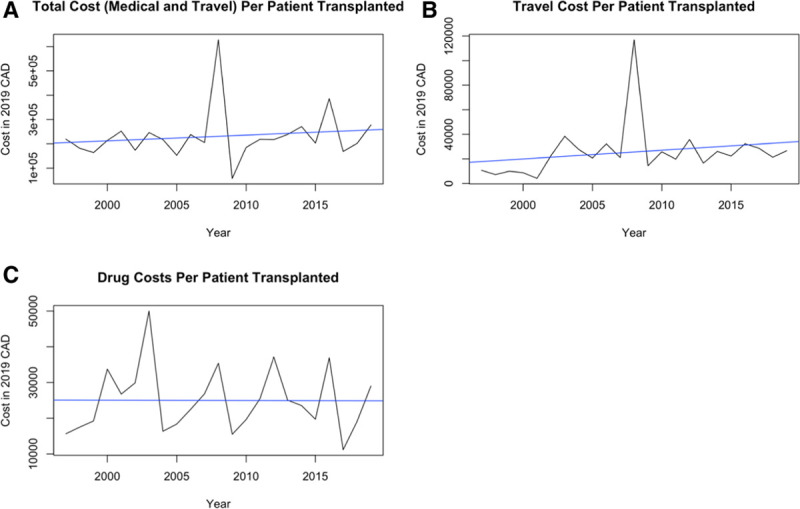
Ninety-six adult outpatient liver transplant recipients (59% males; mean age, 43.1 ± 2.1 y) participated in the survey. Approximately 70% (more so among males and higher educated patients) felt that they had sufficient time to develop confidence in their new healthcare providers and 87% felt that confidence in their local healthcare providers had not been diminished by undergoing the procedure elsewhere. Forty-four percent of patients felt that their overall liver transplant experience had been compromised by more limited opportunities for support visits, a perception that was twice as common in females. Median out-of-pocket expenses were under $5000, and inflation corrected costs to third-party payers have been stable for the past 20 y.
The principal psychological impact of travelling long distances for liver transplantation relates to the consequences of fewer support visits. Confidence in the new and local healthcare teams is not compromised by such travel in most patients. Out-of-pocket expenses are under $5000, and transplant costs to third-party payers have remained stable over the past 20 y.
长途跋涉前往接受肝移植的患者对新的医疗服务提供者建立信心的机会有限,且在移植地点接受家人和朋友的支持探访较少。本研究的目的是记录成年肝病患者长途跋涉进行肝移植所带来的心理和经济影响。
这是一项单中心前瞻性研究,采用了一份包含7个问题的调查问卷,其中包括李克特量表、患者回忆和管理数据库。
96名成年门诊肝移植受者(59%为男性;平均年龄43.1±2.1岁)参与了调查。约70%(男性和受教育程度较高的患者中比例更高)的患者认为他们有足够的时间对新的医疗服务提供者建立信心,87%的患者认为在其他地方接受手术并未削弱他们对当地医疗服务提供者的信心。44%的患者认为由于支持探访机会减少,他们的整体肝移植体验受到了影响,女性中这种看法的比例是男性的两倍。自付费用中位数低于5000美元,过去20年经通胀调整后的第三方支付者成本一直保持稳定。
长途跋涉进行肝移植的主要心理影响与支持探访减少的后果有关。在大多数患者中,这种长途旅行并未削弱他们对新的和当地医疗团队的信心。自付费用低于5000美元,过去20年第三方支付者的移植成本一直保持稳定。