Mayol J, Artucio C, Batista I, Puentes A, Villegas J, Quizpe R, Rojas V, Mangione J, Belardi J
Centro Cardiológico Americano, Montevideo, Uruguay.
Hemodinamia del Litoral, Salto, Uruguay.
Neth Heart J. 2020 Jul;28(7-8):424-430. doi: 10.1007/s12471-020-01440-y.
A reduction in the number of interventional cardiology procedures has emerged as a result of the COVID-19 pandemic. A survey was performed to quantify this decrease and the impact on the management of myocardial infarction in Latin America.
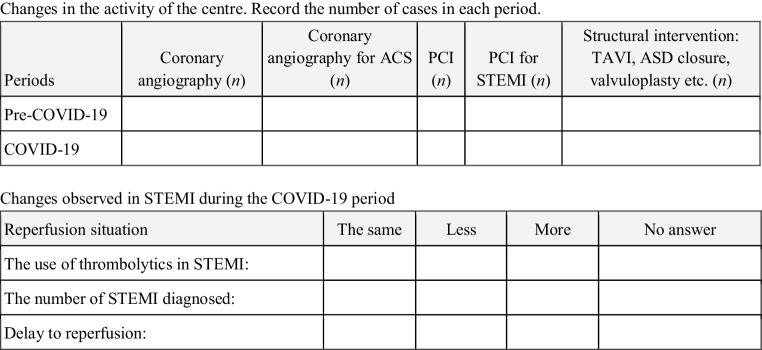
A telematic survey was conducted for all countries in Latin America. Diagnostic catheterisations, coronary and structural interventions, as well as the incidence and delay to reperfusion therapy of myocardial infarction (STEMI), were recorded. Two periods were compared: from 24 February to 8 March 2020 (pre-COVID-19) and another 2‑week period that varied according to country (COVID-19).
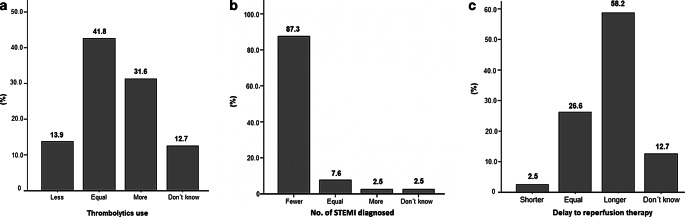
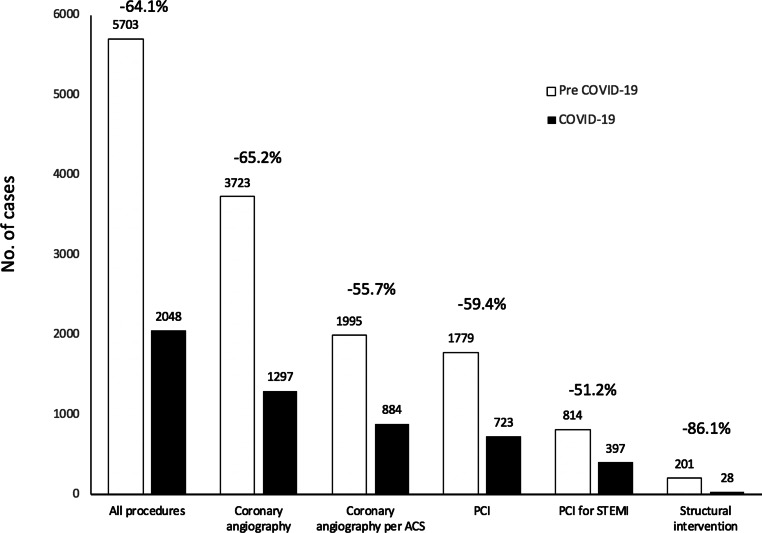
Responses were obtained from 79 centres in 20 countries. There was a significant decrease in the number of diagnostic procedures (-65.2%), coronary interventions (-59.4%), structural therapeutics (-86.1%) and STEMI care (-51.2%). A decrease was noted in the incidence of STEMI, but also a delay in the time to STEMI reperfusion. While there was a variation in activity in interventional cardiology between countries, patient behaviour was rather homogeneous.
A significant reduction in healthcare activity has been noted during the COVID-19 pandemic, including STEMI care, with the risk of increased mortality and/or morbidity following STEMI. Healthcare providers should encourage patients with suspected symptoms of STEMI to call for emergency care to ensure rapid diagnosis and timely reperfusion treatment.
由于新冠疫情,介入心脏病学手术数量有所减少。开展了一项调查以量化这种减少情况以及对拉丁美洲心肌梗死管理的影响。
对拉丁美洲所有国家进行了一项远程调查。记录了诊断性心导管插入术、冠状动脉和结构性介入手术,以及心肌梗死(ST段抬高型心肌梗死)的发病率和再灌注治疗延迟情况。比较了两个时期:2020年2月24日至3月8日(新冠疫情前)以及根据国家不同而变化的另一个为期2周的时期(新冠疫情期间)。
从20个国家的79个中心获得了回复。诊断性手术数量(-65.2%)、冠状动脉介入手术(-59.4%)、结构性治疗(-86.1%)和ST段抬高型心肌梗死治疗(-51.2%)均显著减少。ST段抬高型心肌梗死的发病率有所下降,但ST段抬高型心肌梗死再灌注时间也出现延迟。虽然各国介入心脏病学的活动存在差异,但患者行为较为一致。
在新冠疫情期间,包括ST段抬高型心肌梗死治疗在内的医疗活动显著减少,ST段抬高型心肌梗死后死亡率和/或发病率增加的风险上升。医疗服务提供者应鼓励有疑似ST段抬高型心肌梗死症状的患者呼叫急救,以确保快速诊断和及时的再灌注治疗。