MRC Centre for Global Infectious Disease Analysis, Imperial College London, London, W2 1PG, United Kingdom.
Department of Statistics, University of Oxford, Oxford, OX1 3LB, United Kingdom.
PLoS Comput Biol. 2020 Jul 1;16(7):e1007990. doi: 10.1371/journal.pcbi.1007990. eCollection 2020 Jul.
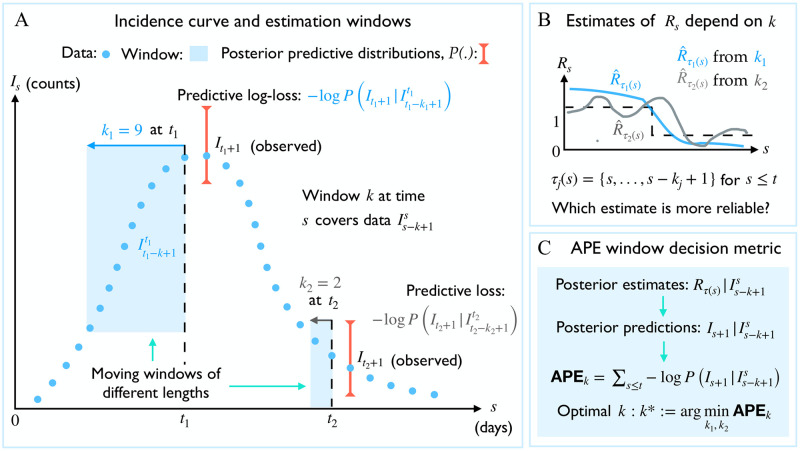
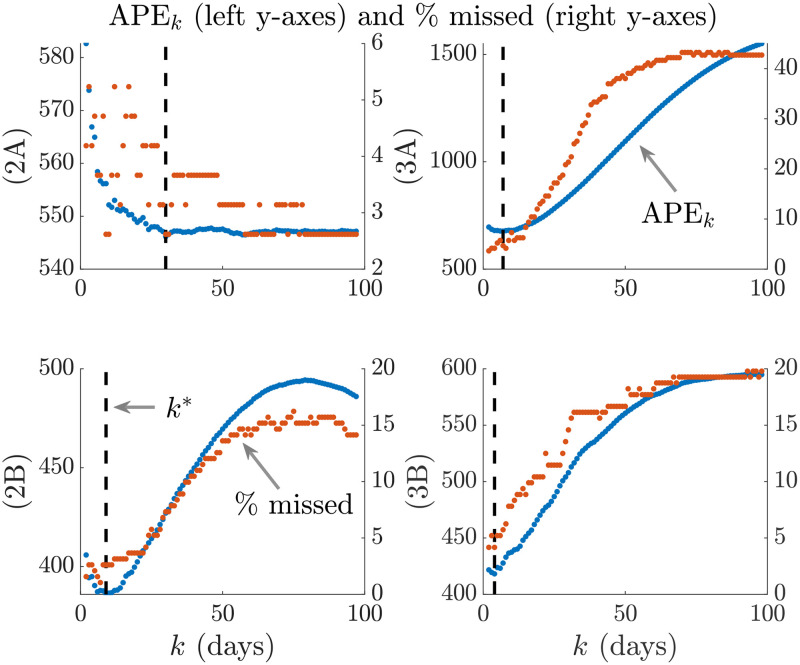
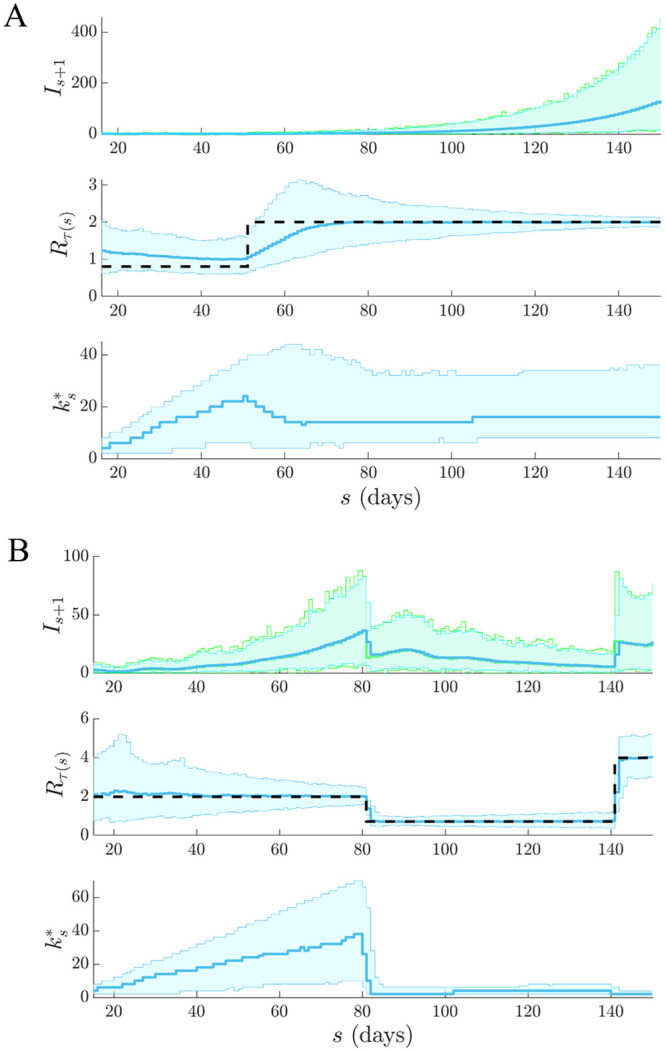
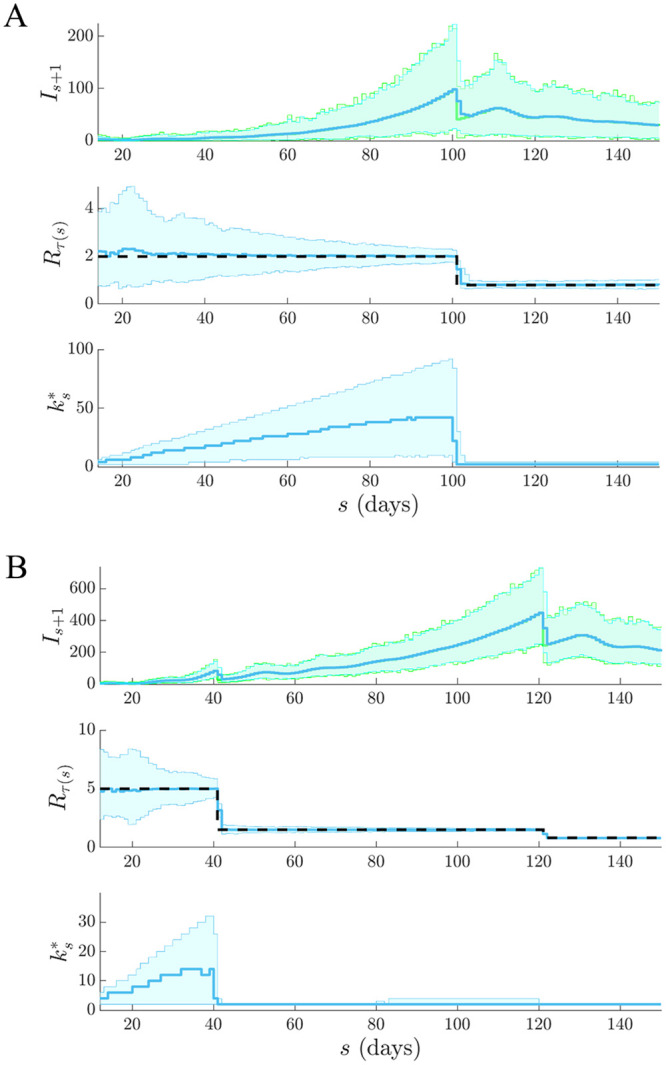
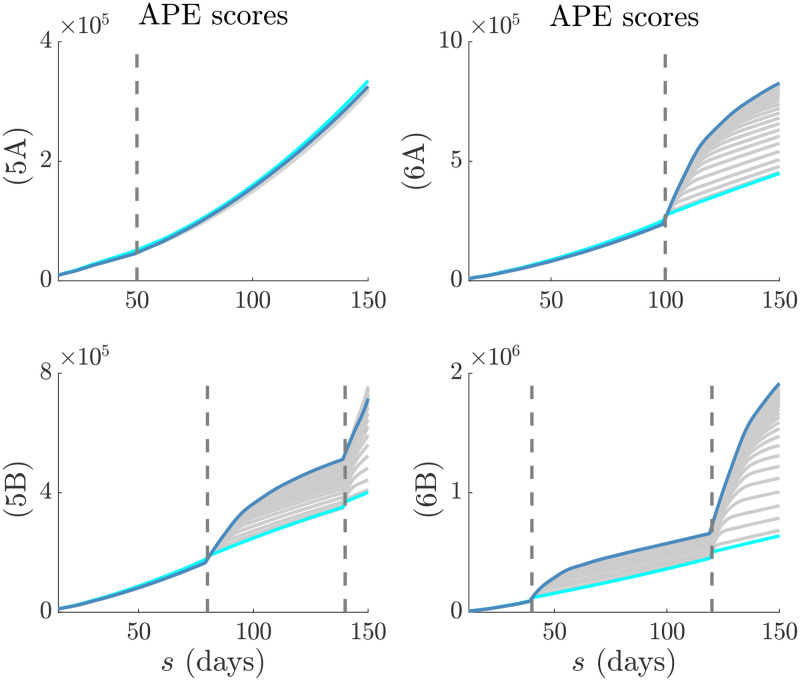
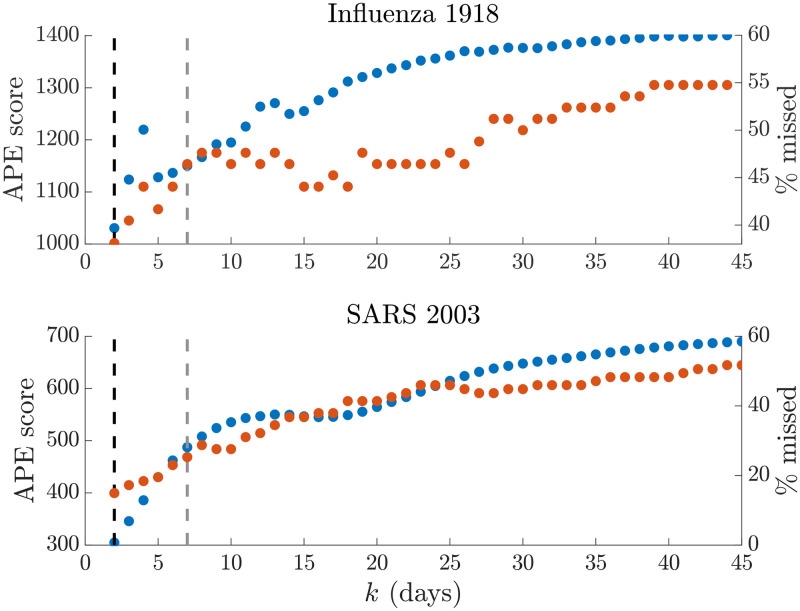
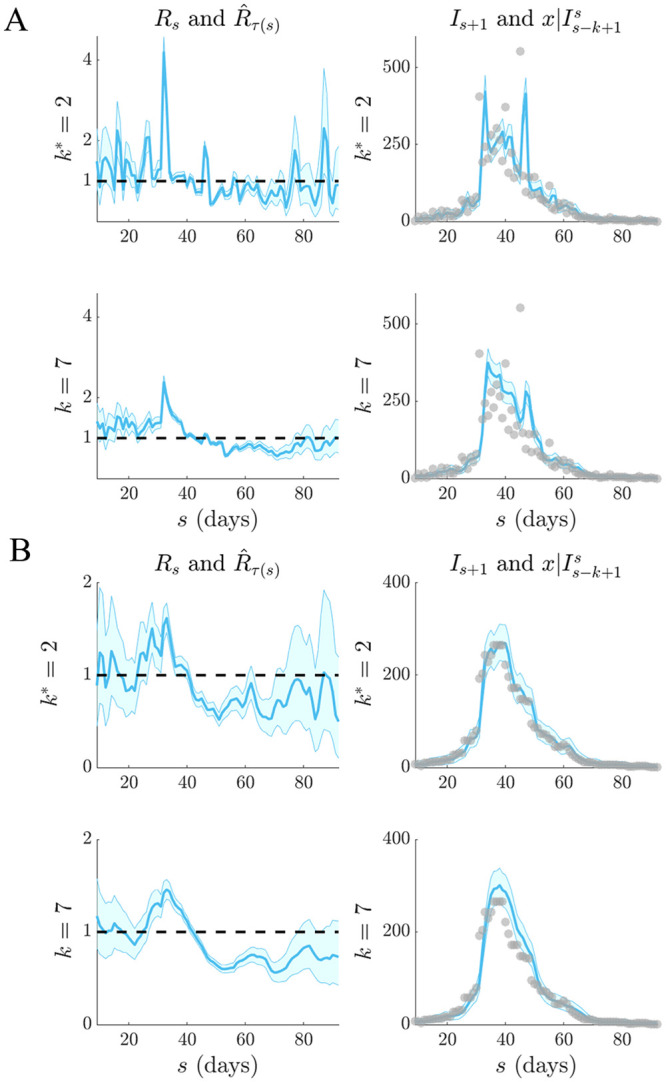
The effective reproduction number, Rt, is a key time-varying prognostic for the growth rate of any infectious disease epidemic. Significant changes in Rt can forewarn about new transmissions within a population or predict the efficacy of interventions. Inferring Rt reliably and in real-time from observed time-series of infected (demographic) data is an important problem in population dynamics. The renewal or branching process model is a popular solution that has been applied to Ebola and Zika virus disease outbreaks, among others, and is currently being used to investigate the ongoing COVID-19 pandemic. This model estimates Rt using a heuristically chosen piecewise function. While this facilitates real-time detection of statistically significant Rt changes, inference is highly sensitive to the function choice. Improperly chosen piecewise models might ignore meaningful changes or over-interpret noise-induced ones, yet produce visually reasonable estimates. No principled piecewise selection scheme exists. We develop a practical yet rigorous scheme using the accumulated prediction error (APE) metric from information theory, which deems the model capable of describing the observed data using the fewest bits as most justified. We derive exact posterior prediction distributions for infected population size and integrate these within an APE framework to obtain an exact and reliable method for identifying the piecewise function best supported by available epidemic data. We find that this choice optimises short-term prediction accuracy and can rapidly detect salient fluctuations in Rt, and hence the infected population growth rate, in real-time over the course of an unfolding epidemic. Moreover, we emphasise the need for formal selection by exposing how common heuristic choices, which seem sensible, can be misleading. Our APE-based method is easily computed and broadly applicable to statistically similar models found in phylogenetics and macroevolution, for example. Our results explore the relationships among estimate precision, forecast reliability and model complexity.
有效繁殖数(Rt)是预测任何传染病流行增长率的关键时变预后指标。Rt 的显著变化可以预警人群内的新传播,或者预测干预措施的效果。从观察到的受感染(人口统计学)数据的时间序列中可靠且实时地推断 Rt 是群体动态中的一个重要问题。更新或分支过程模型是一种流行的解决方案,已应用于埃博拉和寨卡病毒病等暴发,目前正在用于调查正在进行的 COVID-19 大流行。该模型使用启发式选择的分段函数来估计 Rt。虽然这便于实时检测统计上显著的 Rt 变化,但推断对函数选择非常敏感。选择不当的分段模型可能会忽略有意义的变化或过度解释噪声引起的变化,但会产生视觉上合理的估计。没有原则性的分段选择方案。我们使用信息论中的累积预测误差(APE)度量标准开发了一种实用而严格的方案,该方案认为模型使用最少的位数来描述观察到的数据是最合理的,从而认为模型有能力进行描述。我们为受感染人群规模推导了精确的后验预测分布,并将这些分布集成到 APE 框架中,以获得一种通过可用的流行数据准确可靠地识别最佳支持的分段函数的方法。我们发现,这种选择优化了短期预测精度,可以实时快速检测到 Rt 中明显的波动,从而实时检测到受感染人群增长率。此外,我们强调需要通过暴露常见的启发式选择是如何具有误导性的,来进行正式选择。我们的基于 APE 的方法易于计算,并且可以广泛应用于系统发生学和宏观进化等领域中发现的统计上相似的模型。我们的结果探讨了估计精度、预测可靠性和模型复杂性之间的关系。