Studio Tecnico Ing. Laura Molinari, Environmental Health and Safety Via Quarto Ponte 17, 37138 Verona, Italy.
Elsa Nervo, Società Chimica Italiana, 00198 Rome, Italy.
Int J Environ Res Public Health. 2020 Jun 29;17(13):4688. doi: 10.3390/ijerph17134688.
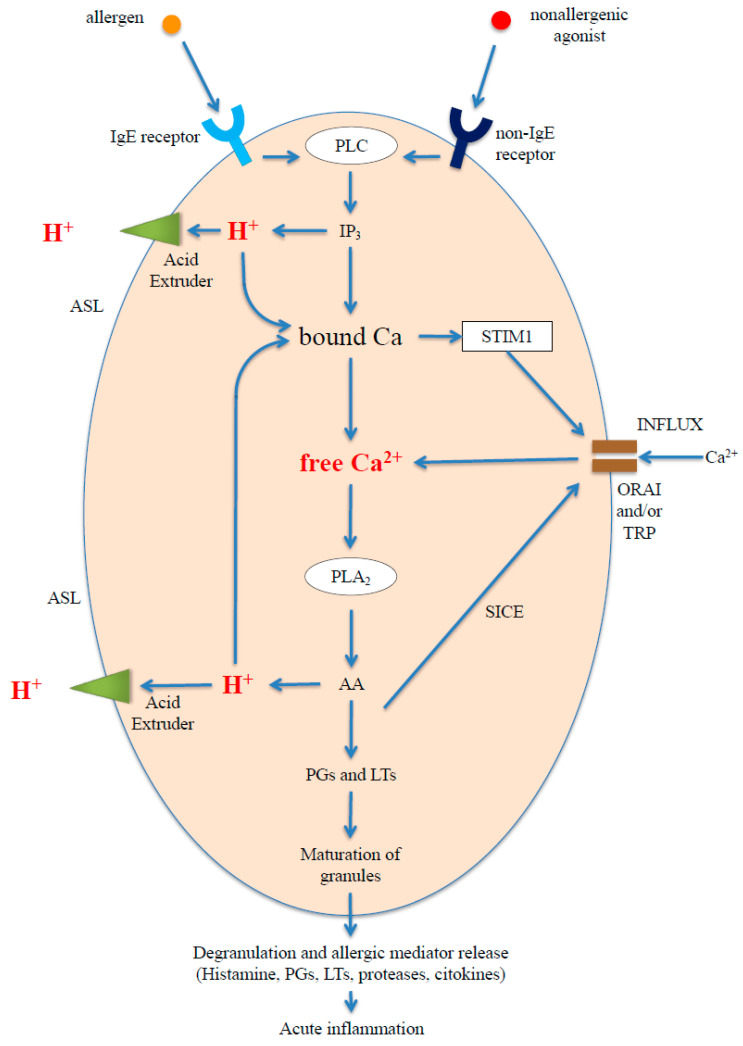
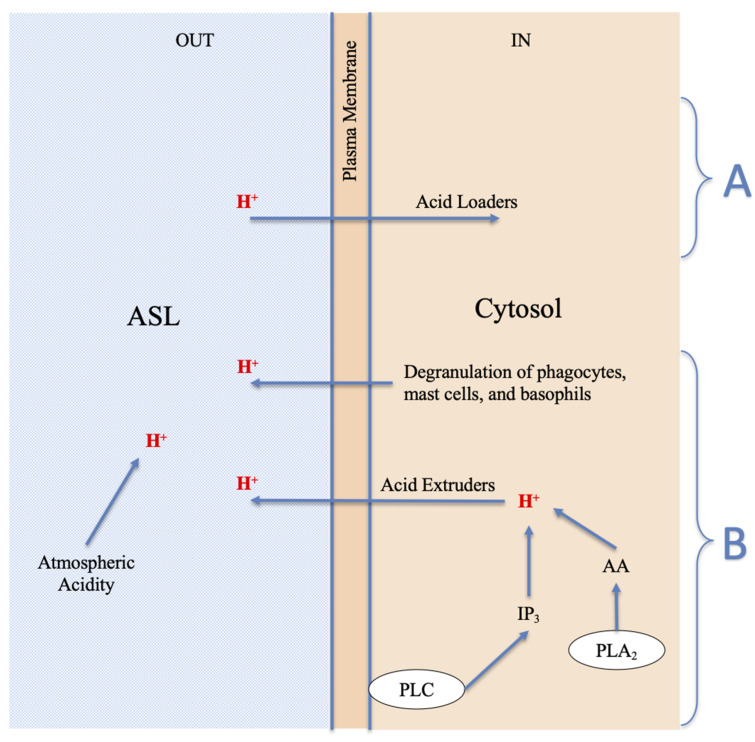
Inflammatory allergic and nonallergic respiratory disorders are spreading worldwide and often coexist. The root cause is not clear. This review demonstrates that, from a biochemical point of view, it is ascribable to protons (H) released into cells by exogenous and endogenous acids. The hypothesis of acids as the common cause stems from two considerations: (a) it has long been known that exogenous acids present in air pollutants can induce the irritation of epithelial surfaces, particularly the airways, inflammation, and bronchospasm; (b) according to recent articles, endogenous acids, generated in cells by phospholipases, play a key role in the biochemical mechanisms of initiation and progression of allergic-type reactions. Therefore, the intracellular acidification and consequent Ca increase, induced by protons generated by either acid pollutants or endogenous phospholipases, may constitute the basic mechanism of the multimorbidity of these disorders, and environmental acidity may contribute to their spread.
炎症性过敏性和非过敏性呼吸疾病正在全球范围内传播,并且常常并存。其根本原因尚不清楚。本综述表明,从生化角度来看,这可归因于细胞外和细胞内酸释放的质子(H)。将酸作为共同原因的假设源于两个方面:(a)长期以来,人们已经知道存在于空气污染物中的外源酸会引起上皮表面(特别是气道)的刺激、炎症和支气管痉挛;(b)根据最近的一些文章,细胞内由磷脂酶产生的内源酸在过敏型反应的生化机制的起始和进展中发挥关键作用。因此,由酸污染物或内源性磷脂酶产生的质子引起的细胞内酸化和随之而来的 Ca 增加,可能构成这些疾病的多种疾病的基本机制,并且环境酸度可能会促进其传播。