Department of Epidemiology and Global Health, Umeå University, SE90185, Umeå, Sweden.
Smartkliniken Eques Indolor, Stolp-Ekeby 24, SE18695, Vallentuna, Sweden.
BMC Health Serv Res. 2020 Jul 1;20(1):604. doi: 10.1186/s12913-020-05452-7.
Chronic pain is a widespread problem that is usually approached by focusing on its psychological aspects or on trying to reduce the pain from the pain generator. Patients report that they feel responsible for their pain and that they are disempowered and stigmatized because of it. Here, we explored interventional pain management from the patient's perspective to understand the process better.
A purposive sample of 19 subjects was interviewed by an independent interviewer. The interviews were transcribed into text and thematic analysis was performed.
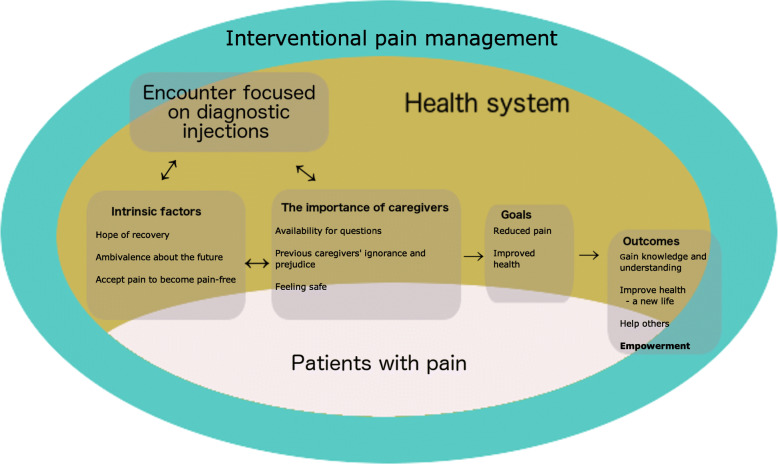
The subjects' perceptions covered three key themes: themselves as objects; the caregivers, including the process of tests and retests, the encounters and interactions with professionals, and the availability of the caregivers; and finally the outcomes, including the results of the tests and treatments and how these inspired them to think of other people with pain. Linking these themes, the subjects reported something best described as "gained empowerment" during interventional pain management; they were feeling heard and seen, they gained knowledge that helped them understand their problem better, they could ask questions and receive answers, and they felt safe and listened to.
Many of the themes evolved in relation to the subjects' contact with the healthcare services they received, but when the themes were merged and structured into the model, a cohesive pattern of empowerment appeared. If empowerment is a major factor in the positive effects of interventional pain management, it is important to facilitate and not hinder empowerment.
Clinicaltrials.gov 2013-04-24 (Protocol ID SE-Dnr-2012-446-31 M-3, ClinicalTrials ID NCT01838603 ).
慢性疼痛是一个普遍存在的问题,通常通过关注其心理方面或试图减轻疼痛源来解决。患者报告说,他们对自己的疼痛感到负责,并且因为疼痛而感到无能为力和被污名化。在这里,我们从患者的角度探讨了介入性疼痛管理,以更好地理解这一过程。
通过独立采访者对 19 名受试者进行了有针对性的样本采访。采访内容被转录成文本,并进行了主题分析。
受试者的感知涵盖了三个关键主题:他们自己作为对象;护理人员,包括测试和重新测试的过程、与专业人员的相遇和互动以及护理人员的可用性;最后是结果,包括测试和治疗的结果以及这些结果如何激发他们对其他疼痛患者的思考。将这些主题联系起来,受试者报告了一些最好被描述为“获得赋权”的东西,即他们在介入性疼痛管理中感受到被倾听和看到,他们获得了帮助他们更好地理解自己问题的知识,他们可以提问并得到答案,他们感到安全并被倾听。
许多主题与他们接触到的医疗保健服务有关,但当这些主题被合并并构建到模型中时,就出现了一个连贯的赋权模式。如果赋权是介入性疼痛管理的积极影响的一个主要因素,那么促进而不是阻碍赋权就很重要。
Clinicaltrials.gov 2013-04-24(方案 ID SE-Dnr-2012-446-31M-3,临床试验 ID NCT01838603)。