Biochemical and Cellular Pharmacology, Genentech Inc., 103 DNA Way, South San Francisco, CA, USA.
Biomedical Engineering, Washington University in St. Louis, St. Louis, MO, USA.
Sci Rep. 2020 Jul 1;10(1):10730. doi: 10.1038/s41598-020-67761-5.
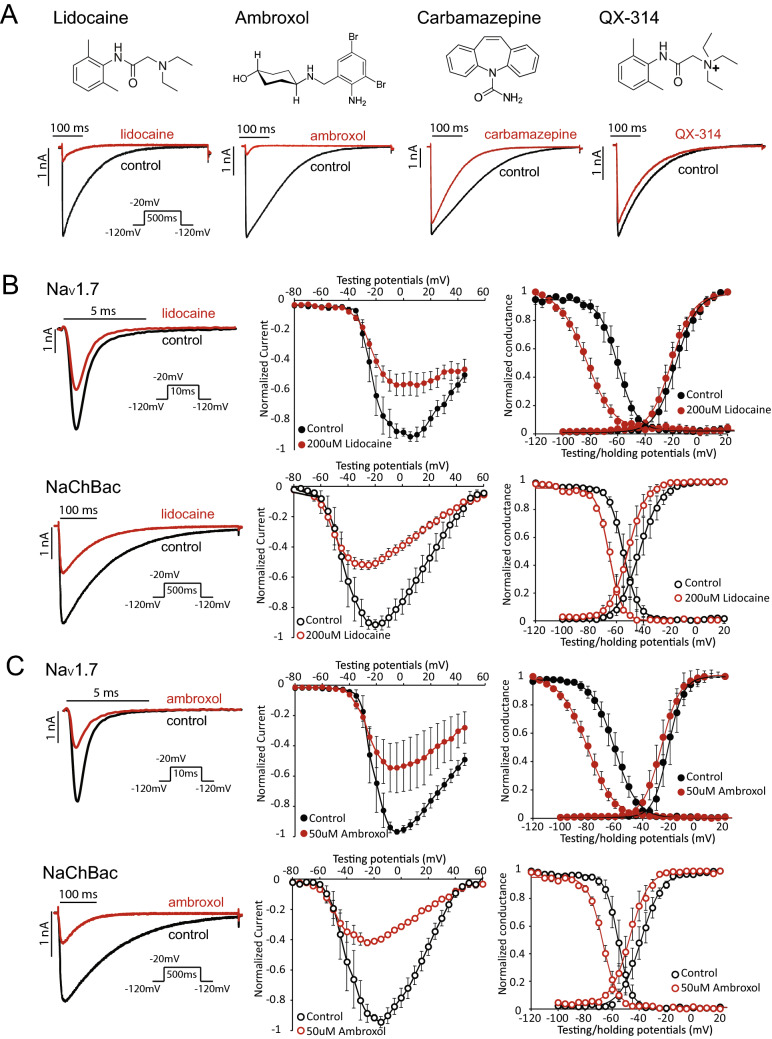
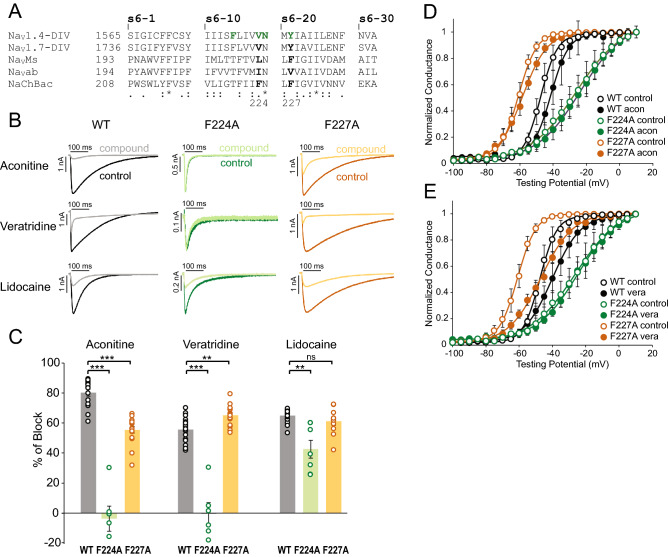
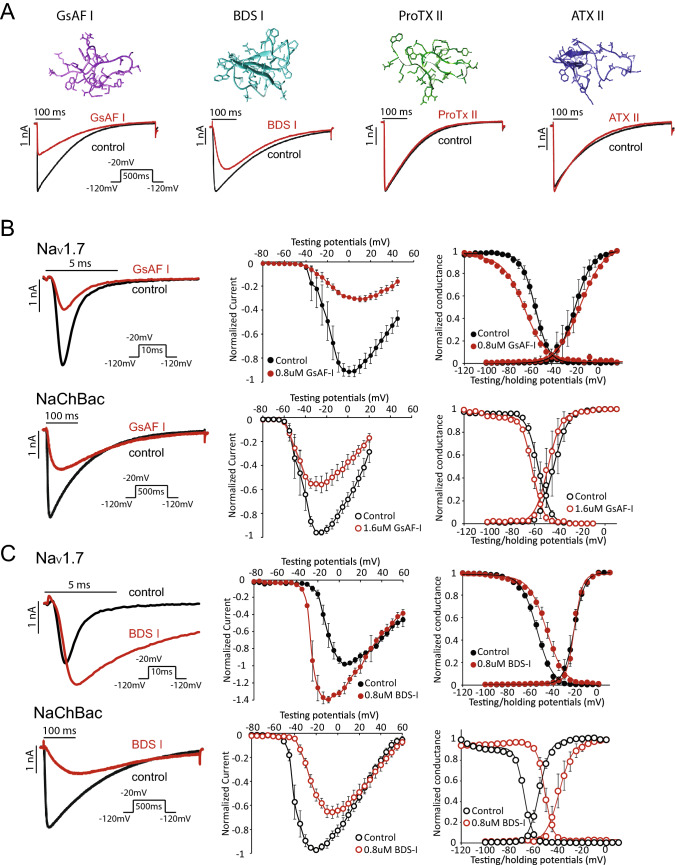
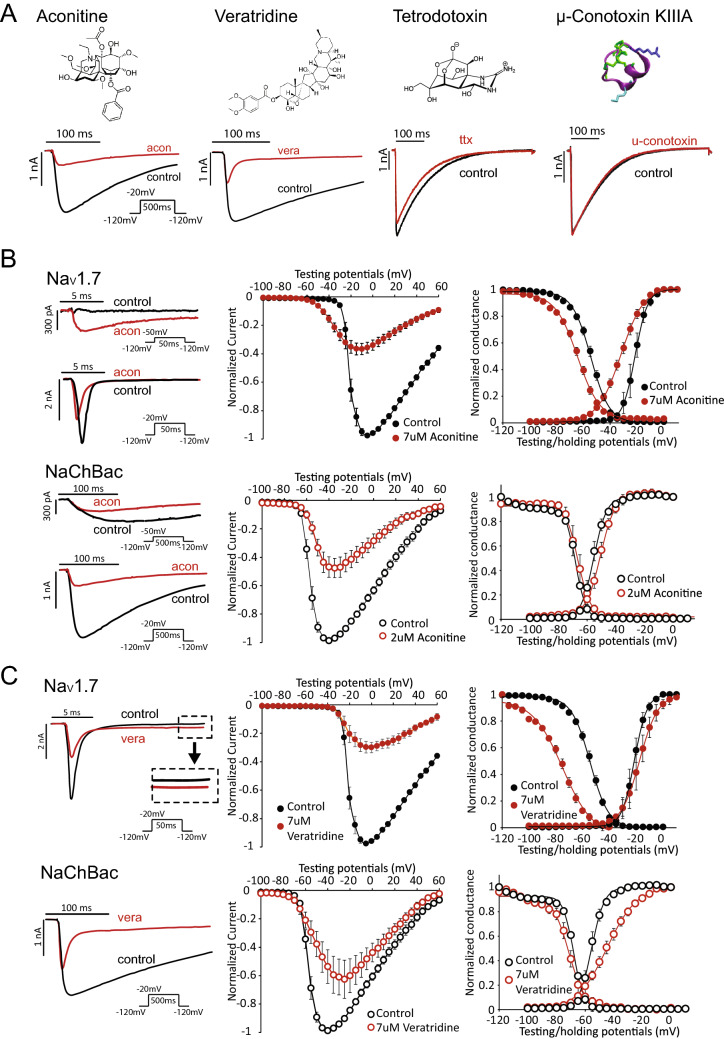
Voltage-gated Na (Na) channels regulate homeostasis in bacteria and control membrane electrical excitability in mammals. Compared to their mammalian counterparts, bacterial Na channels possess a simpler, fourfold symmetric structure and have facilitated studies of the structural basis of channel gating. However, the pharmacology of bacterial Na remains largely unexplored. Here we systematically screened 39 Na modulators on a bacterial channel (NaChBac) and characterized a selection of compounds on NaChBac and a mammalian channel (human Na1.7). We found that while many compounds interact with both channels, they exhibit distinct functional effects. For example, the local anesthetics ambroxol and lidocaine block both Na1.7 and NaChBac but affect activation and inactivation of the two channels to different extents. The voltage-sensing domain targeting toxin BDS-I increases Na1.7 but decreases NaChBac peak currents. The pore binding toxins aconitine and veratridine block peak currents of Na1.7 and shift activation (aconitine) and inactivation (veratridine) respectively. In NaChBac, they block the peak current by binding to the pore residue F224. Nonetheless, aconitine has no effect on activation or inactivation, while veratridine only modulates activation of NaChBac. The conservation and divergence in the pharmacology of bacterial and mammalian Na channels provide insights into the molecular basis of channel gating and will facilitate organism-specific drug discovery.
电压门控钠离子通道(Na 通道)调节细菌的内稳态,并控制哺乳动物的细胞膜电兴奋性。与哺乳动物的 Na 通道相比,细菌 Na 通道具有更简单的、四重对称的结构,这促进了对通道门控结构基础的研究。然而,细菌 Na 的药理学在很大程度上仍未得到探索。在这里,我们系统地筛选了 39 种 Na 调节剂在细菌通道(NaChBac)上的作用,并在 NaChBac 和哺乳动物通道(人源 Na1.7)上对选定的化合物进行了表征。我们发现,尽管许多化合物与两种通道相互作用,但它们表现出不同的功能效应。例如,局部麻醉剂氨溴索和利多卡因均可阻断 Na1.7 和 NaChBac,但对两种通道的激活和失活的影响程度不同。靶向电压感应结构域的毒素 BDS-I 增加 Na1.7,但减少 NaChBac 的峰值电流。孔结合毒素乌头碱和藜芦碱阻断 Na1.7 的峰值电流,并分别改变其激活(乌头碱)和失活(藜芦碱)。在 NaChBac 中,它们通过与孔残基 F224 结合来阻断峰值电流。尽管如此,乌头碱对激活或失活没有影响,而藜芦碱仅调节 NaChBac 的激活。细菌和哺乳动物 Na 通道的药理学的保守性和差异性为通道门控的分子基础提供了深入了解,并将促进针对特定生物体的药物发现。