Tůma S, Izaguirre J K, Bondar M, Marques M M, Fernandes P, da Fonseca M M R, Cesário M T
iBB- Institute for Bioengineering and Biosciences, Bioengineering Department, Instituto Superior Técnico, Universidade de Lisboa, Portugal.
Neiker-Tecnalia, Basque Institute for Agricultural Research, Vitoria-Gasteiz, Spain.
Biotechnol Rep (Amst). 2020 Jun 16;27:e00491. doi: 10.1016/j.btre.2020.e00491. eCollection 2020 Sep.
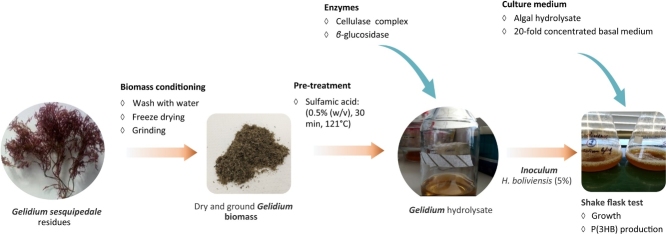
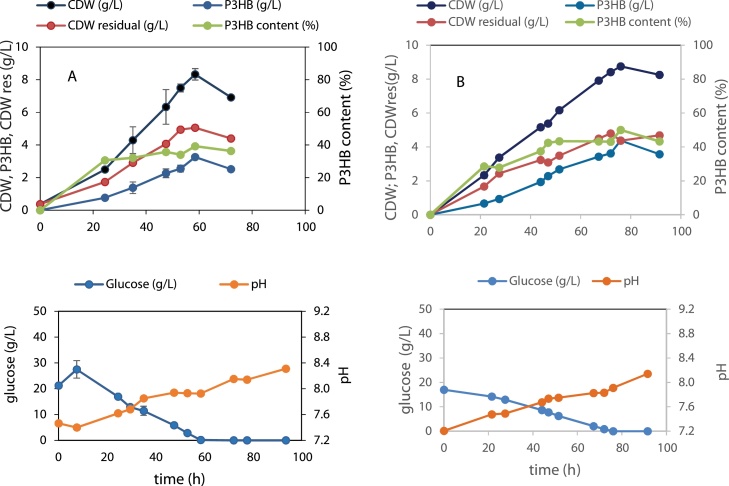
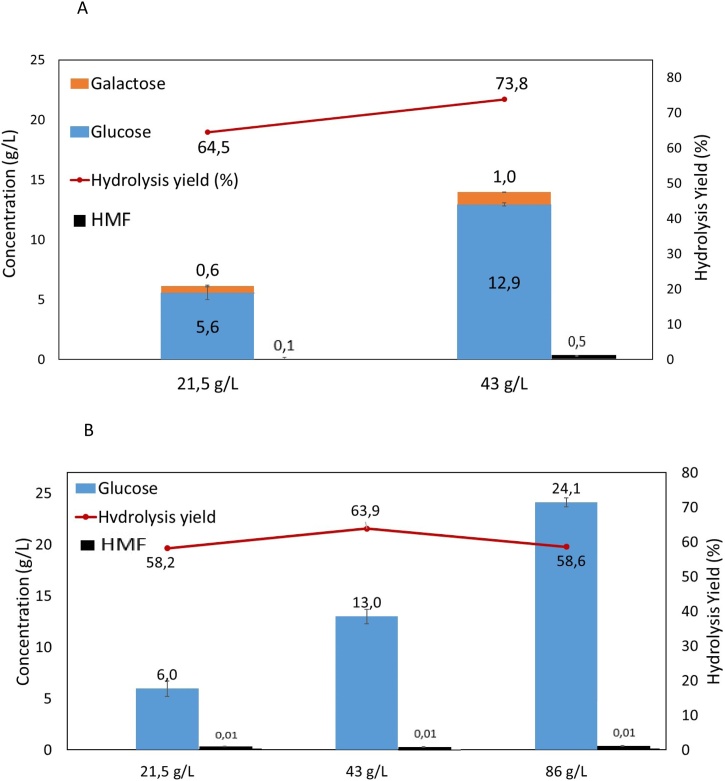
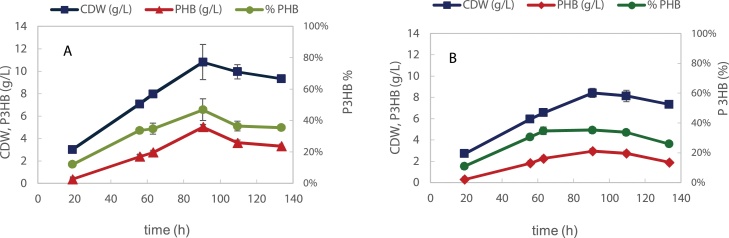
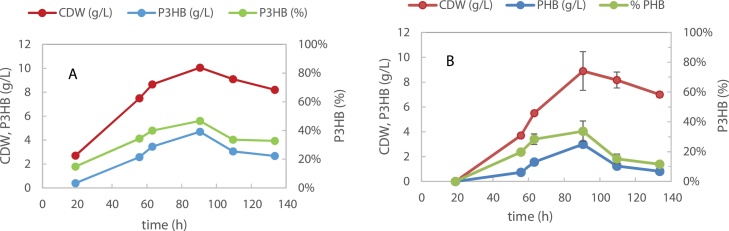
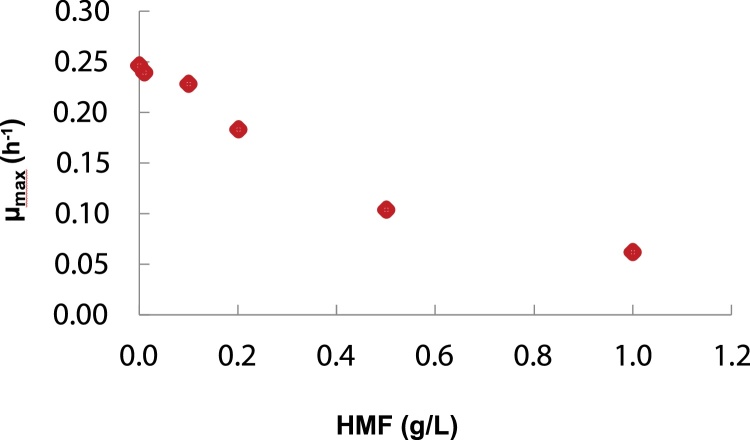
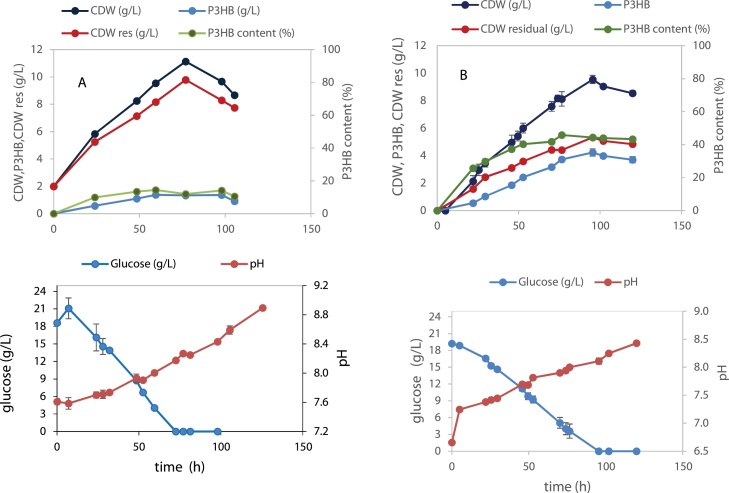
Agar extraction from and red seaweed species produces hundred thousand ton of carbohydrate-rich residues annually. waste biomass obtained after agar extraction, still contained 44.2 % w/w total carbohydrates (dry-weight basis). These residues were biologically up-graded to poly-3-hydroxybutyrate (P3HB) after saccharification of their carbohydrate fraction to simple sugars. A combined hydrolysis treatment using sulfamic acid followed by enzymatic hydrolysis with cellulases produced a glucose-rich hydrolysate with a negligible content of inhibitors. With this treatment a sugar yield of circa 30 % (g glucose/g biomass) was attained. The algal hydrolysates were assessed as carbon source for the production of P3HB by the halotolerant bacteria . A cell concentration of 8.3 g L containing 41 % (w/w) of polymer and a yield ( ) of 0.16 g/g were attained in shake flask assays. In this work, cellulose-rich seaweed waste was shown to be an upgradable, sustainable source of carbohydrates.
从[具体两种]红藻物种中提取琼脂每年会产生数十万吨富含碳水化合物的残渣。琼脂提取后获得的废弃生物质仍含有44.2%(重量/重量)的总碳水化合物(以干重计)。这些残渣在其碳水化合物部分糖化成为单糖后被生物转化为聚3-羟基丁酸酯(P3HB)。使用氨基磺酸进行联合水解处理,随后用纤维素酶进行酶水解,产生了富含葡萄糖且抑制剂含量可忽略不计的水解产物。通过这种处理,糖产率约为30%(克葡萄糖/克生物质)。藻类水解产物被评估为耐盐细菌生产P3HB的碳源。在摇瓶试验中,细胞浓度达到8.3克/升,聚合物含量为41%(重量/重量),产率([此处原文有缺失])为0.16克/克。在这项工作中,富含纤维素的海藻废料被证明是一种可升级的、可持续的碳水化合物来源。