Speck Stephanie, Wenke Cindy, Feßler Andrea T, Kacza Johannes, Geber Franziska, Scholtzek Anissa D, Hanke Dennis, Eichhorn Inga, Schwarz Stefan, Rosolowski Maciej, Truyen Uwe
Institute of Animal Hygiene and Veterinary Public Health, University of Leipzig, Leipzig, Germany.
Institute of Microbiology and Epizootics, Centre of Infection Medicine, Department of Veterinary Medicine, Freie Universität Berlin, Berlin, Germany.
Heliyon. 2020 Jun 21;6(6):e04070. doi: 10.1016/j.heliyon.2020.e04070. eCollection 2020 Jun.
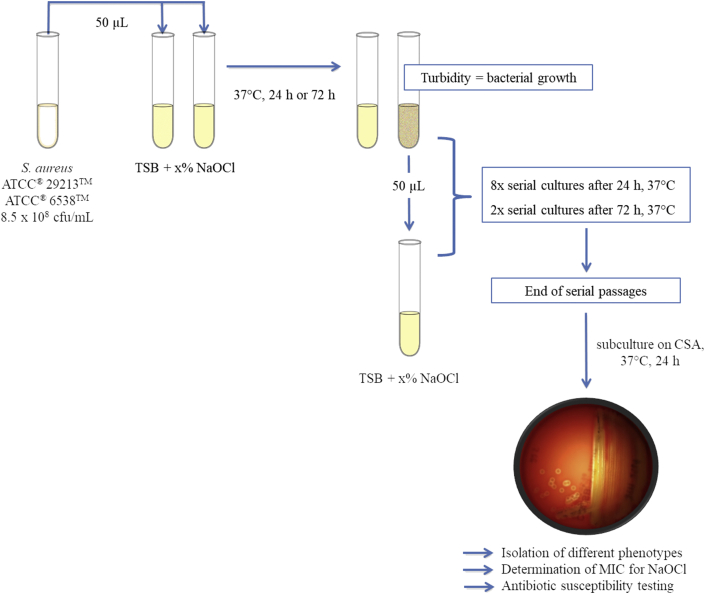
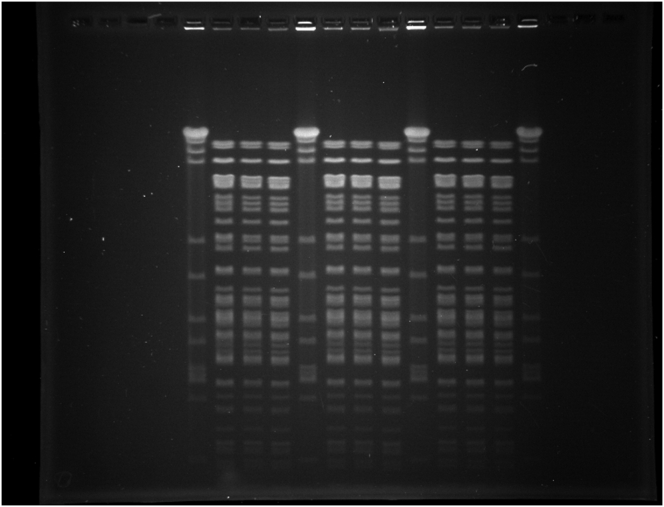
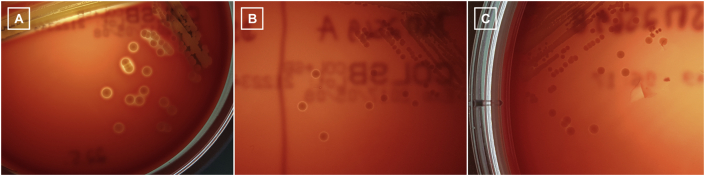
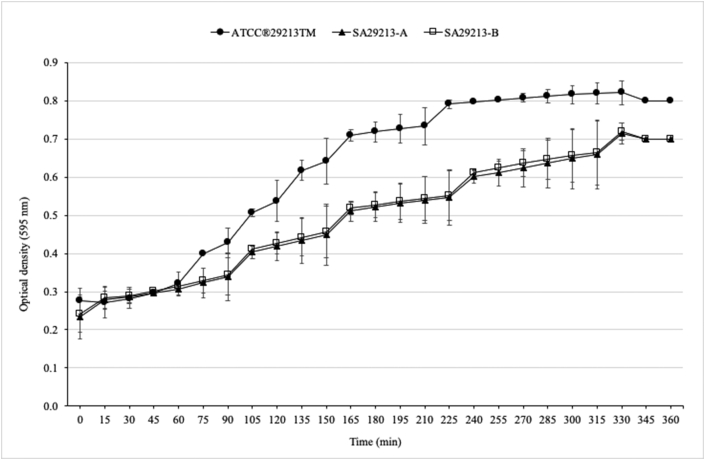
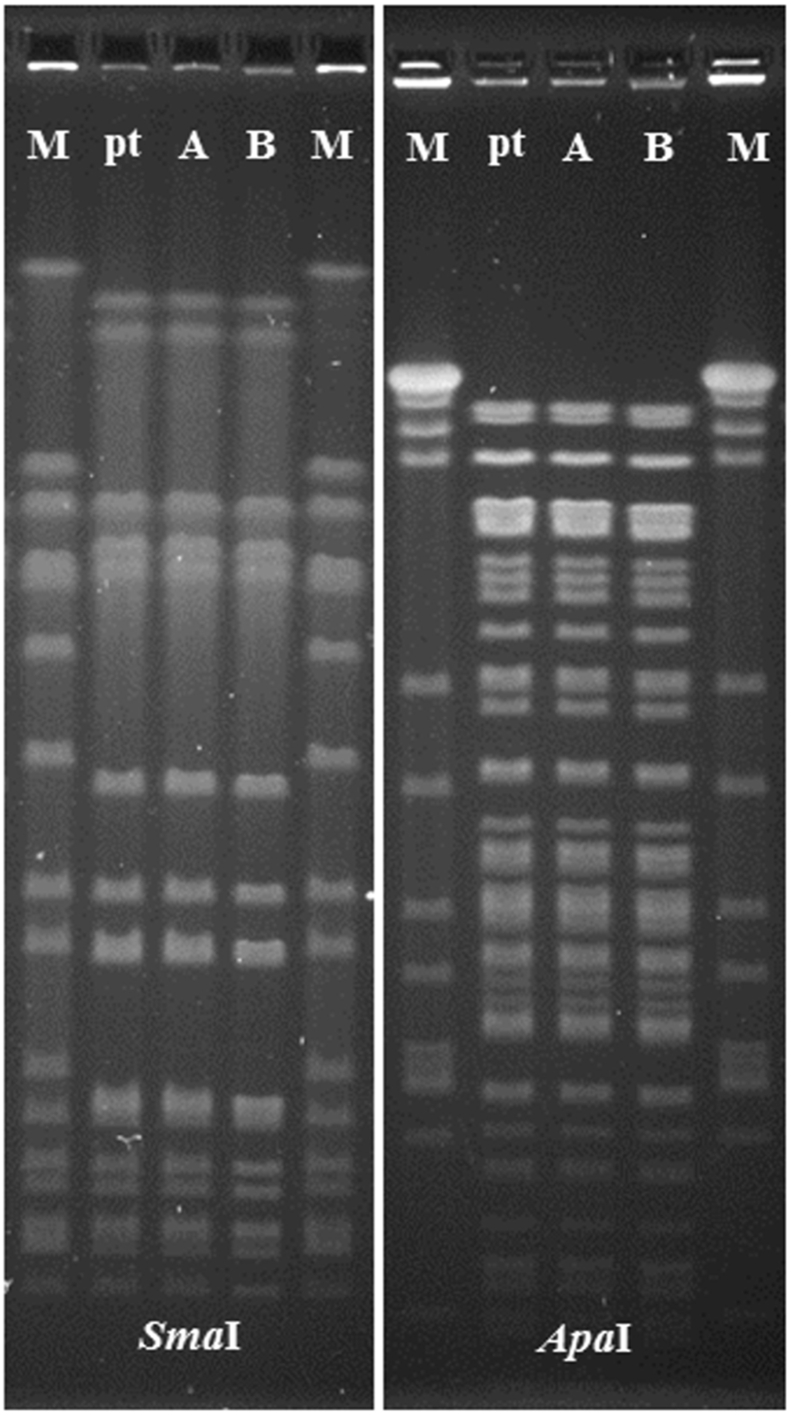
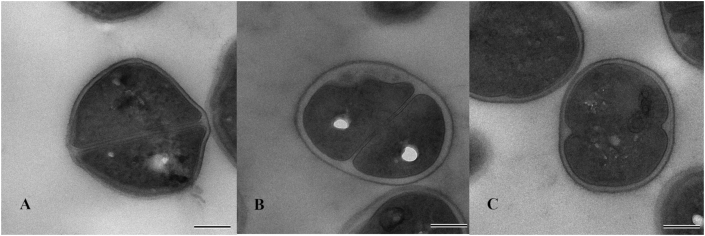
Surface disinfectants are regularly used in prophylactic and infection control measures. Concern has been raised whether residues of sub-inhibitory disinfectant concentrations may constitute a selective pressure and could contribute to the development of strains which are tolerant and/or resistant to biocides including antibiotics. The current study investigated whether (.) ATCC® 29213™ and ATCC® 6538™ would change their growth characteristics and antimicrobial susceptibility profiles after prolonged treatment with sub-inhibitory concentrations of sodium hypochlorite (NaOCl). NaOCl is a fast-acting disinfectant with a broad-spectrum activity, inexpensive and widely used in healthcare and the food production industry. Minimum inhibitory concentration (MIC) for NaOCl was determined by broth macrodilution according to the guidelines for disinfectant efficacy testing provided by the German Veterinary Medical Society. Serial passages after 24 h and 72 h, respectively, in defined sub-inhibitory concentrations of NaOCl resulted in a number of phenotypic variants. Two of these variants, derived from . ATCC® 29213™, showed elevated MICs of oxacillin and were considered as generated borderline oxacillin-resistant (BORSA). Transmission electron microscopy revealed a significantly thickened cell wall in these isolates, a phenomenon that has also been described for after low-level exposure to NaOCl. Whole genome sequencing revealed an early stop codon in the gene coding for the GdpP protein and thereby abolishing the function of this gene. GdpP represents a phosphodiesterase that regulates gene expression, and loss of function of the GdpP protein has been described in association with borderline oxacillin resistance. Our findings suggest that a mutation in the GdpP protein gene and morphological changes of the cell wall were induced by repeated exposure to sub-lethal NaOCl concentrations, and most likely accounted for a BORSA phenotype in two variants derived from ATCC® 29213™.
表面消毒剂常用于预防和感染控制措施。人们担心亚抑制浓度的消毒剂残留是否会构成一种选择压力,并可能促使对包括抗生素在内的杀菌剂产生耐受性和/或抗性的菌株出现。当前的研究调查了金黄色葡萄球菌ATCC® 29213™和白色念珠菌ATCC® 6538™在亚抑制浓度的次氯酸钠(NaOCl)长时间处理后,其生长特性和抗菌药敏谱是否会发生变化。NaOCl是一种速效消毒剂,具有广谱活性,价格低廉,广泛应用于医疗保健和食品生产行业。根据德国兽医医学会提供的消毒剂效力测试指南,通过肉汤稀释法测定NaOCl的最低抑菌浓度(MIC)。分别在确定的亚抑制浓度的NaOCl中传代培养24小时和72小时后,产生了许多表型变异株。其中两个源自金黄色葡萄球菌ATCC® 29213™的变异株,对苯唑西林的MIC升高,被认为是产生了临界苯唑西林耐药(BORSA)。透射电子显微镜显示这些分离株的细胞壁明显增厚,低水平暴露于NaOCl后的[某种菌]也有这种现象。全基因组测序显示,编码GdpP蛋白的基因中出现了一个提前终止密码子,从而使该基因的功能丧失。GdpP是一种调节基因表达的磷酸二酯酶,GdpP蛋白功能丧失与临界苯唑西林耐药有关。我们的研究结果表明,反复暴露于亚致死浓度的NaOCl会诱导GdpP蛋白基因突变和细胞壁形态变化,这很可能是源自金黄色葡萄球菌ATCC® 29213™的两个变异株出现BORSA表型的原因。