Eijkman Institute for Molecular Biology, Jakarta, Indonesia.
Department of Parasitology, Faculty of Medicine, Hasanuddin University, Makassar, Indonesia.
PLoS Negl Trop Dis. 2020 Jul 2;14(7):e0008385. doi: 10.1371/journal.pntd.0008385. eCollection 2020 Jul.
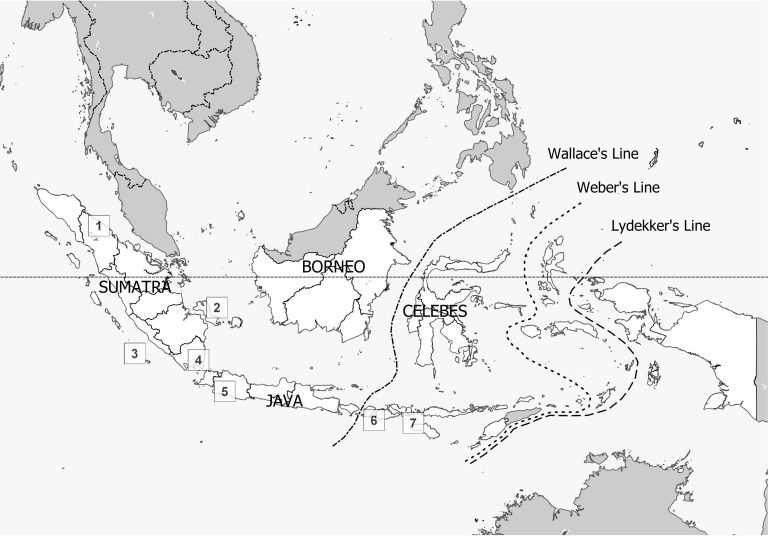
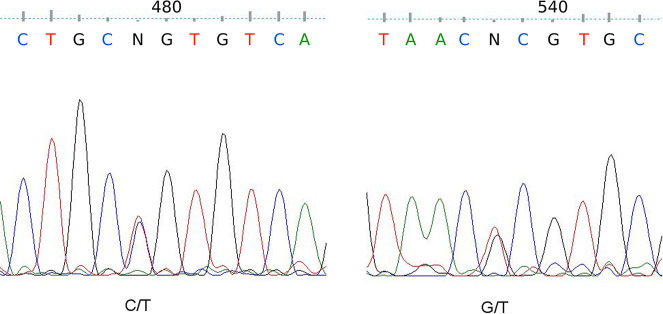
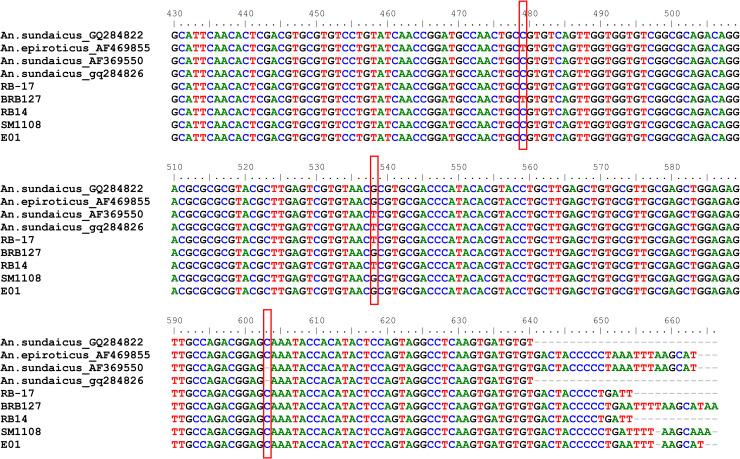
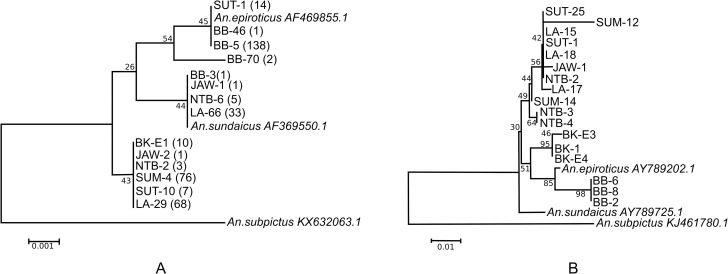
Anopheles sundaicus s.l. is an important malaria vector primarily found in coastal landscapes of western and central Indonesia. The species complex has a wide geographical distribution in South and Southeast Asia and exhibits ecological and behavioural variability over its range. Studies on understanding the distribution of different members in the complex and their bionomics related to malaria transmission might be important guiding more effective vector intervention strategies. Female An. sundaicus s.l. were collected from seven provinces, 12 locations in Indonesia representing Sumatra: North Sumatra, Bangka-Belitung, South Lampung, and Bengkulu; in Java: West Java; and the Lesser Sunda Islands: West Nusa Tenggara and East Nusa Tenggara provinces. Sequencing of ribosomal DNA ITS2 gene fragments and two mitochondrial DNA gene markers, COI and cytb, enabled molecular identification of morphologically indistinguishable members of the complex. Findings allowed inference on the distribution of the An. sundaicus s.l. present in Indonesia and further illustrate the phylogenetic relationships of An. epiroticus within the complex. A total of 370 An. sundaicus s.l specimens were analysed for the ITS2 fragment. The ITS2 sequence alignment revealed two consistent species-specific point mutations, a T>C transition at base 479 and a G>T transversion at base 538 that differentiated five haplotypes: TG, CG, TT, CT, and TY. The TG haplotype matched published An. epiroticus-indicative sequences from Thailand, Vietnam and peninsular Malaysia. The previously described insertion event (base 603) was observed in all identified specimens. Analysis of the COI and cytb genes revealed no consistent nucleotide variations that could definitively distinguish An. epiroticus from other members in the Sundaicus Complex. The findings indicate and support the existence of An. epiroticus in North Sumatra and Bangka-Belitung archipelago. Further studies are recommended to determine the full distributional extent of the Sundaicus complex in Indonesia and investigate the role of these species in malaria transmission.
按蚊库蚊亚种是一种重要的疟疾传播媒介,主要分布在印度尼西亚西部和中部的沿海地区。该物种复合体在南亚和东南亚地区分布广泛,在其分布范围内表现出生态和行为的可变性。研究了解复合体中不同成员的分布及其与疟疾传播相关的生物学特性,可能对指导更有效的媒介干预策略具有重要意义。从印度尼西亚 7 个省的 12 个地点采集了雌性按蚊库蚊亚种,这些地点代表了苏门答腊岛:北苏门答腊、邦加-勿里洞、南楠榜和占碑;爪哇岛:西爪哇;以及小巽他群岛:西努沙登加拉和东努沙登加拉省。核糖体 DNA ITS2 基因片段和两个线粒体 DNA 基因标记 COI 和 cytb 的测序使形态上无法区分的复合体成员得以进行分子鉴定。研究结果推断了印度尼西亚存在的按蚊库蚊亚种的分布情况,并进一步说明了复合体中按蚊伊蚊的系统发育关系。共分析了 370 只按蚊库蚊亚种 ITS2 片段。ITS2 序列比对显示出两个一致的种特异性点突变,即碱基 479 的 T>C 转换和碱基 538 的 G>T 颠换,这些突变区分了 5 种单倍型:TG、CG、TT、CT 和 TY。TG 单倍型与来自泰国、越南和马来半岛的已发表的按蚊伊蚊指示序列相匹配。在所有鉴定的标本中都观察到了先前描述的插入事件(碱基 603)。COI 和 cytb 基因分析未发现可明确区分按蚊伊蚊与库蚊复合体其他成员的一致核苷酸变异。研究结果表明并支持按蚊伊蚊存在于北苏门答腊和邦加勿里洞群岛。建议进一步研究以确定库蚊复合体在印度尼西亚的分布范围,并研究这些物种在疟疾传播中的作用。