U.S. Department of Agriculture, Agricultural Research Service, Southern Plains Agricultural Research Center, College Station, TX 77845, USA.
U.S. Department of Agriculture, Agricultural Research Service, Southern Plains Agricultural Research Center, College Station, TX 77845, USA.
Poult Sci. 2020 Jul;99(7):3428-3436. doi: 10.1016/j.psj.2020.03.031. Epub 2020 Apr 15.
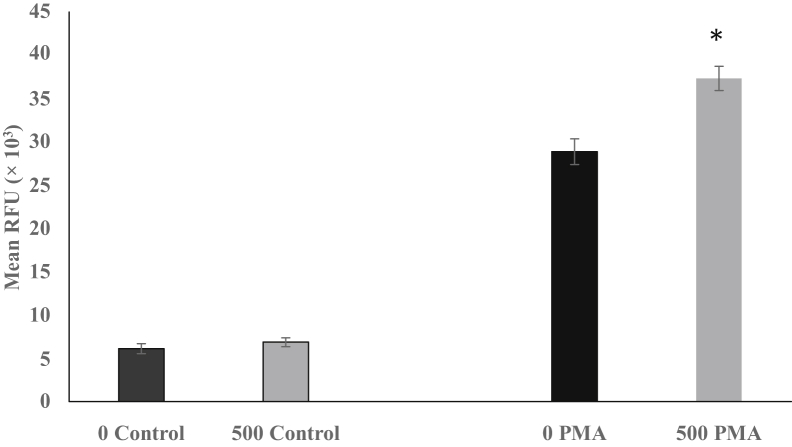
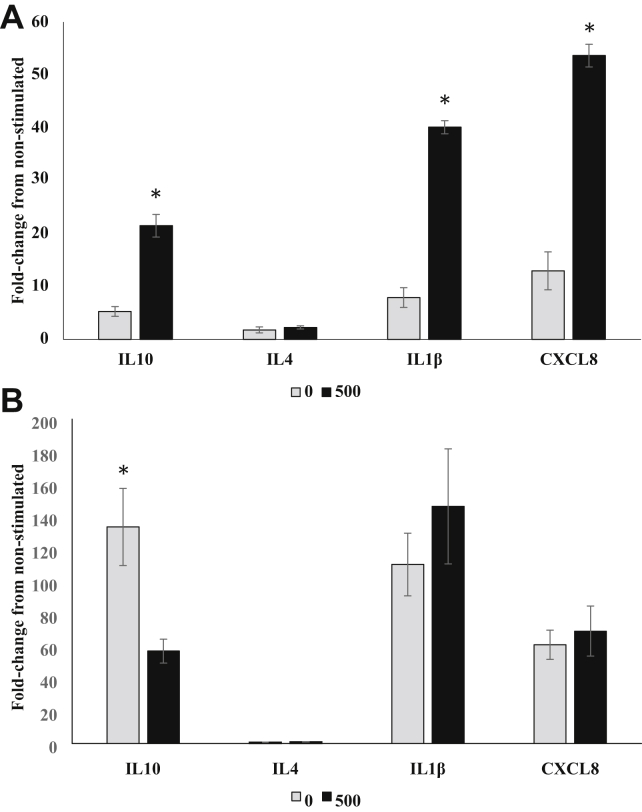
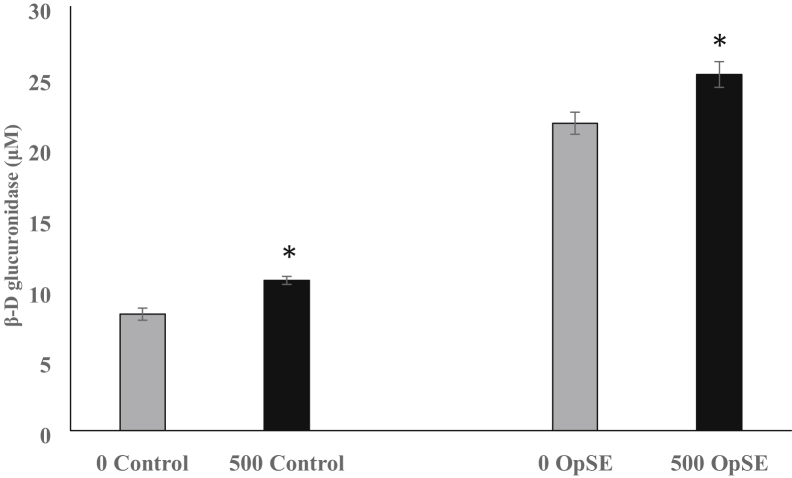
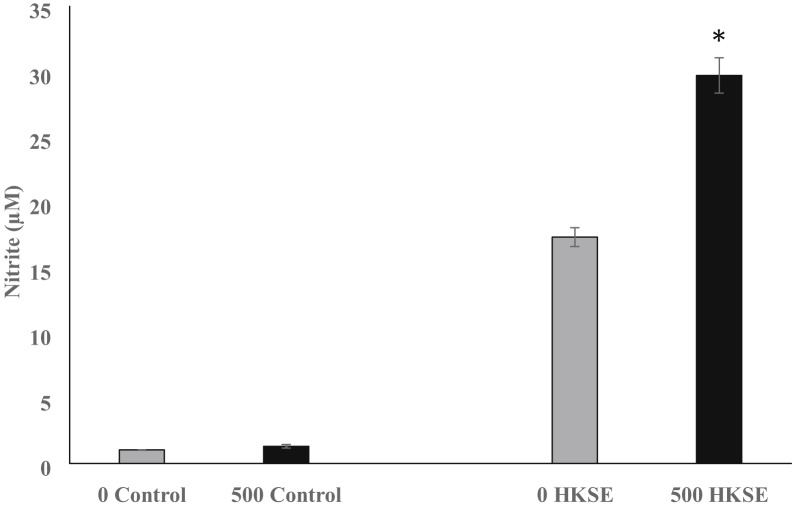
During the first week after hatch, young chicks are vulnerable to pathogens as the immune system is not fully developed. The objectives of this study were to determine if supplementing the starter diet with a microencapsulated feed additive containing citric and sorbic acids, thymol, and vanillin affects in vitro functional activity of peripheral blood leukocytes (PBLs). Day-old chicks (n = 800) were assigned to either a control diet (0 g/metric ton [MT]) or a diet supplemented with 500 g/MT of the microencapsulated additive. At 4 D of age, peripheral blood was collected (100 birds per treatment), and heterophils and monocytes isolated (n = 4). Heterophils were assayed for the ability to undergo degranulation and production of an oxidative burst response while nitric oxide production was measured in monocytes. Select cytokine and chemokine mRNA expression levels were also determined. Statistical analysis was performed using Student t test comparing the supplemented diet to the control (P ≤ 0.05). Heterophils isolated from chicks fed the microencapsulated citric and sorbic acids, thymol, and vanillin had higher (P ≤ 0.05) levels of degranulation and oxidative burst responses than those isolated from chicks on the control diet. Heterophils from the supplemented chicks also had greater (P ≤ 0.05) expression of IL10, IL1β, and CXCL8 mRNA than those from control-fed chicks. Similarly, nitric oxide production was significantly (P ≤ 0.05) higher in monocytes isolated from birds fed the supplement. The cytokine and chemokine profile in monocytes from the supplement-fed chicks showed a significant (P ≤ 0.05) drop in IL10 mRNA expression while IL1β, IL4, and CXCL8 were unchanged. In conclusion, 4 D of supplementation with a microencapsulated blend made up of citric and sorbic acids, thymol, and vanillin enhanced the in vitro PBL functions of degranulation, oxidative burst, and nitric oxide production compared with the control diet. Collectively, the data suggest feeding broiler chicks a diet supplemented with a microencapsulated blend of citric and sorbic acids, thymol, and vanillin may prime key immune cells making them more functionally efficient and acts as an immune-modulator to boost the inefficient and undeveloped immune system of young chicks.
在孵化后的第一周,小鸡的免疫系统尚未完全发育,容易受到病原体的侵害。本研究的目的是确定在起始日粮中添加含有柠檬酸和山梨酸、麝香草酚和香草醛的微胶囊饲料添加剂是否会影响外周血白细胞(PBL)的体外功能活性。将 1 日龄小鸡(n=800)分为对照组(0 克/吨[MT])或添加 500 克/MT 微胶囊添加剂的日粮组。在 4 日龄时,采集外周血(每组 100 只),分离嗜中性粒细胞和单核细胞(n=4)。测定嗜中性粒细胞脱颗粒和产生氧化爆发反应的能力,同时测定单核细胞中一氧化氮的产生。还测定了选择细胞因子和趋化因子的 mRNA 表达水平。使用学生 t 检验比较补充日粮与对照组(P≤0.05)进行统计分析。用柠檬酸和山梨酸、麝香草酚和香草醛包被的饲料喂养的雏鸡分离的嗜中性粒细胞的脱颗粒和氧化爆发反应水平高于对照组(P≤0.05)。补充日粮组的雏鸡分离的嗜中性粒细胞中 IL10、IL1β 和 CXCL8 mRNA 的表达也更高(P≤0.05)。同样,从补充饲料喂养的雏鸡分离的单核细胞中产生的一氧化氮也显著增加(P≤0.05)。补充饲料喂养的雏鸡分离的单核细胞中的细胞因子和趋化因子谱显示 IL10 mRNA 表达显著降低(P≤0.05),而 IL1β、IL4 和 CXCL8 不变。总之,与对照组日粮相比,4 天的补充微胶囊混合物(柠檬酸和山梨酸、麝香草酚和香草醛)增强了体外 PBL 的脱颗粒、氧化爆发和一氧化氮产生功能。数据表明,给肉鸡雏鸡饲喂添加柠檬酸和山梨酸、麝香草酚和香草醛的微胶囊混合物的日粮可能会使关键免疫细胞成熟,从而提高其功能效率,并作为免疫调节剂增强幼雏尚未发育成熟的免疫系统。