Santos Luiz Paulo Araújo, Assunção Leandro do Prado, Lima Patrícia de Souza, Tristão Gabriel Brum, Brock Matthias, Borges Clayton Luiz, Silva-Bailão Mirelle Garcia, Soares Célia Maria de Almeida, Bailão Alexandre Melo
Laboratório de Biologia Molecular, Instituto de Ciências Biológicas, Universidade Federal de Goiás, Goiânia, Brazil.
Universidade Estadual de Goiás, Itapuranga, Brazil.
IMA Fungus. 2020 May 5;11:9. doi: 10.1186/s43008-020-00029-9. eCollection 2020.
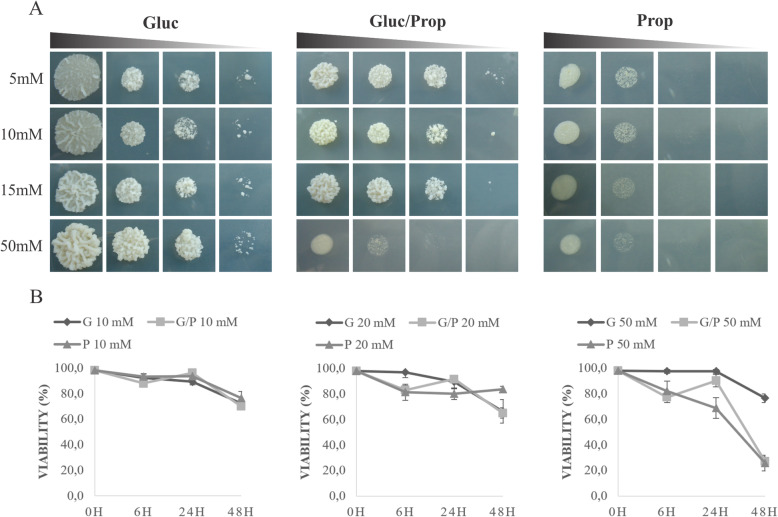
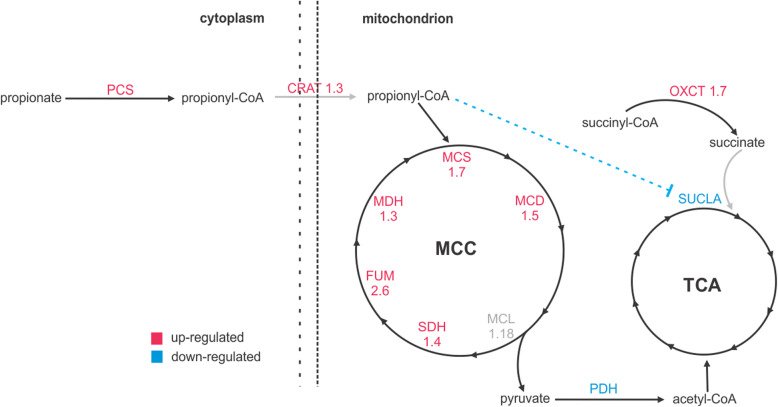
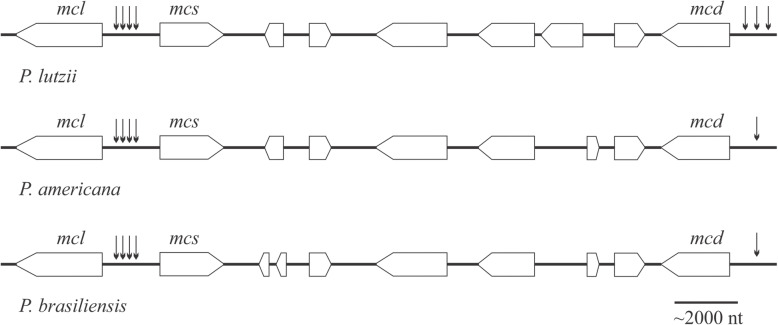
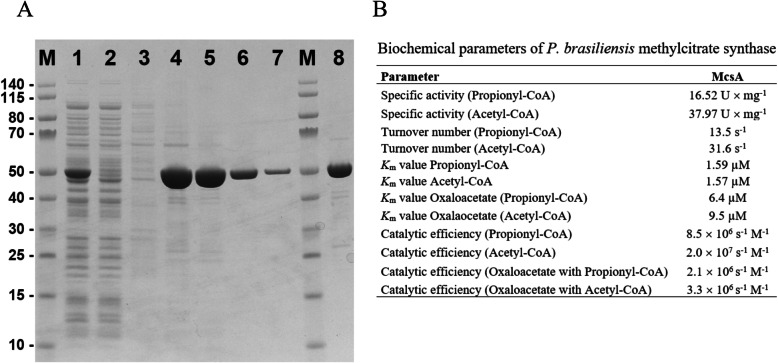
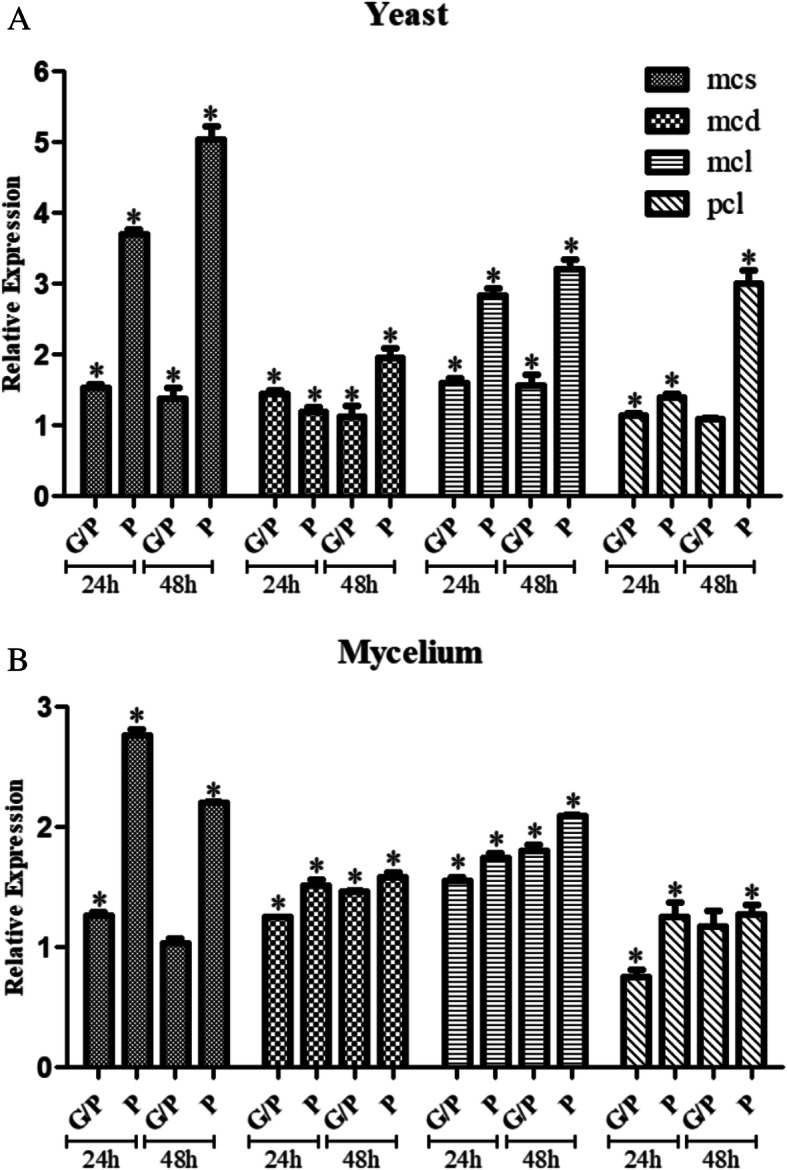
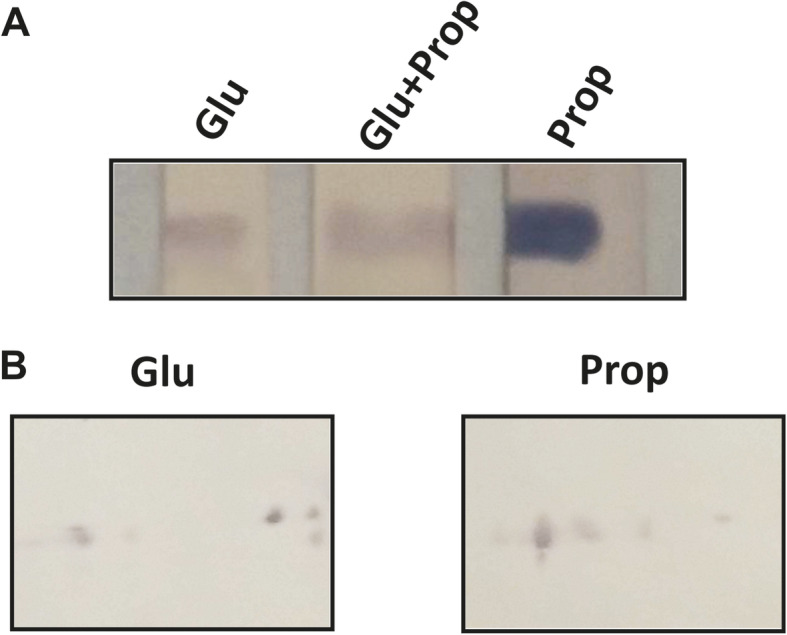
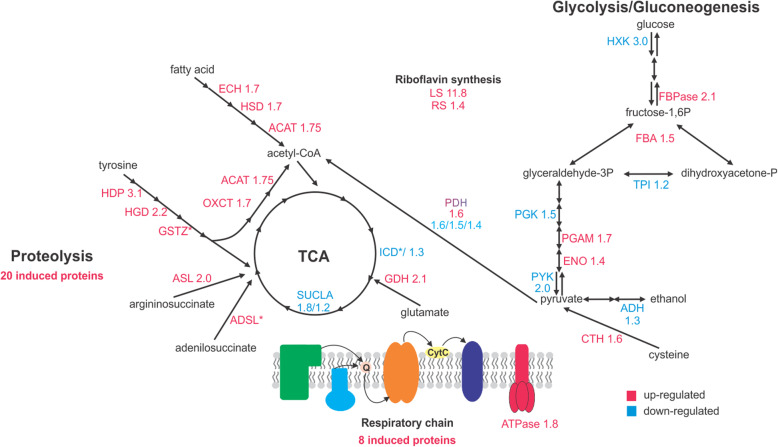
Fungi of the complex spp. are thermodimorphic organisms that cause Paracoccidioidomycosis, one of the most prevalent mycoses in Latin America. These fungi present metabolic mechanisms that contribute to the fungal survival in host tissues. activates glycolysis and fermentation while inactivates aerobic metabolism in iron deprivation, a condition found during infection. In lungs face a glucose poor environment and relies on the beta-oxidation to support energy requirement. During mycelium to yeast transition cells up-regulate transcripts related to lipid metabolism and cell wall remodeling in order to cope with the host body temperature. spp. cells also induce transcripts/enzymes of the methylcitrate cycle (MCC), a pathway responsible for propionyl-CoA metabolism. Propionyl-CoA is a toxic compound formed during the degradation of odd-chain fatty acids, branched chain amino acids and cholesterol. Therefore, fungi require a functional MCC for full virulence and the ability to metabolize propionyl-CoA is related to the virulence traits in spp. On this way we sought to characterize the propionate metabolism in spp. The data collected showed that grows in propionate and activates the MCC by accumulating transcripts and proteins of methylcitrate synthase (MCS), methylcitrate dehydratase (MCD) and methylisocitrate lyase (MCL). Biochemical characterization of MCS showed that the enzyme is regulated by phosphorylation, an event not yet described. Proteomic analyses further indicate that yeast cells degrades lipids and amino acids to support the carbon requirement for propionate metabolism. The induction of a putative propionate kinase suggests that fungal cells use propionyl-phosphate as an intermediate in the production of toxic propionyl-CoA. Concluding, the metabolism of propionate in is under regulation at transcriptional and phosphorylation levels and that survival on this carbon source requires additional mechanisms other than activation of MCC.
复杂 spp. 的真菌是引起副球孢子菌病的双相型生物体,副球孢子菌病是拉丁美洲最常见的真菌病之一。这些真菌呈现出有助于在宿主组织中存活的代谢机制。在缺铁(感染期间出现的一种情况)时, 激活糖酵解和发酵,同时使有氧代谢失活。在肺部, 面临葡萄糖匮乏的环境,并依赖β-氧化来满足能量需求。在菌丝体向酵母转变过程中, 细胞上调与脂质代谢和细胞壁重塑相关的转录本,以应对宿主体温。 spp. 细胞还诱导甲基柠檬酸循环(MCC)的转录本/酶,MCC是负责丙酰辅酶A代谢的途径。丙酰辅酶A是在奇数链脂肪酸、支链氨基酸和胆固醇降解过程中形成的有毒化合物。因此,真菌需要功能性的MCC才能具有完全毒力,并且丙酰辅酶A的代谢能力与 spp. 的毒力特征相关。通过这种方式,我们试图表征 spp. 中的丙酸盐代谢。收集到的数据表明, 在丙酸盐中生长,并通过积累甲基柠檬酸合酶(MCS)、甲基柠檬酸脱水酶(MCD)和甲基异柠檬酸裂合酶(MCL)的转录本和蛋白质来激活MCC。MCS的生化特性表明该酶受磷酸化调节,这一事件尚未见报道。蛋白质组学分析进一步表明, 酵母细胞降解脂质和氨基酸以支持丙酸盐代谢的碳需求。一种假定的丙酸盐激酶的诱导表明,真菌细胞利用丙酰磷酸作为产生有毒丙酰辅酶A的中间体。总之, 中丙酸盐的代谢在转录和磷酸化水平受到调节,并且在这种碳源上的存活需要除激活MCC之外的其他机制。