• 文献检索
  • 文档翻译
  • 深度研究
  • 学术资讯
  • Suppr Zotero 插件Zotero 插件
  • 邀请有礼
  • 套餐&价格
  • 历史记录
应用&插件
Suppr Zotero 插件Zotero 插件浏览器插件Mac 客户端Windows 客户端微信小程序
定价
高级版会员购买积分包购买API积分包
服务
文献检索文档翻译深度研究API 文档MCP 服务
关于我们
关于 Suppr公司介绍联系我们用户协议隐私条款
关注我们

Suppr 超能文献

核心技术专利:CN118964589B侵权必究
粤ICP备2023148730 号-1Suppr @ 2026

文献检索

告别复杂PubMed语法,用中文像聊天一样搜索,搜遍4000万医学文献。AI智能推荐,让科研检索更轻松。

立即免费搜索

文件翻译

保留排版,准确专业,支持PDF/Word/PPT等文件格式,支持 12+语言互译。

免费翻译文档

深度研究

AI帮你快速写综述,25分钟生成高质量综述,智能提取关键信息,辅助科研写作。

立即免费体验

猴子中类似人类的母亲左侧怀抱偏好受社会压力影响而改变。

Human-like maternal left-cradling bias in monkeys is altered by social pressure.

机构信息

Laboratoire de Psychologie Cognitive UMR7290, CNRS, Aix-Marseille Université, 3 Place Victor Hugo, 13331, Marseille Cedex 3, France.

Station de Primatologie, CNRS, Rousset-sur-Arc, France.

出版信息

Sci Rep. 2020 Jul 3;10(1):11036. doi: 10.1038/s41598-020-68020-3.

DOI:10.1038/s41598-020-68020-3
PMID:32620801
原文链接:https://pmc.ncbi.nlm.nih.gov/articles/PMC7335100/
Abstract

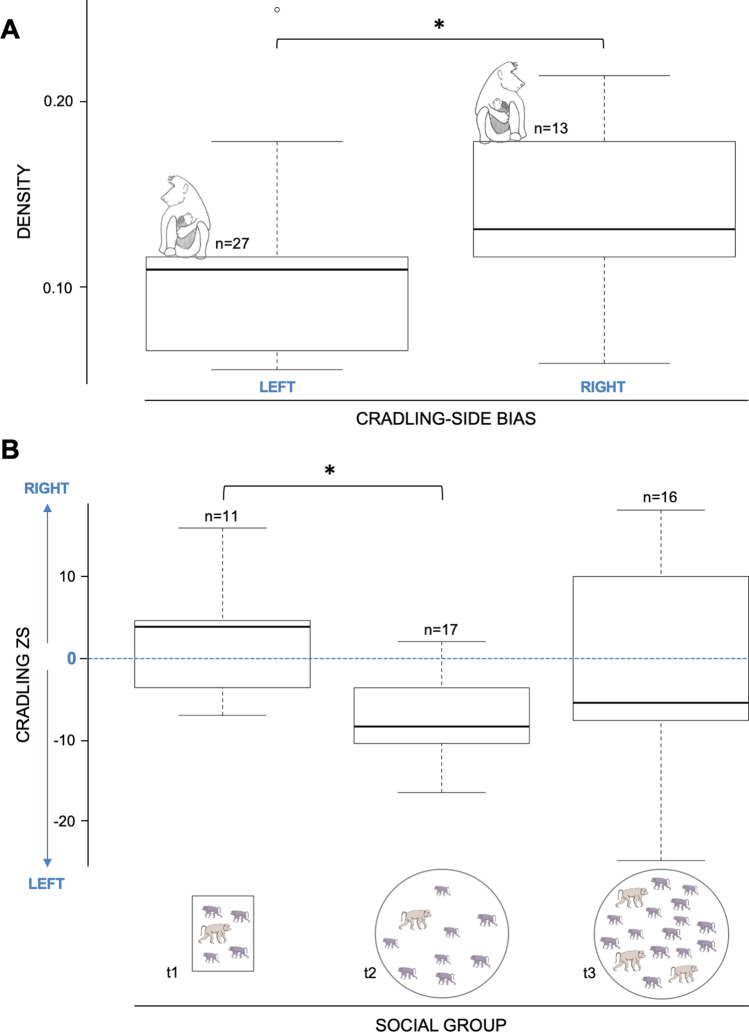
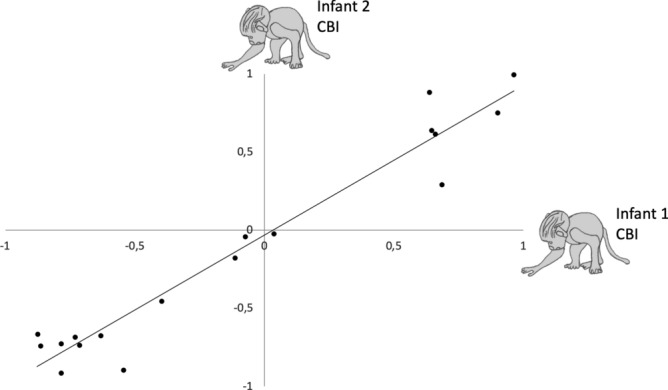
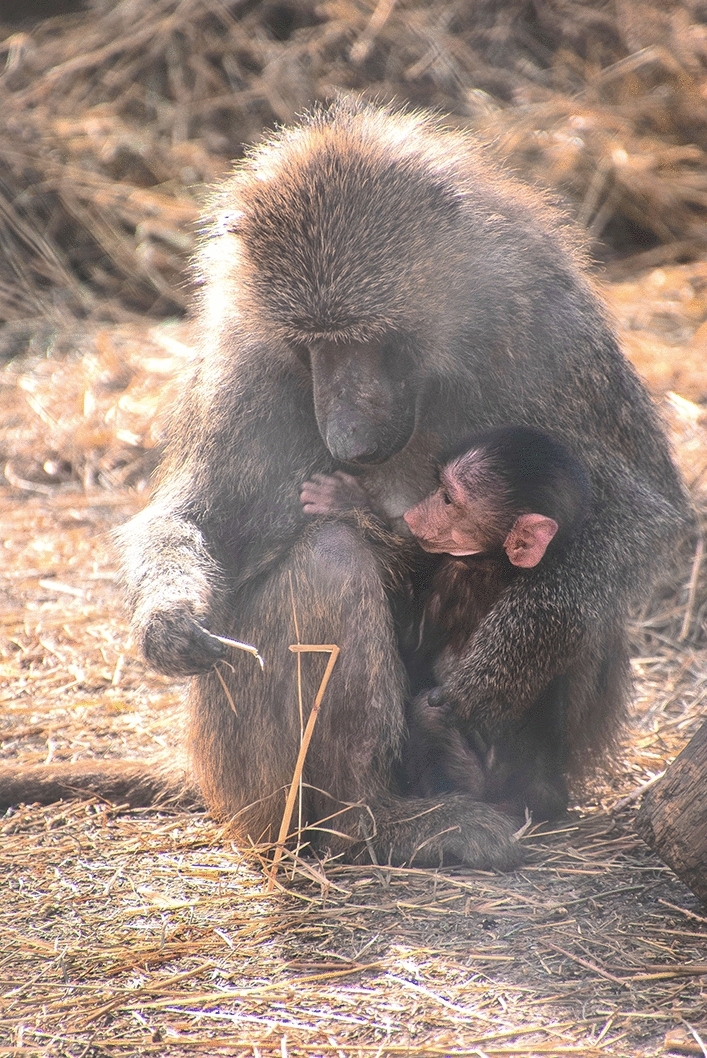
About 66-72% of human mothers cradle their infants on their left side. Given that left-cradling exposes the baby's face to the mother's left visual field (i.e., mainly projected to her right hemisphere) and is altered by emotional states such as stress, maternal left-cradling was interpreted as reflecting right-hemispheric dominance for emotional processing. Whether this phenomenon is unique to human evolution is still in debate. In the present study we followed 44 olive baboon (Papio anubis) mothers and their infants in different social groups. We found that a maternal cradling bias exists and is predominantly towards the left in a similar proportion as in humans, but shifts toward a right bias in mothers living in high density groups. The sensitivity of left-cradling to social pressure highlights its potential links with the mother's stress as reported in humans. Our finding clearly illustrates the phylogenetic continuity between humans and Old-World monkeys concerning this lateralization and its potential links with hemispheric specialization for emotions, inherited from a common ancestor 25-35 million years ago.

摘要

大约 66-72%的人类母亲会将婴儿放在左侧怀抱。鉴于左侧怀抱会使婴儿的脸朝向母亲的左视野(即主要投射到她的右半球),并且会受到情绪状态(如压力)的影响,因此母亲的左侧怀抱被解释为反映了右半球在情绪处理方面的优势。这种现象是否是人类进化所特有的,目前仍存在争议。在本研究中,我们跟踪了 44 只橄榄狒狒(Papio anubis)母亲及其在不同社会群体中的婴儿。我们发现,存在一种母亲怀抱的偏向,而且与人类相似,主要偏向左侧,但在生活在高密度群体中的母亲中,偏向会向右侧转移。左侧怀抱对社会压力的敏感性突出了其与人类报告的母亲压力之间的潜在联系。我们的发现清楚地说明了人类和旧世界猴子在这种偏侧性及其与情绪的半球专门化之间的系统发育连续性,这种专门化是从 2500 万到 3500 万年前的共同祖先那里遗传下来的。
https://cdn.ncbi.nlm.nih.gov/pmc/blobs/841c/7335100/bdd53979054c/41598_2020_68020_Fig3_HTML.jpg
https://cdn.ncbi.nlm.nih.gov/pmc/blobs/841c/7335100/abc2f034a7e5/41598_2020_68020_Fig1_HTML.jpg
https://cdn.ncbi.nlm.nih.gov/pmc/blobs/841c/7335100/1e8f3155b736/41598_2020_68020_Fig2_HTML.jpg
https://cdn.ncbi.nlm.nih.gov/pmc/blobs/841c/7335100/bdd53979054c/41598_2020_68020_Fig3_HTML.jpg
https://cdn.ncbi.nlm.nih.gov/pmc/blobs/841c/7335100/abc2f034a7e5/41598_2020_68020_Fig1_HTML.jpg
https://cdn.ncbi.nlm.nih.gov/pmc/blobs/841c/7335100/1e8f3155b736/41598_2020_68020_Fig2_HTML.jpg
https://cdn.ncbi.nlm.nih.gov/pmc/blobs/841c/7335100/bdd53979054c/41598_2020_68020_Fig3_HTML.jpg

相似文献

1
Human-like maternal left-cradling bias in monkeys is altered by social pressure.猴子中类似人类的母亲左侧怀抱偏好受社会压力影响而改变。
Sci Rep. 2020 Jul 3;10(1):11036. doi: 10.1038/s41598-020-68020-3.
2
Cradling side preference is associated with lateralized processing of baby facial expressions in females.抱持侧偏好与女性对婴儿面部表情的偏侧化处理有关。
Brain Cogn. 2009 Jun;70(1):67-72. doi: 10.1016/j.bandc.2008.12.010. Epub 2009 Feb 14.
3
Neuropsychological and neuropsychiatric perspectives on maternal cradling preferences.关于母亲抱婴偏好的神经心理学和神经精神病学观点。
Epidemiol Psichiatr Soc. 2002 Jul-Sep;11(3):170-6. doi: 10.1017/s1121189x00005686.
4
When left means right: an explanation of the left cradling bias in terms of right hemisphere specializations.当左即右:从右半球特化角度解释左抱偏好。
Dev Sci. 2004 Feb;7(1):19-24. doi: 10.1111/j.1467-7687.2004.00318.x.
5
The left cradling bias: An evolutionary facilitator of social cognition?左抱偏爱:社会认知的进化促进因素?
Cortex. 2019 Sep;118:116-131. doi: 10.1016/j.cortex.2018.05.011. Epub 2018 May 21.
6
Maternal cradling bias: A marker of the nature of the mother-infant relationship.母婴抱持偏好:母婴关系本质的一种标志。
Infant Behav Dev. 2022 Feb;66:101680. doi: 10.1016/j.infbeh.2021.101680. Epub 2021 Dec 3.
7
Maternal cradling bias in baboons: The first environmental factor affecting early infant handedness development?狒狒母婴环抱偏向:影响早期婴儿利手发展的第一个环境因素?
Dev Sci. 2022 Jan;25(1):e13179. doi: 10.1111/desc.13179. Epub 2021 Oct 18.
8
Facing each other: mammal mothers and infants prefer the position favouring right hemisphere processing.面对面:哺乳动物母亲和婴儿更喜欢有利于右半球处理的姿势。
Biol Lett. 2018 Jan;14(1). doi: 10.1098/rsbl.2017.0707.
9
Handedness as a major determinant of lateral bias in human functional cradling.用手习惯是人类功能性抱持中侧偏优势的主要决定因素。
Infancy. 2024 Mar-Apr;29(2):84-94. doi: 10.1111/infa.12572. Epub 2023 Dec 15.
10
Left side cradling of an appetitive doll is associated with higher heart rate variability and attenuated startle in nulliparous females.对未生育女性而言,将一个诱导性玩偶抱于左侧与较高的心率变异性及减弱的惊吓反应相关。
Int J Psychophysiol. 2009 Oct;74(1):53-7. doi: 10.1016/j.ijpsycho.2009.07.002. Epub 2009 Jul 17.

引用本文的文献

1
Effect of the habitat and tusks on trunk grasping techniques in African savannah elephants.栖息地和象牙对非洲草原象象鼻抓握技巧的影响。
Ecol Evol. 2024 Apr 19;14(4):e11317. doi: 10.1002/ece3.11317. eCollection 2024 Apr.
2
A 108-h total sleep deprivation did not impair fur seal performance in delayed matching to sample task.108 小时的完全睡眠剥夺并未损害海豹在延迟匹配样本任务中的表现。
J Comp Physiol B. 2024 Jun;194(3):315-333. doi: 10.1007/s00360-023-01511-7. Epub 2023 Aug 18.
3
Developmental cascades as a framework for primate handedness.

本文引用的文献

1
Received Cradling Bias During the First Year of Life: A Retrospective Study on Children With Typical and Atypical Development.生命第一年的抱持偏见:一项关于典型与非典型发育儿童的回顾性研究
Front Psychiatry. 2020 Feb 27;11:91. doi: 10.3389/fpsyt.2020.00091. eCollection 2020.
2
The association between received maternal cradling and neurodevelopment: Is left better?接受母亲拥抱与神经发育的关系:左侧更好吗?
Med Hypotheses. 2020 Jan;134:109442. doi: 10.1016/j.mehy.2019.109442. Epub 2019 Oct 18.
3
Handedness and sex effects on lateral biases in human cradling: Three meta-analyses.
作为灵长类动物利手框架的发育级联
Front Behav Neurosci. 2022 Nov 7;16:1063348. doi: 10.3389/fnbeh.2022.1063348. eCollection 2022.
4
Evolution and function of neurocognitive systems in non-human animals.非人类动物的神经认知系统的进化与功能。
Sci Rep. 2021 Dec 8;11(1):23487. doi: 10.1038/s41598-021-02736-8.
5
Human Lateralization, Maternal Effects and Neurodevelopmental Disorders.人类大脑偏侧化、母体效应与神经发育障碍
Front Behav Neurosci. 2021 Mar 22;15:668520. doi: 10.3389/fnbeh.2021.668520. eCollection 2021.
6
The Role of Ethnic Prejudice in the Modulation of Cradling Lateralization.种族偏见在调节抱持侧化中的作用。
J Nonverbal Behav. 2021;45(2):187-205. doi: 10.1007/s10919-020-00346-y. Epub 2020 Oct 27.
利手性和性别对人类抱持行为中偏侧性的影响:三项荟萃分析。
Neurosci Biobehav Rev. 2019 Sep;104:30-42. doi: 10.1016/j.neubiorev.2019.06.035. Epub 2019 Jun 26.
4
The left-cradling bias and its relationship with empathy and depression.左抱偏爱及其与同理心和抑郁的关系。
Sci Rep. 2019 Apr 16;9(1):6141. doi: 10.1038/s41598-019-42539-6.
5
Emotions and the Right Hemisphere: Can New Data Clarify Old Models?情绪与右半球:新数据能否澄清旧模型?
Neuroscientist. 2019 Jun;25(3):258-270. doi: 10.1177/1073858418785342. Epub 2018 Jul 9.
6
The left cradling bias: An evolutionary facilitator of social cognition?左抱偏爱:社会认知的进化促进因素?
Cortex. 2019 Sep;118:116-131. doi: 10.1016/j.cortex.2018.05.011. Epub 2018 May 21.
7
Contrasting hemispheric asymmetries for emotional processing from event-related potentials and behavioral responses.从事件相关电位和行为反应看情绪加工的半球性不对称。
Neuropsychology. 2018 Mar;32(3):317-328. doi: 10.1037/neu0000443. Epub 2018 Feb 22.
8
Lateralization of infant holding by mothers: A longitudinal evaluation of variations over the first 12 weeks.母亲怀抱婴儿的偏向性:对出生后前12周变化的纵向评估。
Laterality. 2016;21(1):12-33. doi: 10.1080/1357650X.2015.1059434. Epub 2015 Aug 28.
9
An examination of the leftward cradling bias among typically developing adults high on autistic traits.对自闭症特质得分较高的典型发育成年人中向左怀抱偏好的一项研究。
Laterality. 2015;20(6):711-22. doi: 10.1080/1357650X.2015.1046881. Epub 2015 Jun 29.
10
Investigating the role of social-affective attachment processes in cradling bias: the absence of cradling bias in children with Autism Spectrum Disorders.探究社会情感依恋过程在抱持偏好中的作用:自闭症谱系障碍儿童不存在抱持偏好。
Laterality. 2015;20(2):154-70. doi: 10.1080/1357650X.2014.948449. Epub 2014 Aug 18.