Jeger Michael, Bragard Claude, Caffier David, Candresse Thierry, Chatzivassiliou Elisavet, Dehnen-Schmutz Katharina, Gilioli Gianni, Gregoire Jean-Claude, Anton Josep, Miret Jaques, MacLeod Alan, Navajas Navarro Maria, Niere Björn, Parnell Stephen, Potting Roel, Rafoss Trond, Urek Gregor, Van Bruggen Ariena, Van der Werf Wopke, West Jonathan, Winter Stephan, Gonzalez-Dominguez Elisa, Vicent Antonio, Vloutoglou Irene, Bottex Bernard, Rossi Vittorio
EFSA J. 2017 Jul 21;15(7):e04883. doi: 10.2903/j.efsa.2017.4883. eCollection 2017 Jul.
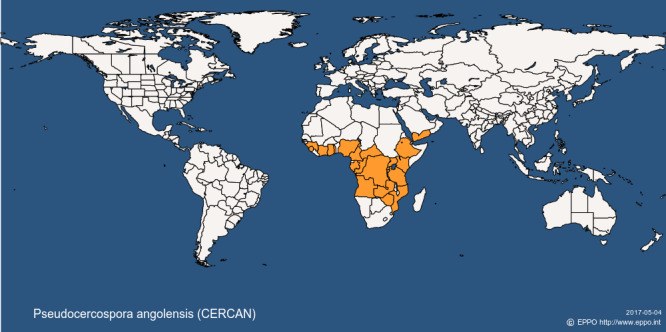
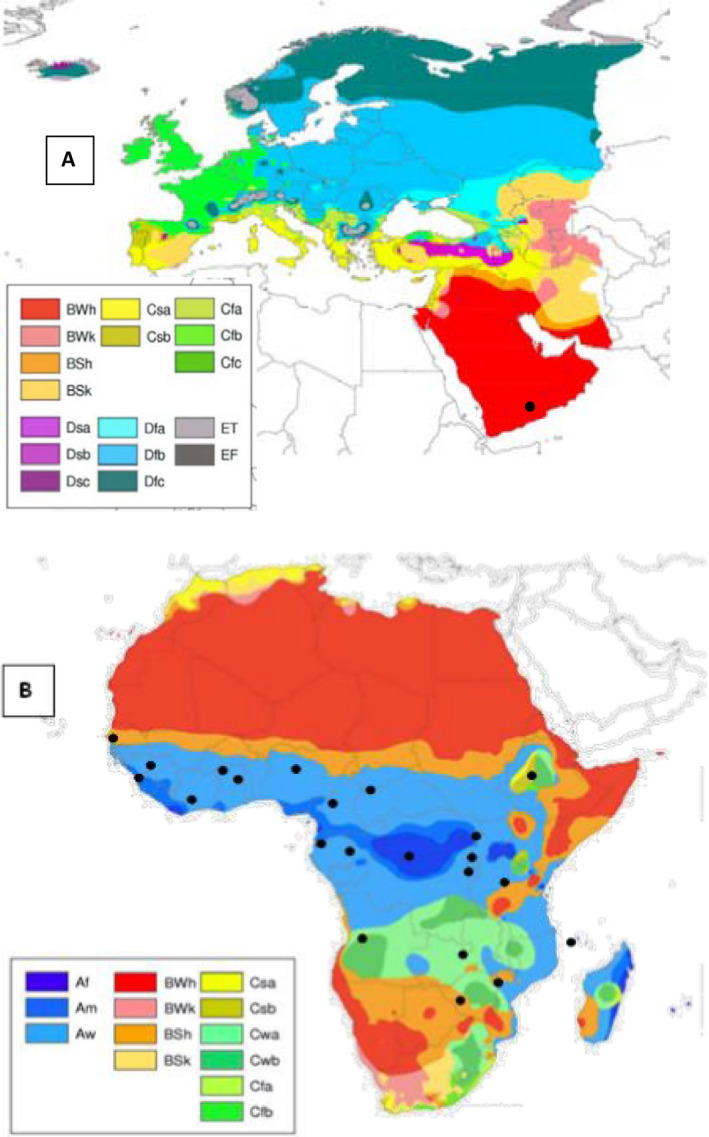
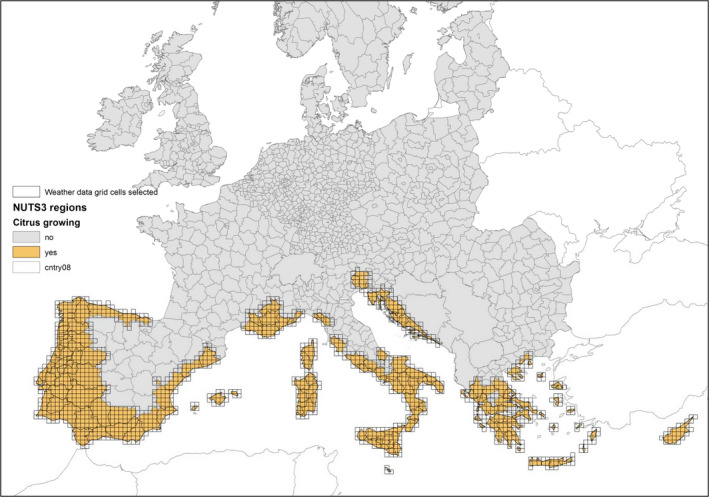
The Panel on Plant Health performed a pest categorisation of the fungus responsible for fruit and leaf spot of citrus, for all territories except of the Union territories defined in Article 1 point 3 of Regulation (EU) 2016/2031. is listed in Annex IIAI of Directive 2000/29/EC and is not known to be present in the EU. The pathogen, which has recently been reclassified as , is a well-defined, distinguishable fungal species affecting all cultivated spp. and plants. It is currently distributed in sub-Saharan Africa (altitudes 80-1,800 m) and Yemen. Although the epidemiology of is not well understood, infection is favoured by warm temperatures and humidity. The current distribution of the pathogen and climate matching suggests that it might not be well adapted to Mediterranean climates. However, the pathogen is also present in arid areas of Yemen and can infect young fruit with short wetness durations. Uncertainty exists on whether and at which extent the irrigation applied to EU citrus orchards can make the microclimate favourable for . There are no eco-climatic factors limiting the potential spread of the pathogen in the EU. Long-distance spread occurs by wind-disseminated conidia and movement of infected plants for planting and fruit. Short-distance spread occurs via water splash and/or wind-driven rain. In the infested areas, the disease causes premature abscission of young leaves and fruit resulting in yield losses up to 50-100%. Cultural practices and chemical measures applied in the infested areas reduce inoculum but they cannot eliminate the pathogen. All criteria assessed by EFSA for consideration as a potential Union quarantine pest are met. As is not known to occur in the EU, this criterion assessed by EFSA to consider it as a Union regulated non-quarantine pest is not met.
植物健康小组对导致柑橘果实和叶斑病的真菌进行了有害生物风险分类,涉及除欧盟法规(EU)2016/2031第1条第3点所定义的联盟领土以外的所有地区。该真菌列于2000/29/EC指令的附件IIAI中,目前在欧盟境内尚未发现。这种病原体最近被重新分类为[具体名称未给出],是一种明确可区分的真菌物种,会影响所有栽培的柑橘属植物和枳属植物。它目前分布在撒哈拉以南非洲(海拔80 - 1800米)和也门。尽管对该病原体的流行病学了解不足,但温暖的温度和湿度有利于感染。病原体目前的分布情况与气候匹配表明,它可能不太适应地中海气候。然而,该病原体也存在于也门的干旱地区,并且在较短的湿润期就能感染幼果。欧盟柑橘果园的灌溉是否以及在何种程度上会使小气候有利于该病原体的生长存在不确定性。不存在限制该病原体在欧盟境内潜在传播的生态气候因素。远距离传播通过风传播的分生孢子以及感染植物用于种植和果实运输的移动来实现。近距离传播通过水滴飞溅和/或风雨来实现。在受侵染地区,该病会导致幼叶和果实过早脱落,产量损失高达50 - 100%。在受侵染地区采用的栽培措施和化学措施可减少接种体,但无法消除病原体。欧洲食品安全局评估的作为潜在欧盟检疫性有害生物需考虑的所有标准均已满足。由于在欧盟境内尚未发现该病原体,因此欧洲食品安全局评估其作为欧盟管制的非检疫性有害生物的这一标准未得到满足。