Knutsen Helle Katrine, Alexander Jan, Barregård Lars, Bignami Margherita, Brüschweiler Beat, Ceccatelli Sandra, Cottrill Bruce, Dinovi Michael, Edler Lutz, Grasl-Kraupp Bettina, Hogstrand Christer, Hoogenboom Laurentius Ron, Nebbia Carlo Stefano, Oswald Isabelle P, Rose Martin, Roudot Alain-Claude, Schwerdtle Tanja, Vleminckx Christiane, Vollmer Günter, Wallace Heather, Fürst Peter, Baert Katleen, Cortiñas Abrahantes José, Dujardin Bruno, Ferrini Krizia, Petersen Annette
EFSA J. 2018 Feb 8;16(2):e05175. doi: 10.2903/j.efsa.2018.5175. eCollection 2018 Feb.
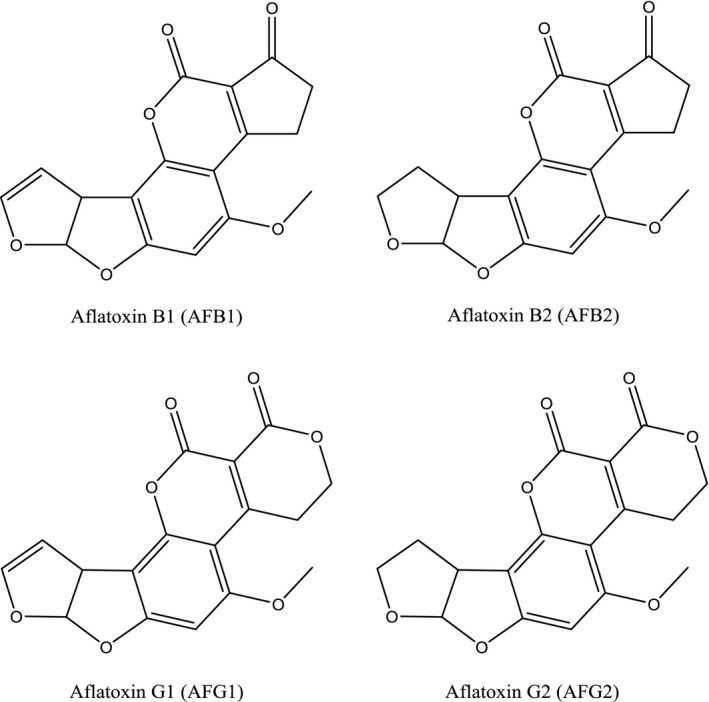
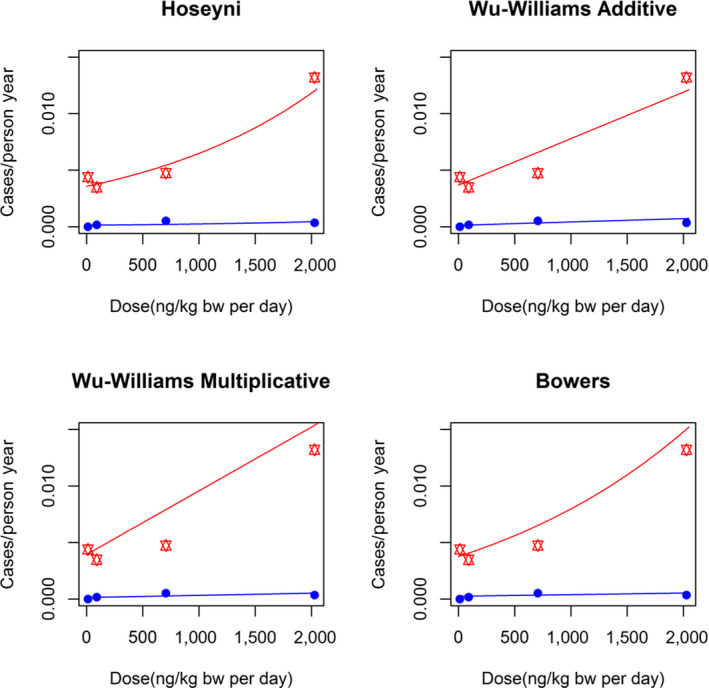
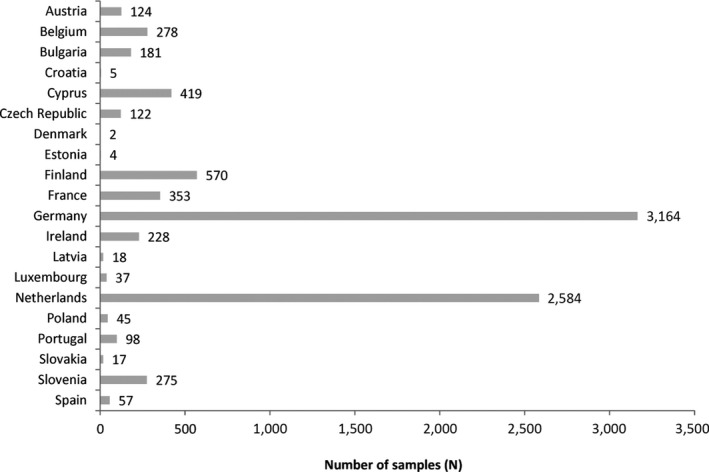
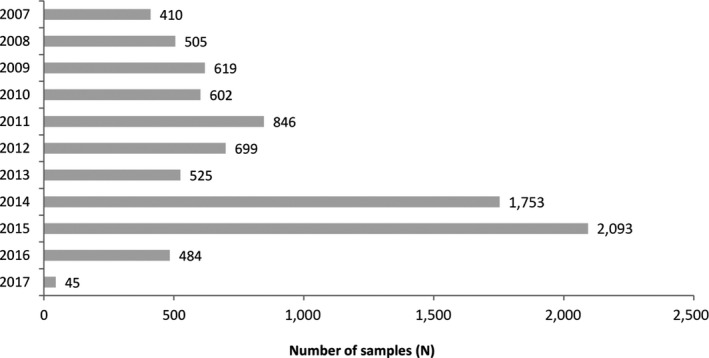
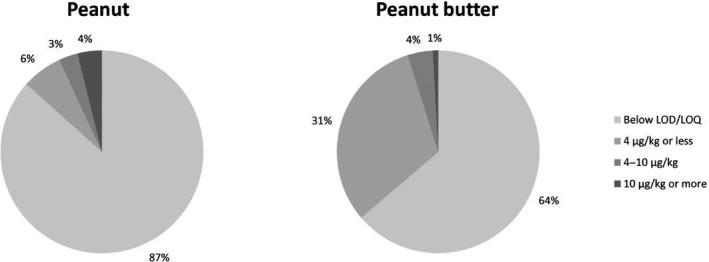
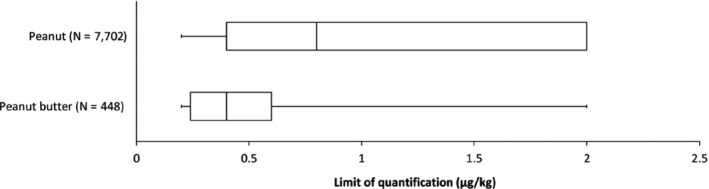
EFSA was asked to deliver a scientific opinion regarding the effect on public health of a possible increase of the maximum level (ML) for 'aflatoxin total' (AFT; sum of aflatoxin B1, aflatoxin B2, aflatoxin G1 and aflatoxin G2) from 4 to 10 μg/kg in peanuts and processed products thereof. Aflatoxins are genotoxic and cause hepatocellular carcinomas in humans. The Panel on Contaminants in the Food Chain (CONTAM Panel) evaluated 8,085 samples of peanuts and 472 samples of peanut butter, with > 60% left-censored. The mean concentration of AFT in peanuts was 2.65/3.56 μg/kg (lower bound (LB)/upper bound (UB)) with a maximum of 1,429 μg/kg. The mean concentration in peanut butter was 1.47/1.92 μg/kg (LB/UB) with a maximum of 407 μg/kg. Peanut oil was not included since all data were left-censored and the ML does not apply for oil. Exposure was calculated for a 'Current ML' and 'Increased ML' scenario, and mean chronic exposure estimates for consumers only, amounted to 0.04-2.74 ng/kg body weight (bw) per day and 0.07-4.28 ng/kg bw per day, respectively. The highest exposures were calculated for adolescents and other children. The CONTAM Panel used the cancer potencies estimated by the Joint FAO/WHO Expert Committee on Food Additives for the risk characterisation. Under the scenario of the current ML, the cancer risk was estimated to range between 0.001 and 0.213 aflatoxin-induced cancers per 100,000 person years. Under the scenario of the increased ML, it ranged between 0.001 and 0.333 aflatoxin-induced cancers per 100,000 person years. Comparing these data calculated under the current ML scenario with the yearly excess cancer risk of 0.014 shows a higher risk for consumers of peanuts and peanut butter in some surveys. The calculated cancer risks indicate that an increase of the ML would further increase the risk by a factor of 1.6-1.8.
欧洲食品安全局(EFSA)被要求就花生及其加工产品中“总黄曲霉毒素”(AFT;黄曲霉毒素B1、黄曲霉毒素B2、黄曲霉毒素G1和黄曲霉毒素G2的总和)的最大限量(ML)从4μg/kg提高到10μg/kg对公众健康的影响发表科学意见。黄曲霉毒素具有基因毒性,可导致人类肝细胞癌。食物链污染物专家小组(CONTAM小组)评估了8085份花生样品和472份花生酱样品,其中超过60%的数据为左删失数据。花生中AFT的平均浓度为2.65/3.56μg/kg(下限(LB)/上限(UB)),最高为1429μg/kg。花生酱中的平均浓度为1.47/1.92μg/kg(LB/UB),最高为407μg/kg。由于所有数据均为左删失数据且ML不适用于油类,因此未纳入花生油。针对“当前ML”和“提高后的ML”两种情况计算了暴露量,仅消费者的平均慢性暴露估计值分别为每天0.04 - 2.74ng/kg体重(bw)和0.07 - 4.28ng/kg bw。青少年和其他儿童的暴露量计算值最高。CONTAM小组使用了粮农组织/世卫组织食品添加剂联合专家委员会估计的癌症效力进行风险特征描述。在当前ML的情况下,估计每10万人年黄曲霉毒素诱发的癌症风险在0.001至0.213例之间。在提高后的ML情况下,每10万人年的风险在0.001至0.333例之间。将当前ML情况下计算的数据与每年0.014的额外癌症风险进行比较,在一些调查中,花生和花生酱消费者面临的风险更高。计算出的癌症风险表明,ML的提高将使风险进一步增加1.6至1.8倍。