Kounadi Ourania, Ristea Alina, Araujo Adelson, Leitner Michael
Department of Geoinformation Processing, University of Twente, Enschede, The Netherlands.
Doctoral College GIScience, Department of Geoinformatics-Z_GIS, University of Salzburg, Salzburg, Austria.
Crime Sci. 2020;9(1):7. doi: 10.1186/s40163-020-00116-7. Epub 2020 May 27.
Predictive policing and crime analytics with a spatiotemporal focus get increasing attention among a variety of scientific communities and are already being implemented as effective policing tools. The goal of this paper is to provide an overview and evaluation of the state of the art in spatial crime forecasting focusing on study design and technical aspects.
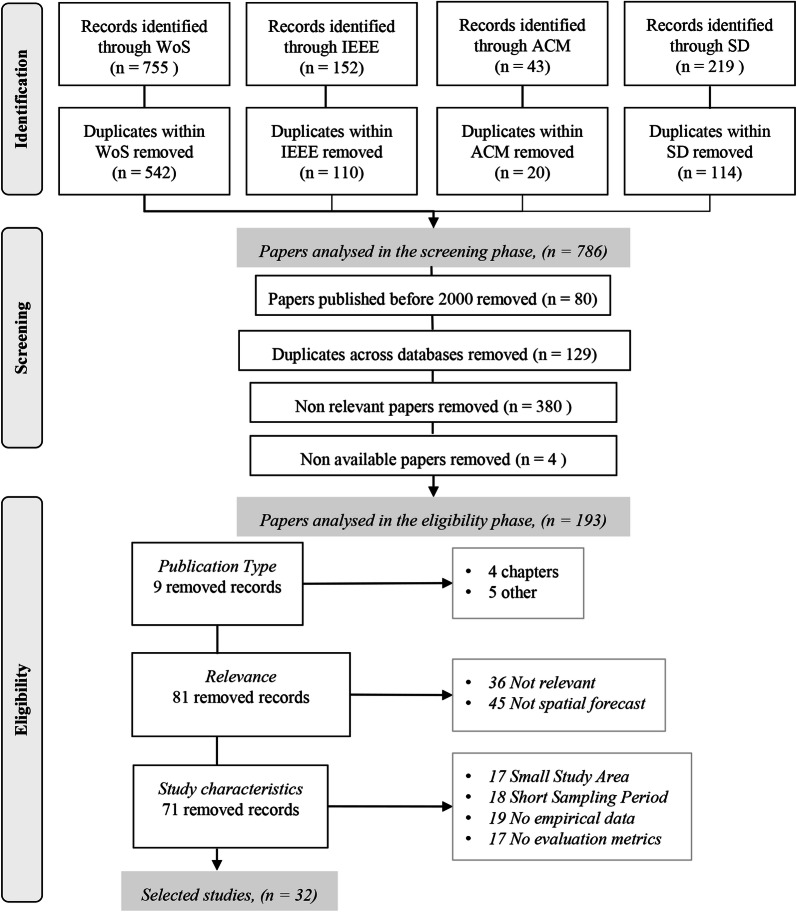
We follow the PRISMA guidelines for reporting this systematic literature review and we analyse 32 papers from 2000 to 2018 that were selected from 786 papers that entered the screening phase and a total of 193 papers that went through the eligibility phase. The eligibility phase included several criteria that were grouped into: (a) the publication type, (b) relevance to research scope, and (c) study characteristics.
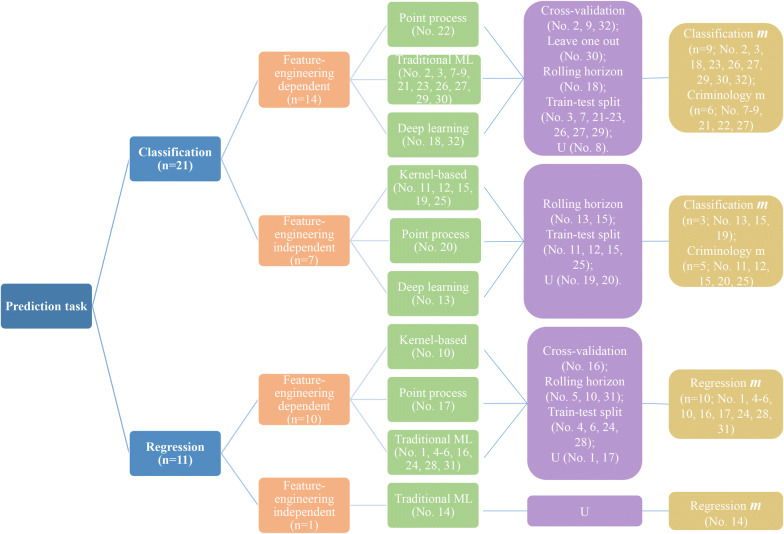
The most predominant type of forecasting inference is the hotspots (i.e. binary classification) method. Traditional machine learning methods were mostly used, but also kernel density estimation based approaches, and less frequently point process and deep learning approaches. The top measures of evaluation performance are the Prediction Accuracy, followed by the Prediction Accuracy Index, and the F1-Score. Finally, the most common validation approach was the train-test split while other approaches include the cross-validation, the leave one out, and the rolling horizon.
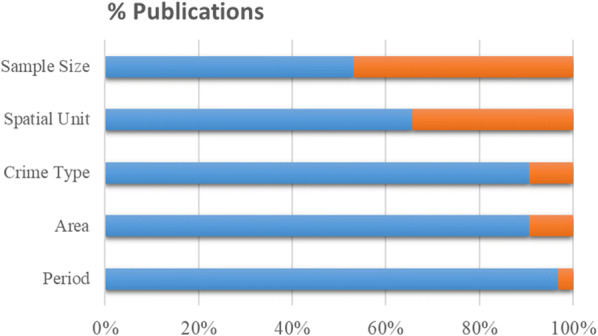
Current studies often lack a clear reporting of study experiments, feature engineering procedures, and are using inconsistent terminology to address similar problems.
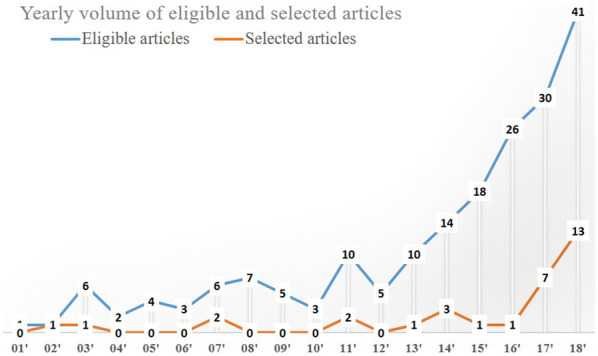
There is a remarkable growth in spatial crime forecasting studies as a result of interdisciplinary technical work done by scholars of various backgrounds. These studies address the societal need to understand and combat crime as well as the law enforcement interest in almost real-time prediction.
Although we identified several opportunities and strengths there are also some weaknesses and threats for which we provide suggestions. Future studies should not neglect the juxtaposition of (existing) algorithms, of which the number is constantly increasing (we enlisted 66). To allow comparison and reproducibility of studies we outline the need for a protocol or standardization of spatial forecasting approaches and suggest the reporting of a study's key data items.
以时空为重点的预测性警务和犯罪分析在众多科学领域中日益受到关注,并且已经作为有效的警务工具得到应用。本文的目的是对空间犯罪预测的现状进行概述和评估,重点关注研究设计和技术方面。
我们遵循PRISMA指南来报告这项系统文献综述,分析了2000年至2018年的32篇论文,这些论文是从进入筛选阶段的786篇论文以及总共193篇通过资格审查阶段的论文中挑选出来的。资格审查阶段包括几个标准,这些标准分为:(a) 出版物类型,(b) 与研究范围的相关性,以及(c) 研究特征。
最主要的预测推理类型是热点(即二元分类)方法。主要使用传统机器学习方法,但也有基于核密度估计的方法,以及较少使用的点过程和深度学习方法。评估性能的首要指标是预测准确率,其次是预测准确率指数和F1分数。最后,最常见的验证方法是训练-测试分割,而其他方法包括交叉验证、留一法和滚动时域法。
当前研究往往缺乏对研究实验、特征工程程序的清晰报告,并且在处理类似问题时使用不一致的术语。
由于不同背景的学者进行的跨学科技术工作,空间犯罪预测研究有了显著增长。这些研究满足了社会对理解和打击犯罪的需求,以及执法部门对近乎实时预测的兴趣。
尽管我们发现了一些机会和优势,但也存在一些弱点和威胁,我们对此提供了建议。未来的研究不应忽视(现有)算法的并列比较,算法的数量在不断增加(我们列出了66种)。为了使研究具有可比性和可重复性,我们概述了对空间预测方法的协议或标准化的需求,并建议报告研究的关键数据项。