Department of Chinese Medicine, China Medical University Hospital, Taichung 40447, Taiwan.
Chinese Medicine Research Center, China Medical University, Taichung 40402, Taiwan.
Int J Mol Sci. 2020 Jun 30;21(13):4693. doi: 10.3390/ijms21134693.
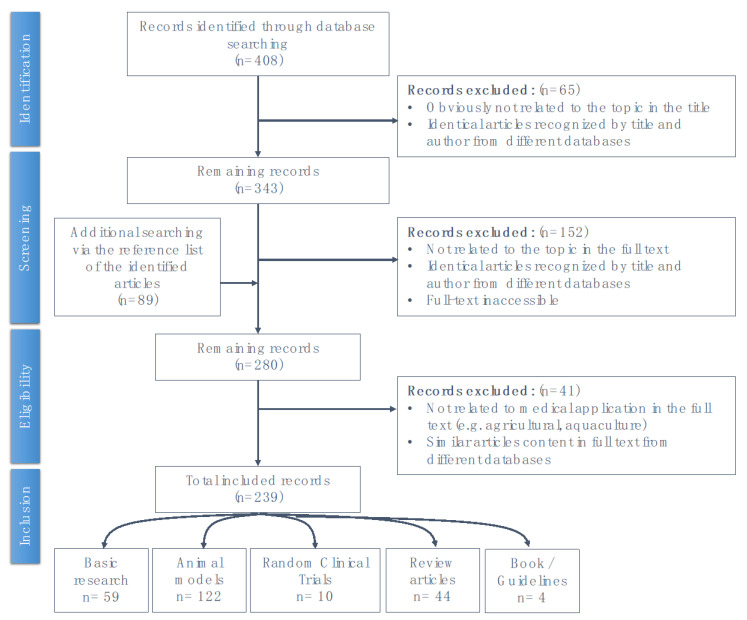
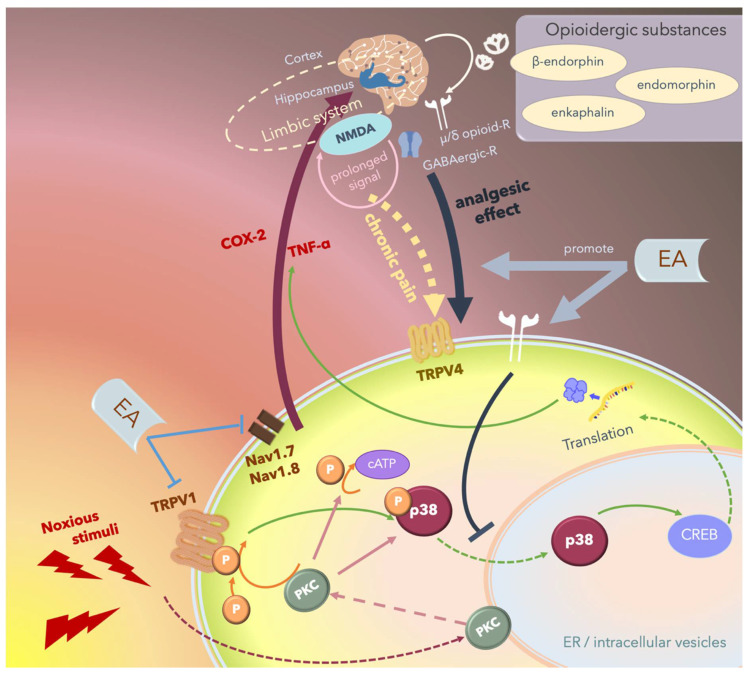
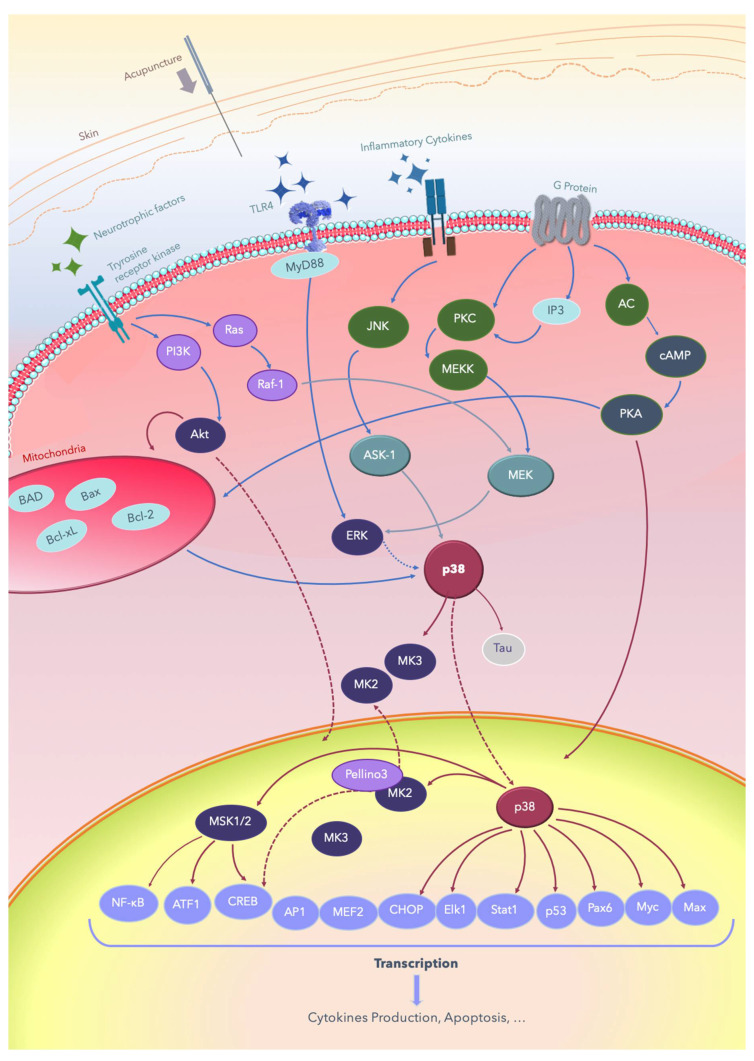
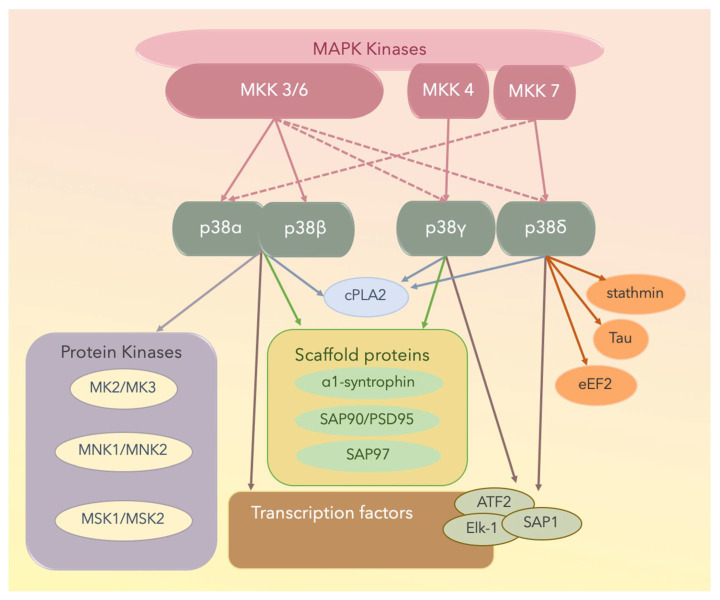
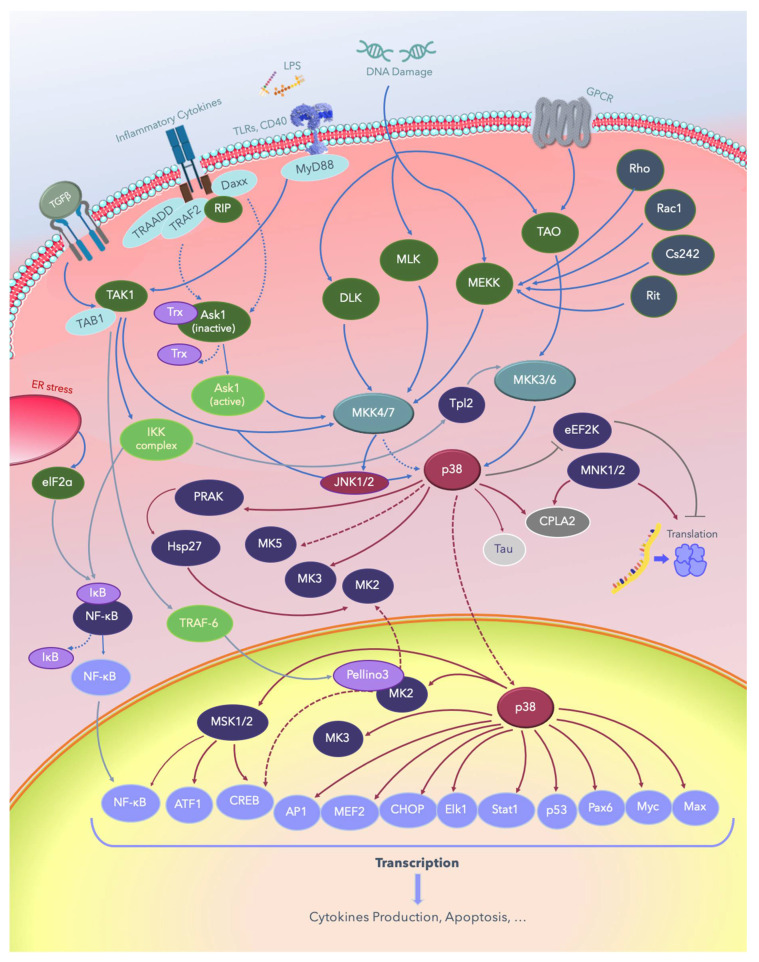
Acupuncture is clinically used to treat various diseases and exerts positive local and systemic effects in several nervous system diseases. Advanced molecular and clinical studies have continually attempted to decipher the mechanisms underlying these effects of acupuncture. While a growing understanding of the pathophysiology underlying several nervous system diseases shows it to be related to inflammation and impair cell regeneration after ischemic events, the relationship between the therapeutic mechanism of acupuncture and the p38 MAPK signal pathway has yet to be elucidated. This review discusses the latest advancements in the identification of the effect of acupuncture on the p38 signaling pathway in several nervous system diseases. We electronically searched databases including PubMed, Embase, and the Cochrane Library from their inception to April 2020, using the following keywords alone or in various combinations: "acupuncture", "p38 MAPK pathway", "signaling", "stress response", "inflammation", "immune", "pain", "analgesic", "cerebral ischemic injury", "epilepsy", "Alzheimer's disease", "Parkinson's disease", "dementia", "degenerative", and "homeostasis". Manual acupuncture and electroacupuncture confer positive therapeutic effects by regulating proinflammatory cytokines, ion channels, scaffold proteins, and transcription factors including TRPV1/4, Na, BDNF, and NADMR1; consequently, p38 regulates various phenomena including cell communication, remodeling, regeneration, and gene expression. In this review article, we found the most common acupoints for the relief of nervous system disorders including GV20, GV14, ST36, ST37, and LI4. Acupuncture exhibits dual regulatory functions of activating or inhibiting different p38 MAPK pathways, contributing to an overall improvement of clinical symptoms and function in several nervous system diseases.
针灸在临床上用于治疗各种疾病,并在多种神经系统疾病中发挥积极的局部和全身作用。先进的分子和临床研究不断试图破译针灸作用的机制。虽然对几种神经系统疾病的病理生理学的认识不断提高,表明其与炎症和缺血事件后细胞再生受损有关,但针灸治疗机制与 p38 MAPK 信号通路之间的关系尚未阐明。本综述讨论了在几种神经系统疾病中鉴定针灸对 p38 信号通路影响的最新进展。我们使用以下关键词单独或组合使用,从数据库 PubMed、Embase 和 Cochrane Library 中进行了电子检索,检索时间从建库至 2020 年 4 月:"针灸"、"p38 MAPK 通路"、"信号转导"、"应激反应"、"炎症"、"免疫"、"疼痛"、"镇痛"、"脑缺血损伤"、"癫痫"、"阿尔茨海默病"、"帕金森病"、"痴呆"、"退行性"和"内稳态"。手动针灸和电针通过调节促炎细胞因子、离子通道、支架蛋白和转录因子(包括 TRPV1/4、Na+、BDNF 和 NADMR1)来发挥积极的治疗作用;因此,p38 调节包括细胞通讯、重塑、再生和基因表达在内的各种现象。在这篇综述文章中,我们发现了治疗神经系统疾病最常用的穴位,包括 GV20、GV14、ST36、ST37 和 LI4。针灸对不同的 p38 MAPK 通路具有激活或抑制的双重调节作用,有助于改善几种神经系统疾病的临床症状和功能。