Department of Medical Research, China Medical University Hospital, Taichung 404, Taiwan.
Department of Neurology, China Medical University Hospital, 404, Taiwan.
Int J Environ Res Public Health. 2020 Jul 1;17(13):4745. doi: 10.3390/ijerph17134745.
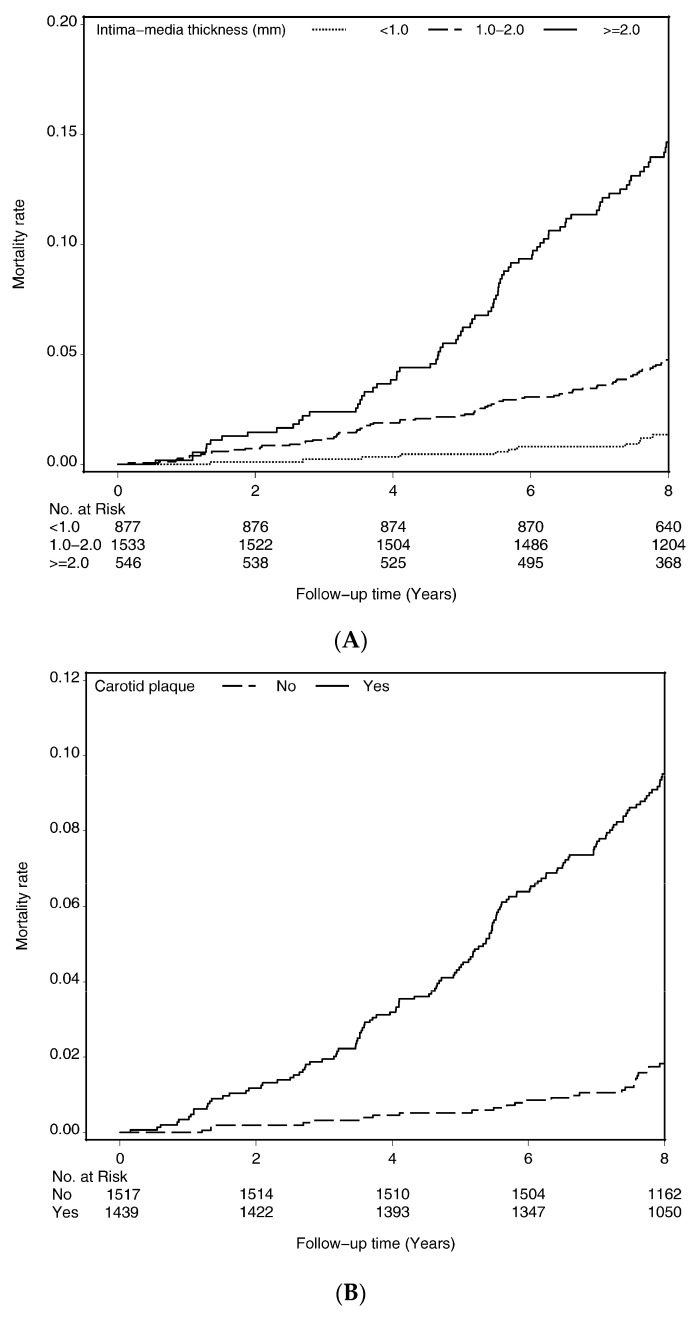
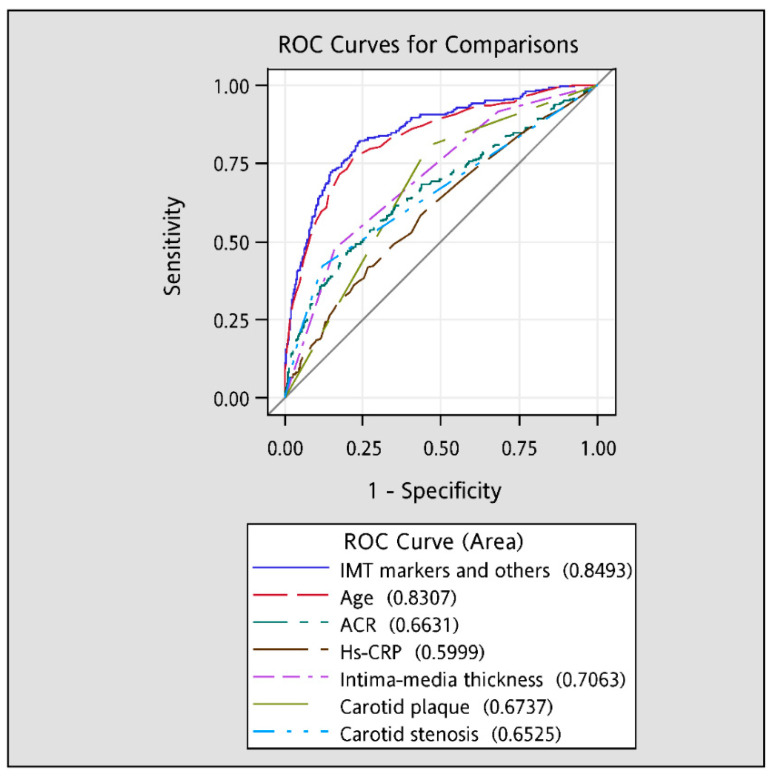
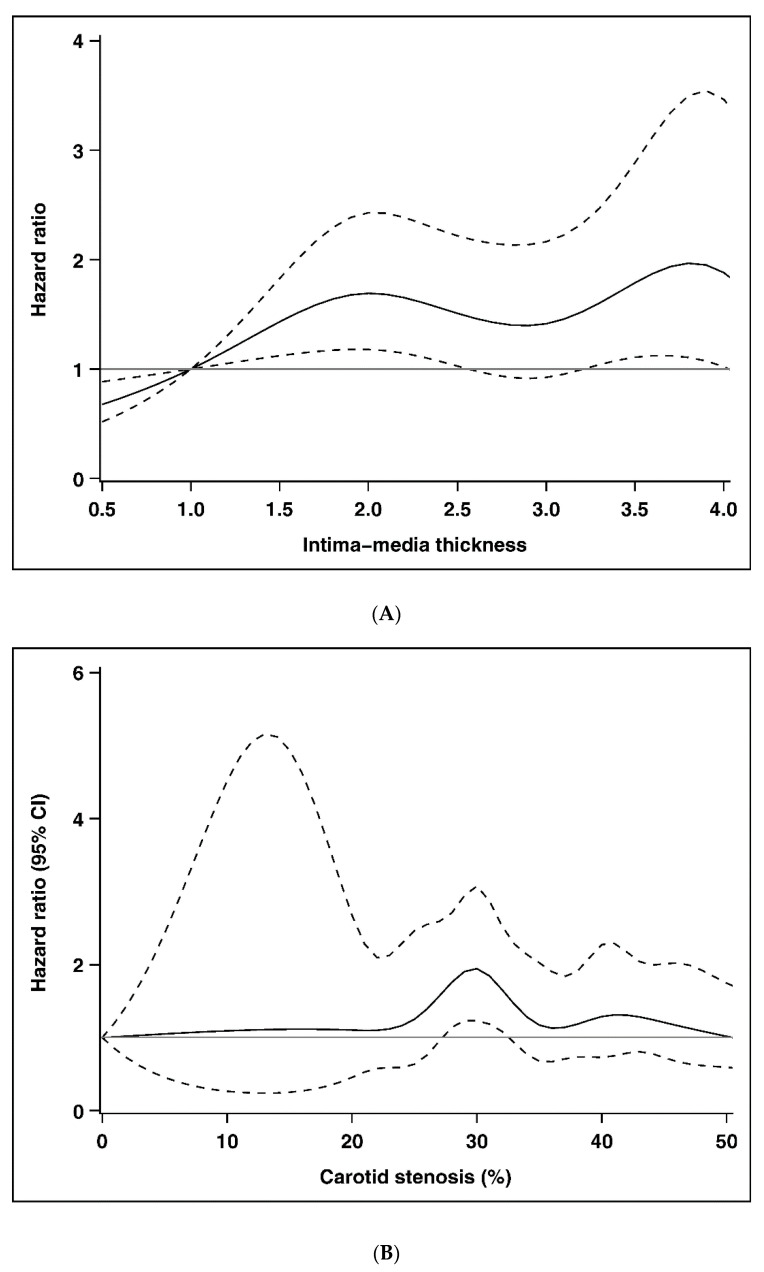
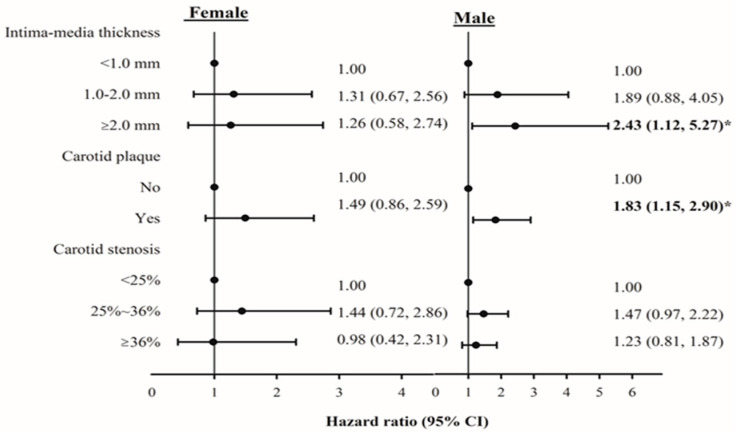
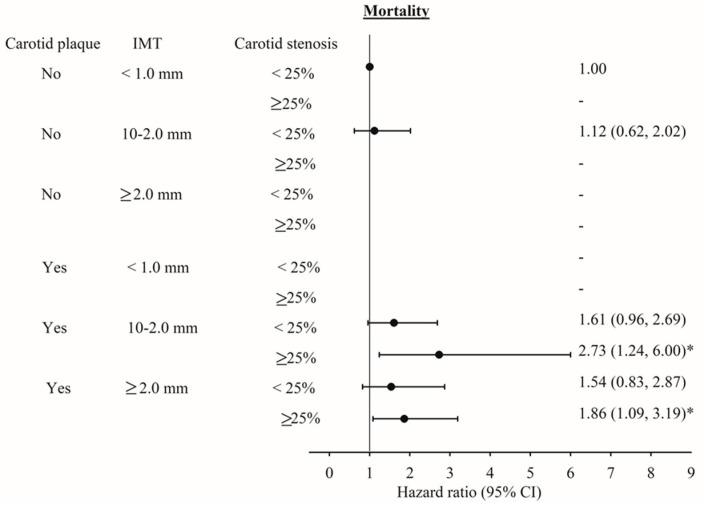
Carotid intima-media thickness (IMT), plaque, and stenosis are widely used as early surrogate markers of subclinical atherosclerosis and strong predictors of future deaths and cardiovascular events. Albuminuria is an indicator of generalized endothelial dysfunction that speeds up atherosclerosis. However, previous studies reporting these associations cannot rule out the confounding effect of albuminuria. We aimed to examine the independent and joint relationships between IMT markers and 10-year mortality in community-dwelling Taiwanese adults. This work was a community-based prospective cohort study consisting of 2956 adults aged at least 30 years recruited in 2007 and followed up through 2019. Cox proportional hazard regression models were used to examine associations of these subclinical atherosclerosis markers with mortality. During an average of 9.41 years of follow up, 242 deaths occurred. The mortality rate was 8.70 per 1000 person-years. Compared with those with carotid IMT less than 1.0 mm, persons with severely increased carotid IMT (≥2.0 mm) had an increased risk for death (hazard ratio (HR): 1.79; 95% confidence interval (CI): 1.07, 3.00). Compared with those without carotid plaque, persons with carotid plaque were more likely to have an increased risk for death (1.65; 1.21-2.32). Compared with those with carotid stenosis less than 25%, persons with carotid stenosis of 25-36% had a significant increased risk for death (1.57; 1.12-2.22). Considering these three IMT markers along with the traditional risk factors (c-statistic: 0.85) significantly increased their predictive ability of mortality compared with any individual variable's predictive ability (all -values < 0.001 for comparisons of c-statistic values). Carotid IMT measures, including IMT thickness, carotid plaque, and carotid stenosis were significant independent predictors of mortality. Our study supports evidence of blood pressure-related media thickening markers to assess future mortality risks in Chinese adults of general population.
颈动脉内膜中层厚度 (IMT)、斑块和狭窄广泛用作亚临床动脉粥样硬化的早期替代标志物,也是未来死亡和心血管事件的强有力预测指标。蛋白尿是全身内皮功能障碍的指标,可加速动脉粥样硬化。然而,以前报告这些关联的研究不能排除蛋白尿的混杂影响。我们旨在研究 IMT 标志物与社区居住的台湾成年人 10 年死亡率之间的独立和联合关系。这项工作是一项基于社区的前瞻性队列研究,包括 2007 年招募的至少 30 岁的 2956 名成年人,并随访至 2019 年。使用 Cox 比例风险回归模型来检查这些亚临床动脉粥样硬化标志物与死亡率的关联。在平均 9.41 年的随访期间,发生了 242 例死亡。死亡率为每 1000 人年 8.70 例。与颈动脉 IMT 小于 1.0 毫米的人相比,颈动脉 IMT 严重增加(≥2.0 毫米)的人死亡风险增加(风险比(HR):1.79;95%置信区间(CI):1.07,3.00)。与没有颈动脉斑块的人相比,有颈动脉斑块的人死亡风险更高(1.65;1.21-2.32)。与颈动脉狭窄小于 25%的人相比,颈动脉狭窄 25-36%的人死亡风险显著增加(1.57;1.12-2.22)。考虑到这三个 IMT 标志物以及传统危险因素(c 统计量:0.85),与任何单个变量的预测能力(所有比较的 c 统计量值均为<0.001)相比,它们显著提高了对死亡率的预测能力。颈动脉 IMT 测量值,包括 IMT 厚度、颈动脉斑块和颈动脉狭窄,是死亡的独立预测指标。我们的研究支持与血压相关的中层增厚标志物来评估中国一般人群成年人未来的死亡风险的证据。