Central Department of Biotechnology, Tribhuvan University, Kirtipur, Kathmandu, Nepal.
Department of Molecular Biology and Virology, Centre for Molecular Dynamics Nepal, Thapathali, Kathmandu, Nepal.
PLoS One. 2020 Jul 7;15(7):e0234929. doi: 10.1371/journal.pone.0234929. eCollection 2020.
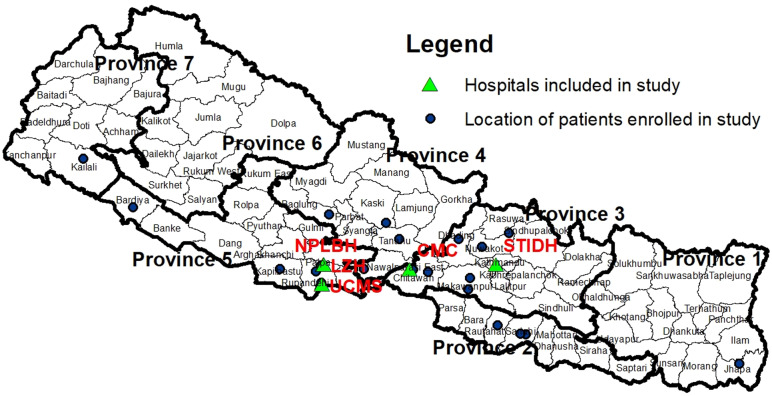
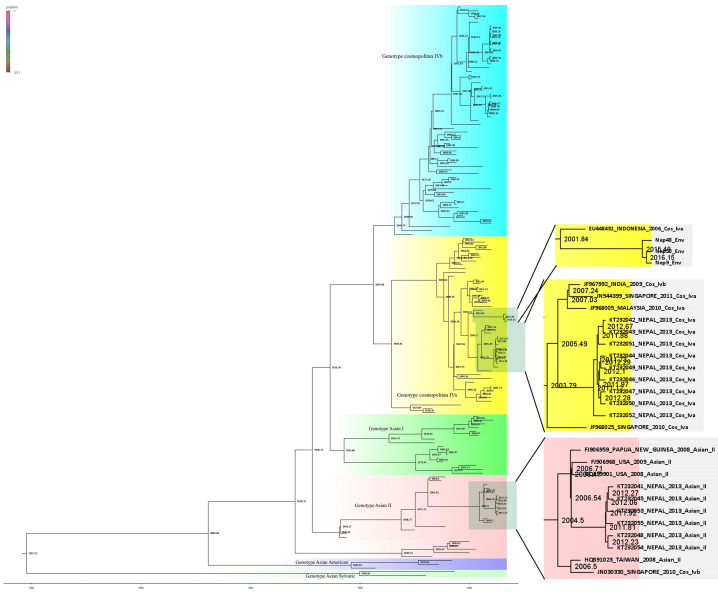
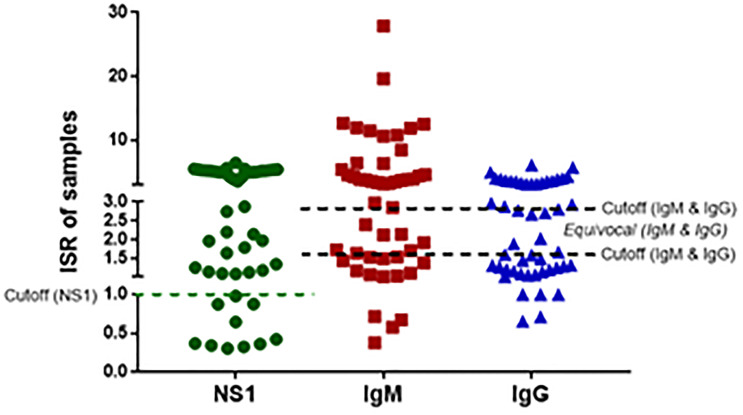
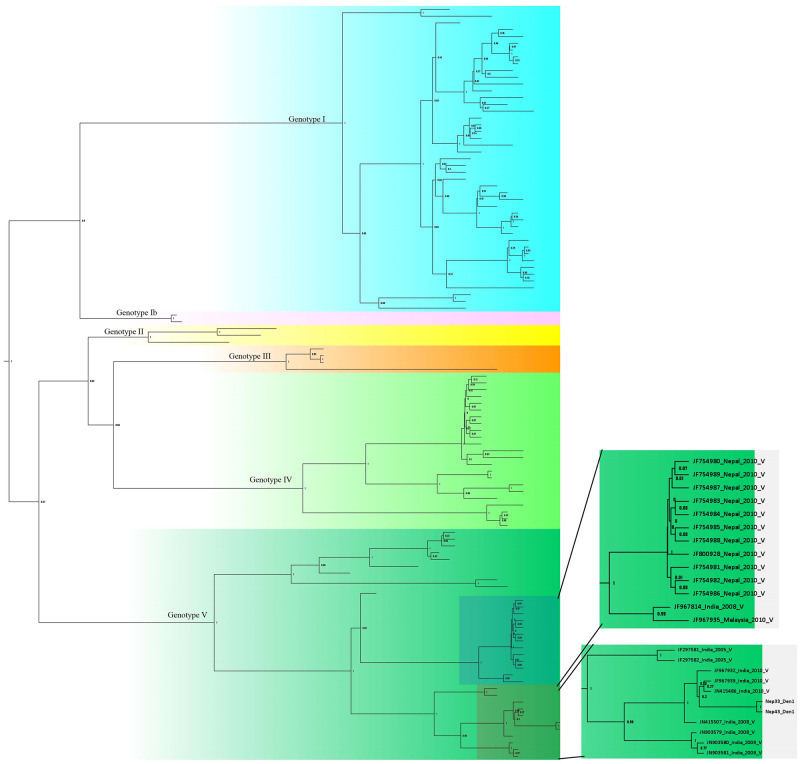
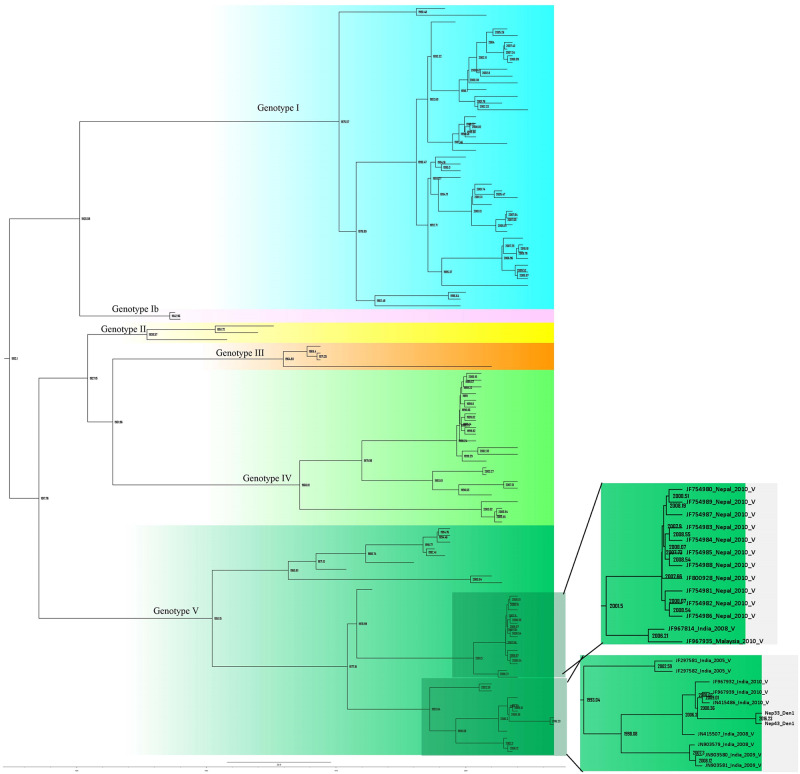
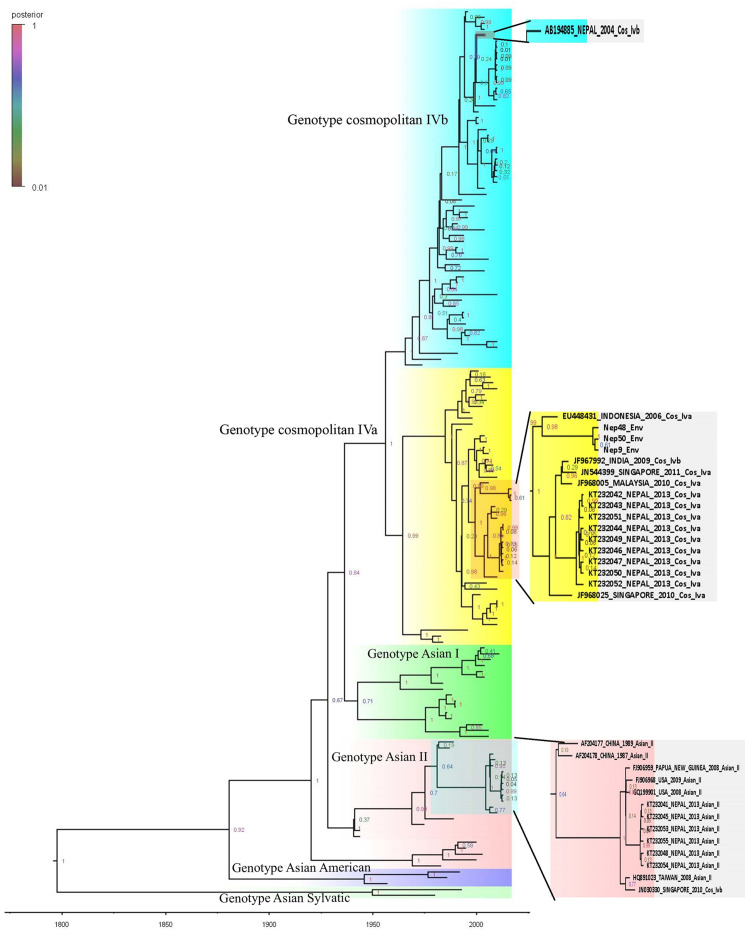
Dengue virus (DENV) infection is endemic in Nepal. Although infection rates are reported annually, little information is available about the circulating viral serotypes and genotypes. Here, we report the results of a multicentre cross-sectional study of DENV serotypes and genotypes sampled from individuals with suspected DENV infection in Nepal in 2017. Of the 50 patients sampled, 40 were serologically positive for DENV NS1, 29 for anti-DENV IgM, 21 for anti-DENV IgG and 14 were positive by qRT-PCR. The three serotypes DENV-1, 2 and 3 were detected and there was no DENV-4. Positive samples from serotyping were subjected to PCR amplification by envelope (E) gene specific primer and subsequent bidirectional sequencing of 5 samples. A time to most recent common ancestor phylogenetic tree was constructed from the new sequences obtained here together with historical DENV-1 and DENV-2 E gene sequences. The DENV-1 isolates (n = 2) from Nepalese individuals were closely related to Indian genotype V, whereas DENV-2 isolates (n = 3) belonged to Cosmopolitan genotype IVa, which is closely related to Indonesian isolates. Historical DENV isolates obtained between 2004 and 2013 clustered with Cosmopolitan IVb, Cosmopolitan IVa, and Asian II genotypes. All Nepalese isolates had different lineages with distinct ancestries. With the exception of isolates obtained in 2004, all other previously published isolates had ancestry to geographically distant part of the world. Molecular analysis revealed dengue epidemics to be comprised of different genotypes of serotype 1 and 2 raising concerns on potential role of different genotypes causing Dengue hemorrhagic fever. Also, our result indicated spread of DENV-2 in non-endemic area such as hilly region of Nepal which was considered to be free of dengue due to high altitude and cold weather.
登革热病毒(DENV)感染在尼泊尔流行。虽然每年都有感染率报告,但关于循环病毒血清型和基因型的信息却很少。在这里,我们报告了 2017 年在尼泊尔对疑似登革热病毒感染个体进行的多中心横断面研究中 DENV 血清型和基因型的结果。在采集的 50 名患者中,有 40 名 NS1 血清学阳性,29 名抗 DENV IgM 阳性,21 名抗 DENV IgG 阳性,14 名 qRT-PCR 阳性。检测到三种血清型 DENV-1、2 和 3,没有 DENV-4。对血清分型的阳性样本进行包膜(E)基因特异性引物 PCR 扩增,随后对 5 个样本进行双向测序。从这里获得的新序列以及历史上的 DENV-1 和 DENV-2 E 基因序列构建了一个最近共同祖先的时间系统发育树。从尼泊尔个体中分离的 DENV-1 分离株(n = 2)与印度基因型 V 密切相关,而 DENV-2 分离株(n = 3)属于泛型 IVa,与印度尼西亚分离株密切相关。2004 年至 2013 年期间获得的历史 DENV 分离株与泛型 IVb、泛型 IVa 和亚洲 II 基因型聚集在一起。所有尼泊尔分离株都具有不同的进化枝和不同的起源。除了 2004 年获得的分离株外,所有其他以前发表的分离株都起源于世界上地理位置遥远的地方。分子分析显示登革热流行由不同血清型 1 和 2 的基因型组成,这引起了对不同基因型引起登革出血热的潜在作用的关注。此外,我们的结果表明,DENV-2 在尼泊尔丘陵地区等非流行地区的传播,由于高海拔和寒冷的天气,该地区被认为没有登革热。