Afreen Nazia, Naqvi Irshad H, Broor Shobha, Ahmed Anwar, Kazim Syed Naqui, Dohare Ravins, Kumar Manoj, Parveen Shama
Centre for Interdisciplinary Research in Basic Sciences, Jamia Millia Islamia, New Delhi, India.
Dr. M.A. Ansari Health Centre, Jamia Millia Islamia, New Delhi, India.
PLoS Negl Trop Dis. 2016 Mar 15;10(3):e0004511. doi: 10.1371/journal.pntd.0004511. eCollection 2016 Mar.
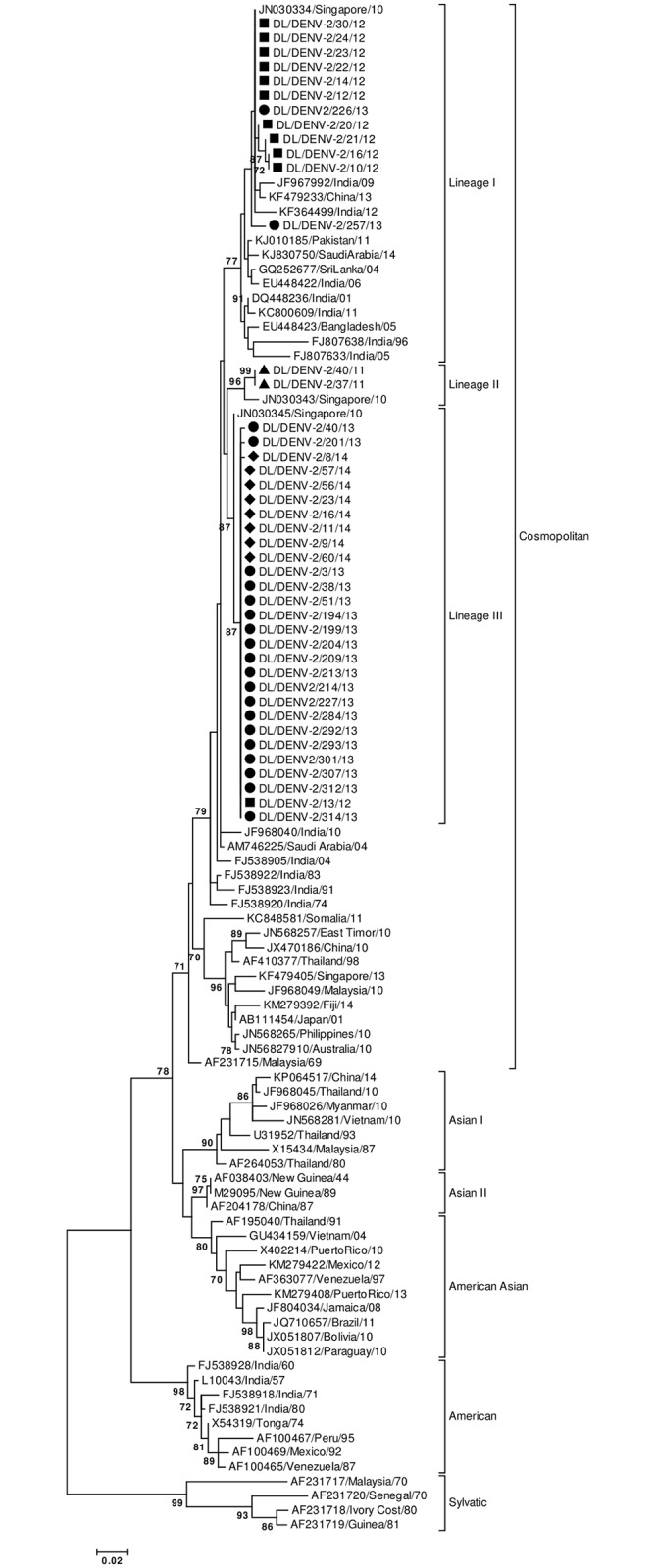
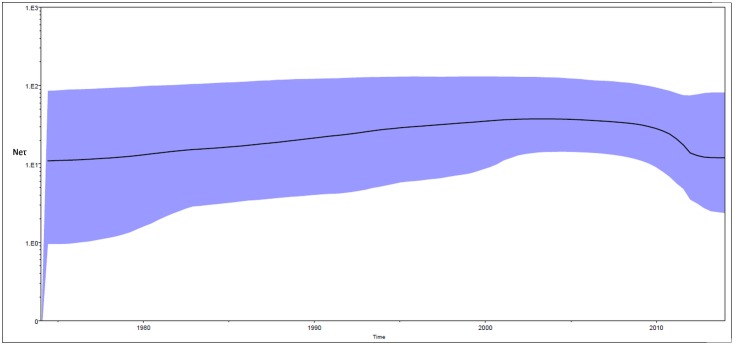
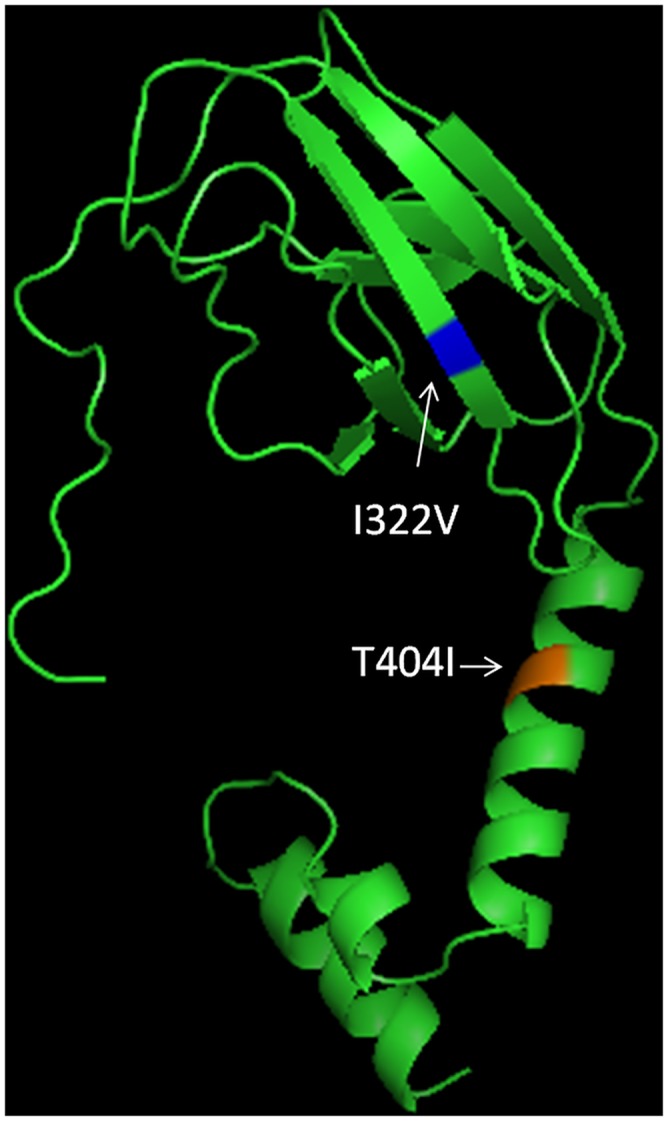
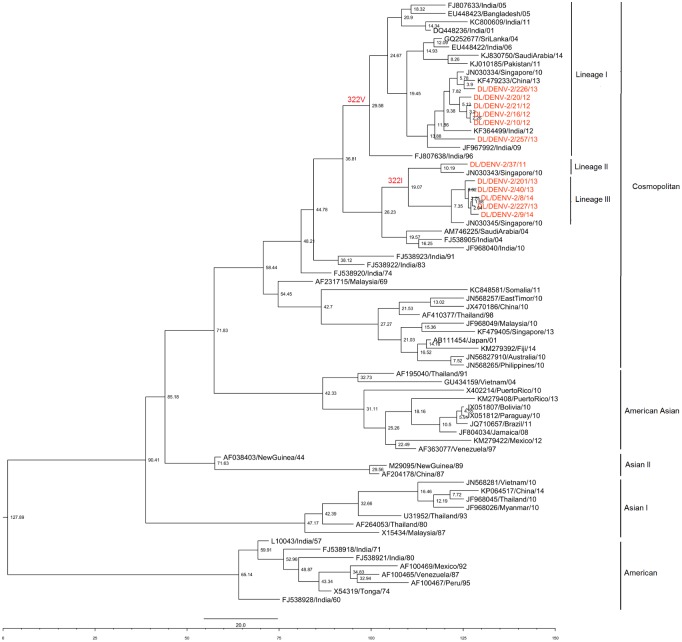
Dengue fever is the most important arboviral disease in the tropical and sub-tropical countries of the world. Delhi, the metropolitan capital state of India, has reported many dengue outbreaks, with the last outbreak occurring in 2013. We have recently reported predominance of dengue virus serotype 2 during 2011-2014 in Delhi. In the present study, we report molecular characterization and evolutionary analysis of dengue serotype 2 viruses which were detected in 2011-2014 in Delhi. Envelope genes of 42 DENV-2 strains were sequenced in the study. All DENV-2 strains grouped within the Cosmopolitan genotype and further clustered into three lineages; Lineage I, II and III. Lineage III replaced lineage I during dengue fever outbreak of 2013. Further, a novel mutation Thr404Ile was detected in the stem region of the envelope protein of a single DENV-2 strain in 2014. Nucleotide substitution rate and time to the most recent common ancestor were determined by molecular clock analysis using Bayesian methods. A change in effective population size of Indian DENV-2 viruses was investigated through Bayesian skyline plot. The study will be a vital road map for investigation of epidemiology and evolutionary pattern of dengue viruses in India.
登革热是世界热带和亚热带国家最重要的虫媒病毒病。印度首都德里市报告了多起登革热疫情,最近一次疫情发生在2013年。我们最近报告了2011 - 2014年期间德里登革热病毒血清型2占主导地位。在本研究中,我们报告了2011 - 2014年在德里检测到的登革热血清型2病毒的分子特征和进化分析。研究中对42株DENV - 2毒株的包膜基因进行了测序。所有DENV - 2毒株都属于泛基因型,进一步聚类为三个谱系:谱系I、II和III。在2013年登革热疫情期间,谱系III取代了谱系I。此外,2014年在一株单一的DENV - 2毒株包膜蛋白的茎区检测到一个新的突变Thr404Ile。使用贝叶斯方法通过分子钟分析确定核苷酸替代率和最近共同祖先的时间。通过贝叶斯天际线图研究了印度DENV - 2病毒有效种群大小的变化。该研究将成为印度登革热病毒流行病学和进化模式调查的重要路线图。