Broersen Kerensa
Department of Applied Stem Cell Technologies, TechMed Centre, University of Twente, Postbus 217, 7500 AE Enschede, The Netherlands.
Foods. 2020 Jul 3;9(7):874. doi: 10.3390/foods9070874.
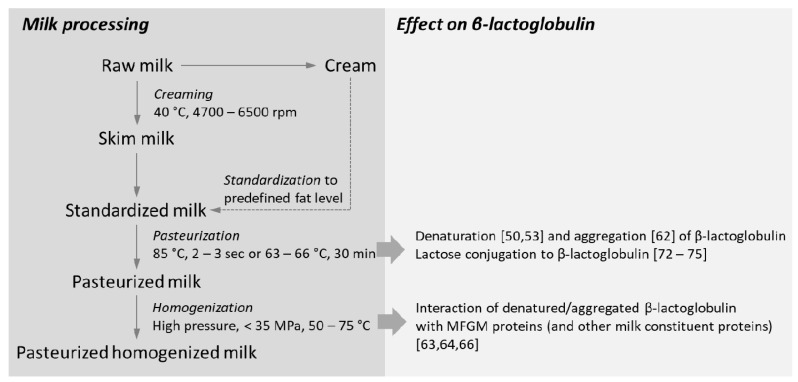
Bovine milk is subjected to various processing steps to warrant constant quality and consumer safety. One of these steps is pasteurization, which involves the exposure of liquid milk to a high temperature for a limited amount of time. While such heating effectively ameliorates consumer safety concerns mediated by pathogenic bacteria, these conditions also have an impact on one of the main nutritional whey constituents of milk, the protein β-lactoglobulin. As a function of heating, β-lactoglobulin was shown to become increasingly prone to denaturation, aggregation, and lactose conjugation. This review discusses the implications of such heat-induced modifications on digestion and adsorption in the gastro-intestinal tract, and the responses these conformations elicit from the gastro-intestinal immune system.
牛乳要经过各种加工步骤以确保质量稳定和消费者安全。其中一个步骤是巴氏杀菌,这包括将液态奶在高温下暴露一段有限的时间。虽然这种加热有效地缓解了由致病细菌介导的消费者安全担忧,但这些条件也会对牛奶的主要营养乳清成分之一——蛋白质β-乳球蛋白产生影响。随着加热,β-乳球蛋白显示出越来越容易发生变性、聚集和乳糖结合。本文综述讨论了这种热诱导修饰对胃肠道消化和吸收的影响,以及这些构象引发的胃肠道免疫系统反应。