Division of Biomedical Sciences, School of Medicine, University of California, Riverside, Riverside, CA, United States.
Front Immunol. 2019 Jul 2;10:1499. doi: 10.3389/fimmu.2019.01499. eCollection 2019.
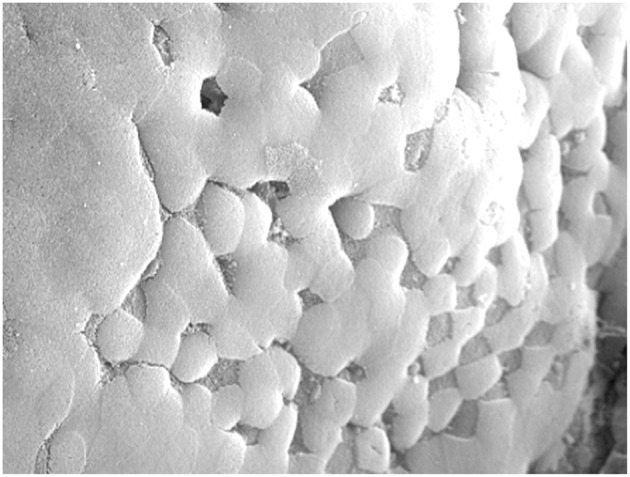
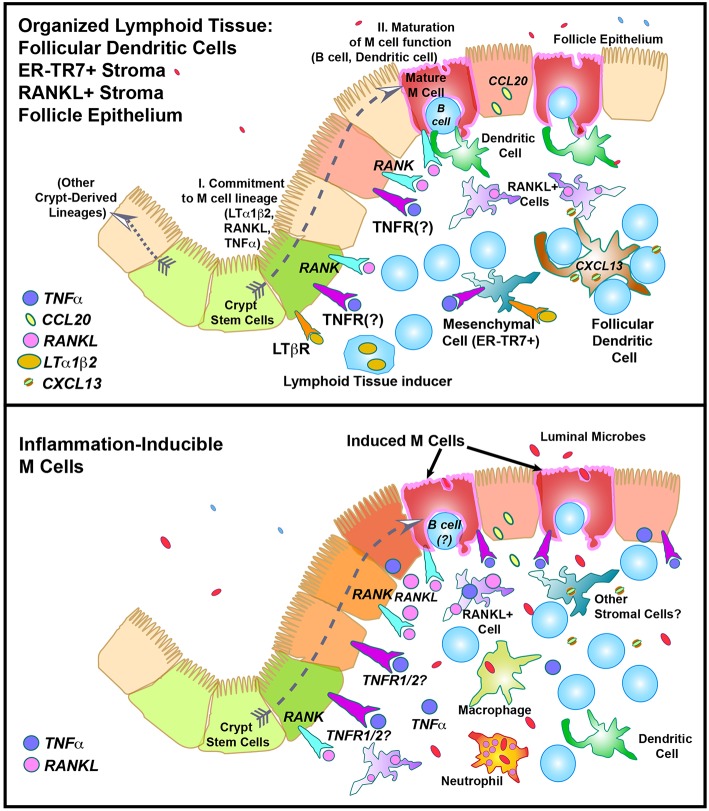
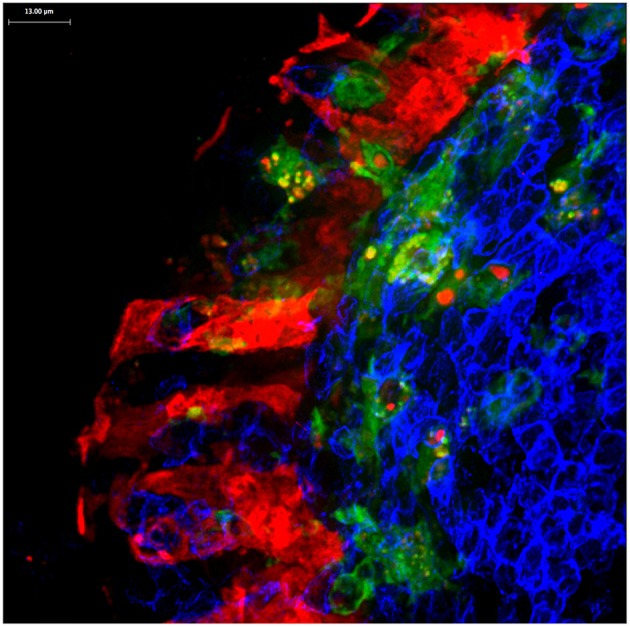
M cells are specialized intestinal epithelial cells that provide the main machinery for sampling luminal microbes for mucosal immune surveillance. M cells are usually found in the epithelium overlying organized mucosal lymphoid tissues, but studies have identified multiple distinct lineages of M cells that are produced under different conditions, including intestinal inflammation. Among these lineages there is a common morphology that helps explain the efficiency of M cells in capturing luminal bacteria and viruses; in addition, M cells recruit novel cellular mechanisms to transport the particles across the mucosal barrier into the lamina propria, a process known as transcytosis. These specializations used by M cells point to a novel engineering of cellular machinery to selectively capture and transport microbial particles of interest. Because of the ability of M cells to effectively violate the mucosal barrier, the circumstances of M cell induction have important consequences. Normal immune surveillance insures that transcytosed bacteria are captured by underlying myeloid/dendritic cells; in contrast, inflammation can induce development of new M cells not accompanied by organized lymphoid tissues, resulting in bacterial transcytosis with the potential to amplify inflammatory disease. In this review, we will discuss our own perspectives on the life history of M cells and also raise a few questions regarding unique aspects of their biology among epithelia.
M 细胞是一种专门的肠上皮细胞,为黏膜免疫监视提供了从腔内容物中采样微生物的主要机制。M 细胞通常存在于覆盖有组织黏膜淋巴组织的上皮细胞中,但研究已经确定了多种不同的 M 细胞谱系,这些谱系是在不同条件下产生的,包括肠道炎症。在这些谱系中,有一种共同的形态有助于解释 M 细胞捕捉腔内容物中的细菌和病毒的效率;此外,M 细胞还招募新的细胞机制将颗粒穿过黏膜屏障转运到固有层,这一过程称为转胞吞作用。M 细胞使用的这些特殊结构指向了一种用于选择性捕获和转运感兴趣的微生物颗粒的新型细胞机制。由于 M 细胞能够有效地侵犯黏膜屏障,因此 M 细胞诱导的情况具有重要的后果。正常的免疫监视可确保被转胞吞的细菌被下方的髓样/树突状细胞捕获;相比之下,炎症可诱导不伴有组织性淋巴组织的新 M 细胞的发育,导致细菌的转胞吞作用,从而有可能放大炎症性疾病。在这篇综述中,我们将讨论我们对 M 细胞的生活史的观点,也将提出一些关于它们在上皮细胞中的生物学独特方面的问题。