Diaz-Perete Daniel, Mercado-Colmenero Jorge Manuel, Valderrama-Zafra Jose Manuel, Martin-Doñate Cristina
Department of Engineering Graphics Design and Projects, University of Jaen, Campus Las Lagunillas, s/n, Building, A3-210 23071 Jaen, Spain.
Polymers (Basel). 2020 Jul 4;12(7):1498. doi: 10.3390/polym12071498.
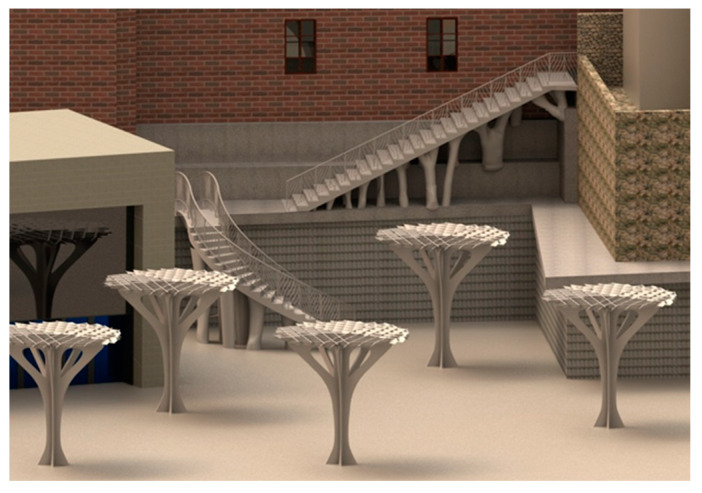
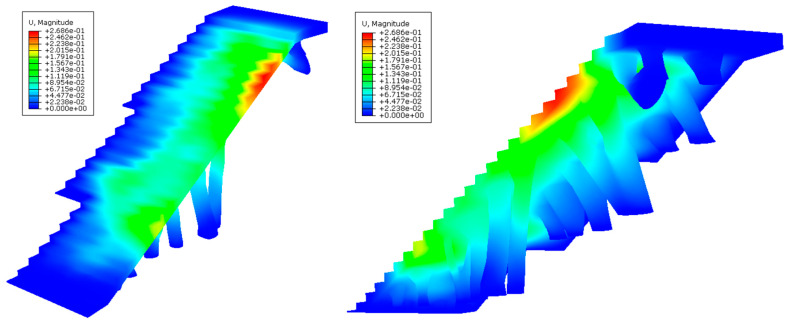
This paper presents a new procedure for the building information modeling (BIM) characterization of structural topologies manufactured with plastic materials and fused deposition modeling (FDM) additive technology. The procedure presented here transforms the architectural geometry into an expanded three-dimensional model, capable of directly linking the topology of the plastic structure with the technological, functional and economic requirements for working in advanced construction 4.0 environments. The model incorporates a new algorithm whose objective is to recognize the topological surface of the plastic structural part obtaining in a fully automated way the FDM manufacturing time as well as the manufacturing cost. The new algorithm starts from the voxelized geometrical surface of the architectural model, calculating the manufacturing time from the full geometric path traveled by the extruder in a voxel, the extruder's speed, the print pattern and the layer height. In this way it is possible to obtain a complete digital model capable of managing and analyzing the plastic architectural object in an advanced BIM 4.0 environment. The model presented in this paper was applied to two architectural structures designed for a real urban environment. The final structural geometries have been obtained through topological processes in order to reduce the raw plastic manufacturing material and to improve the plastic structure strength. The architectural elements have been validated structurally by the means of numerical simulations, following the scenario of loads and boundary conditions required for the real project. The displacement maps point to a maximum value of 0.5 mm according to the project requirements. The Von Mises stress fields indicate maximum values of 0.423 and 0.650 MPa, not exceeding in any case the tensile yield strength of the thermoplastic material.
本文提出了一种新的程序,用于对采用塑料材料和熔融沉积建模(FDM)增材技术制造的结构拓扑进行建筑信息模型(BIM)表征。这里介绍的程序将建筑几何形状转换为一个扩展的三维模型,该模型能够直接将塑料结构的拓扑与在先进的建筑4.0环境中工作的技术、功能和经济要求联系起来。该模型纳入了一种新算法,其目标是以全自动方式识别塑料结构部件的拓扑表面,从而获得FDM制造时间以及制造成本。新算法从建筑模型的体素化几何表面开始,根据挤出机在一个体素中走过的完整几何路径、挤出机的速度、打印图案和层高来计算制造时间。通过这种方式,可以获得一个完整的数字模型,能够在先进的BIM 4.0环境中管理和分析塑料建筑对象。本文提出的模型应用于为真实城市环境设计的两个建筑结构。最终的结构几何形状是通过拓扑过程获得的,以减少原始塑料制造材料并提高塑料结构强度。按照实际项目所需的荷载和边界条件,通过数值模拟对建筑构件进行了结构验证。根据项目要求,位移图显示最大值为0.5毫米。冯·米塞斯应力场表明最大值分别为0.423和0.650兆帕,在任何情况下都不超过热塑性材料的拉伸屈服强度。