Chen Xiyu, Zhang Shuiting, Liu Chao, Li Guo, Lu Shanhong, Wang Yunyun, Zhang Xin, Huang Donghai, Qiu Yuanzheng, Liu Yong
Department of Otolaryngology Head and Neck Surgery, Xiangya Hospital, Central South University, Changsha, Hunan 410008, People's Republic of China.
Otolaryngology Major Disease Research Key Laboratory of Hunan Province, Changsha, Hunan 410008, People's Republic of China.
Onco Targets Ther. 2020 Jun 29;13:6191-6202. doi: 10.2147/OTT.S253861. eCollection 2020.
UBE2O, as a member of the ubiquitin-conjugating enzyme family, is abnormally expressed and exhibits abnormal functions in human malignancies. However, the function of UBE2O in head and neck squamous cell carcinoma (HNSCC) remains unknown. Therefore, our study aims to investigate the role of UBE2O in HNSCC progression and the underlying mechanisms.
The expression of UBE2O in HNSCC patients was investigated with data from the Cancer Genome Atlas (TCGA) and from a separate primary tumor cohort. The function of UBE2O in HNSCC cells was studied by cell viability assay, colony formation assay, wound healing assay, and cell migration and invasion chamber assay. The effect of UBE2O on tumor growth in vivo was determined in a subcutaneous xenograft model of HNSCC.
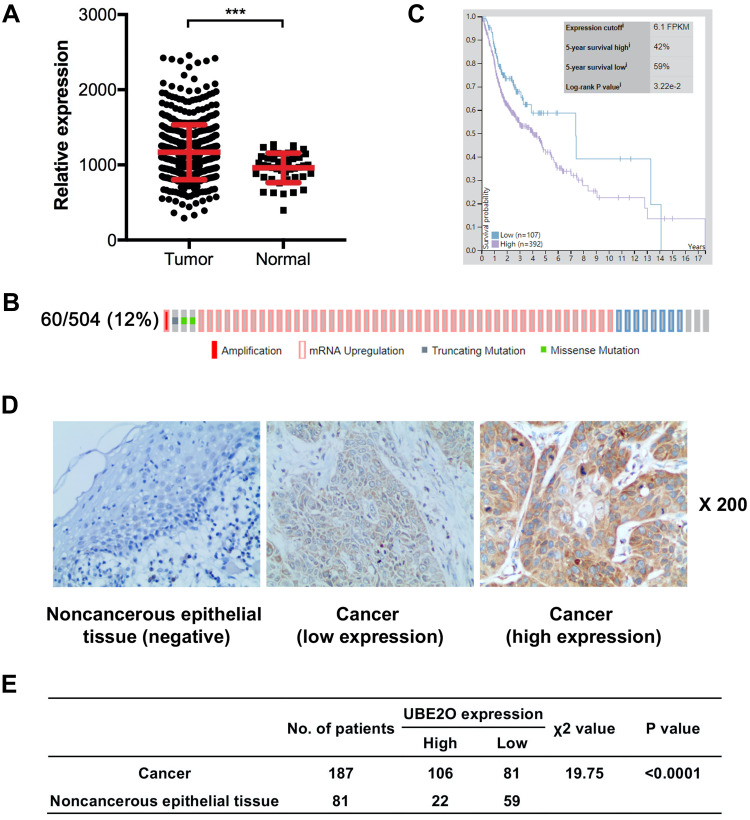
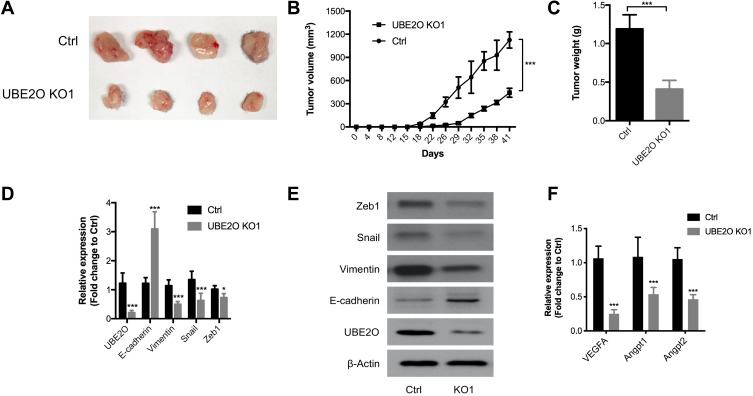
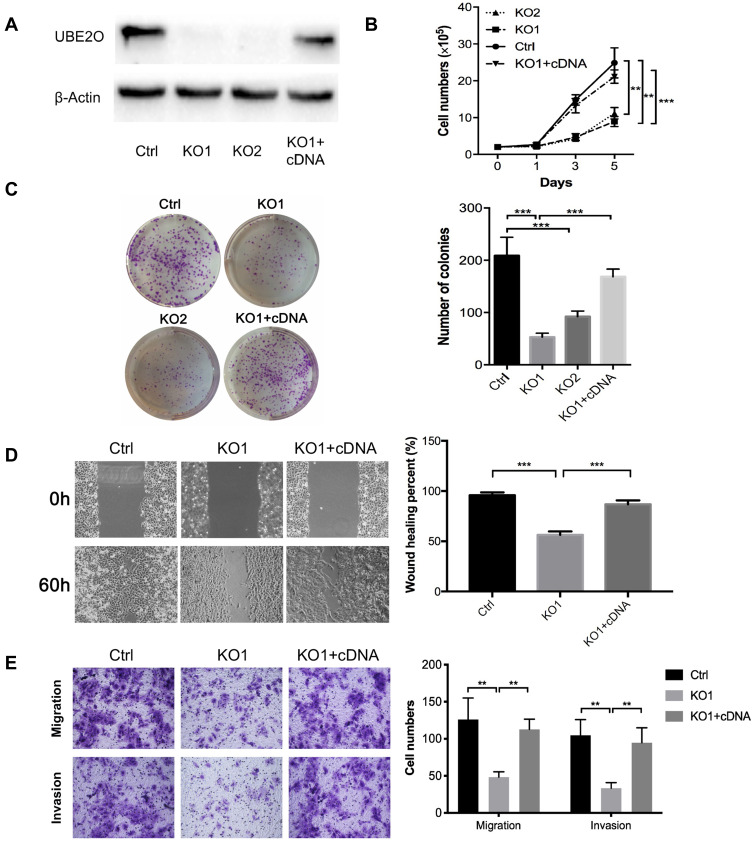
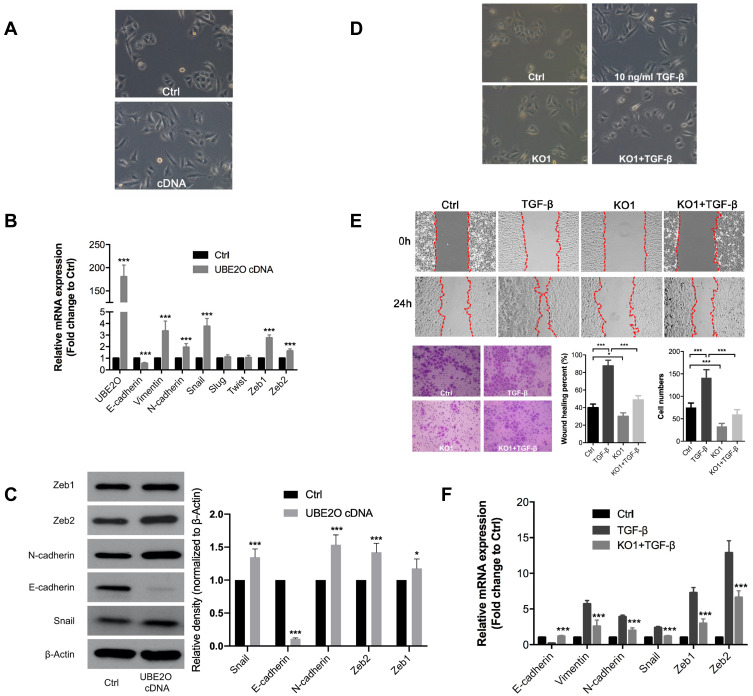
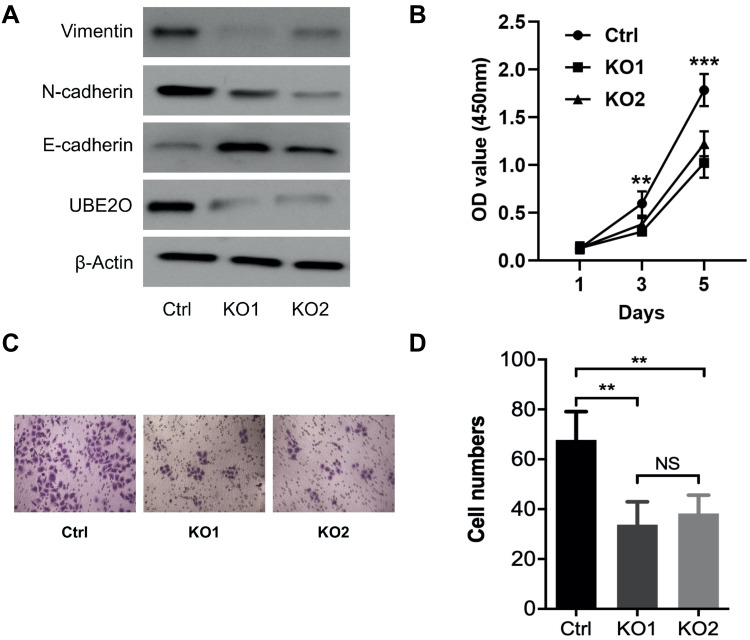
TCGA data showed that UBE2O mRNA expression was dramatically increased in HNSCC tissues and that patients with high expression of UBE2O transcripts had a worse survival prognosis than patients with low expression of UBE2O transcripts. Gain-of-function and loss-of-function analyses revealed that oncogenic UBE2O enhanced the proliferation, migration and invasion of HNSCC cells in vitro. Further, mechanistic analysis revealed that UBE2O induced the epithelial-mesenchymal transition (EMT) phenotype and also potentiated TGF-β1-induced EMT, and thus leading to an enhanced capacity of migration and invasion in HNSCC. Finally, xenograft models showed that UBE2O knockout obviously inhibited the occurrence of EMT, angiogenesis and tumor growth in HNSCC in vivo.
Our study indicates that UBE2O acts as an oncogene to promote the malignant progression and EMT of HNSCC.
泛素结合酶家族成员UBE2O在人类恶性肿瘤中表达异常且功能异常。然而,UBE2O在头颈部鳞状细胞癌(HNSCC)中的功能尚不清楚。因此,我们的研究旨在探讨UBE2O在HNSCC进展中的作用及其潜在机制。
利用癌症基因组图谱(TCGA)的数据以及一个单独的原发性肿瘤队列研究了HNSCC患者中UBE2O的表达。通过细胞活力测定、集落形成测定、伤口愈合测定以及细胞迁移和侵袭小室测定研究了UBE2O在HNSCC细胞中的功能。在HNSCC皮下异种移植模型中确定了UBE2O对体内肿瘤生长的影响。
TCGA数据显示,HNSCC组织中UBE2O mRNA表达显著增加,UBE2O转录本高表达的患者比UBE2O转录本低表达的患者生存预后更差。功能获得和功能丧失分析表明,致癌性UBE2O在体外增强了HNSCC细胞的增殖、迁移和侵袭。此外,机制分析表明,UBE2O诱导上皮-间质转化(EMT)表型,并增强TGF-β1诱导的EMT,从而导致HNSCC迁移和侵袭能力增强。最后,异种移植模型显示,UBE2O基因敲除明显抑制了HNSCC体内EMT、血管生成和肿瘤生长的发生。
我们的研究表明,UBE2O作为一种癌基因促进HNSCC的恶性进展和EMT。