Wu Yong, Xia Lingfang, Guo Qinhao, Zhu Jun, Deng Yu, Wu Xiaohua
Department of Gynecologic Oncology, Fudan University Shanghai Cancer Center, Shanghai, People's Republic of China.
Department of Oncology, Shanghai Medical College, Fudan University, Shanghai, People's Republic of China.
Cancer Manag Res. 2020 Jun 30;12:5213-5223. doi: 10.2147/CMAR.S251622. eCollection 2020.
High-grade serous ovarian cancer (HGSOC) is the leading cause of death among gynecological malignancies. This is mainly attributed to its high rates of chemoresistance. To date, few studies have investigated the molecular mechanisms underlying this resistance to treatment in ovarian cancer patients. In this study, we aimed to explore these molecular mechanisms using bioinformatics analysis.
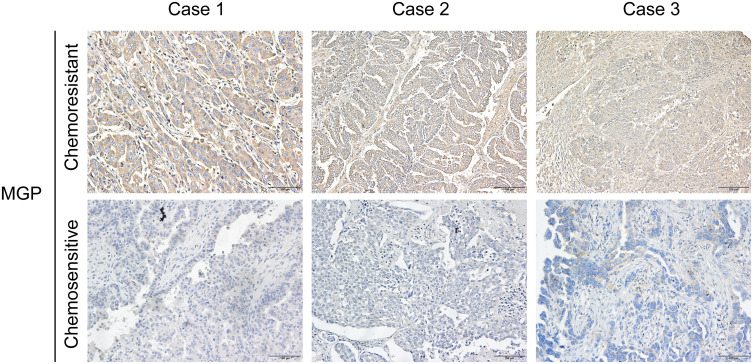
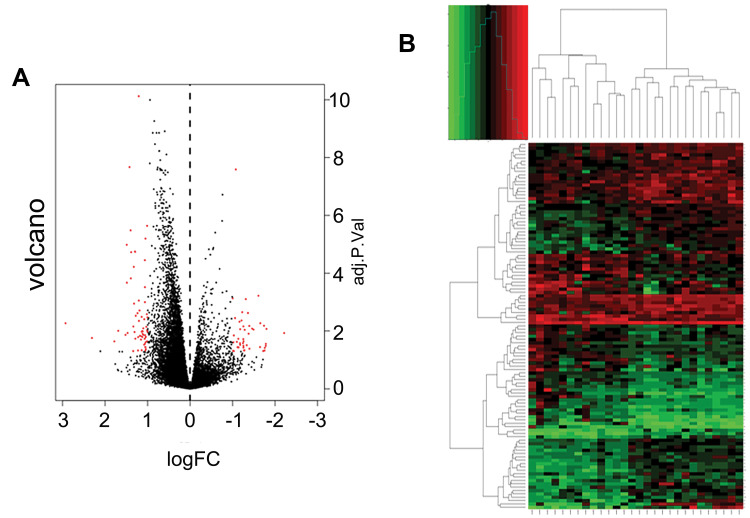
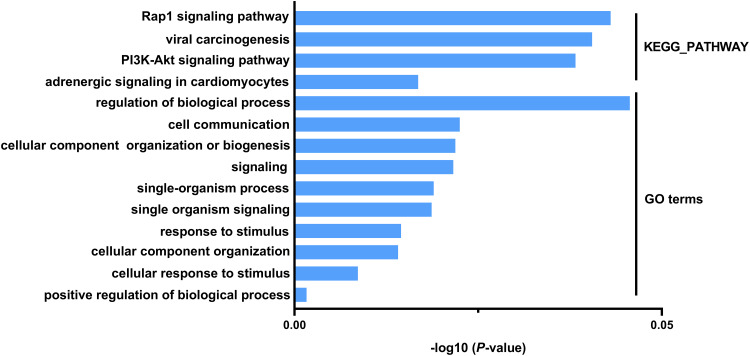
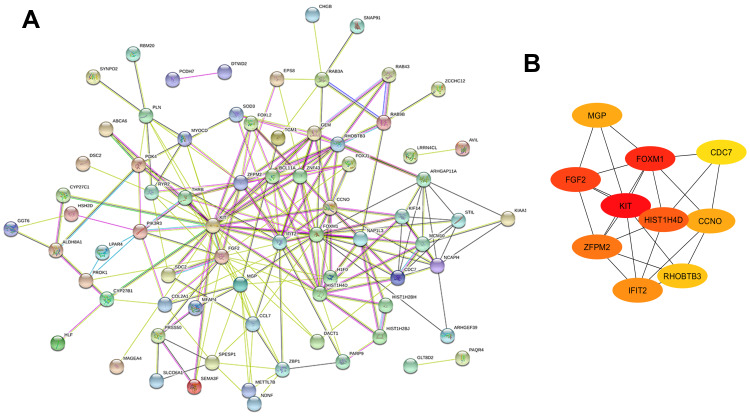
We analyzed microarray data set GSE51373, which included 16 platinum-sensitive HGSOC samples and 12 platinum-resistant control samples. Differentially expressed genes (DEGs) were identified using RStudio. Gene ontology (GO) and Kyoto Encyclopedia of Genes and Genomes (KEGG) pathway enrichment analyses were performed using DAVID, and a DEG-associated protein-protein interaction (PPI) network was constructed using STRING. Hub genes in the PPI network were identified, and the prognostic value of the top ten hub genes was evaluated. MGP, one of the hub genes, was verified by immunohistochemistry.
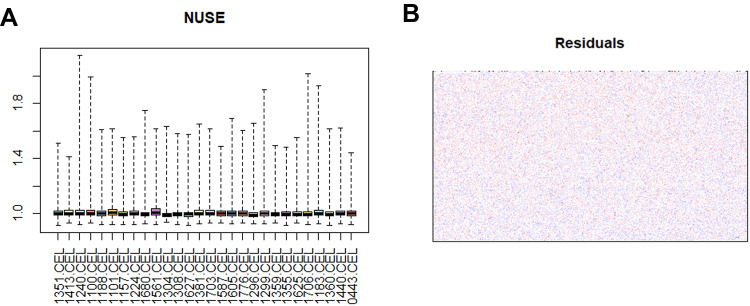
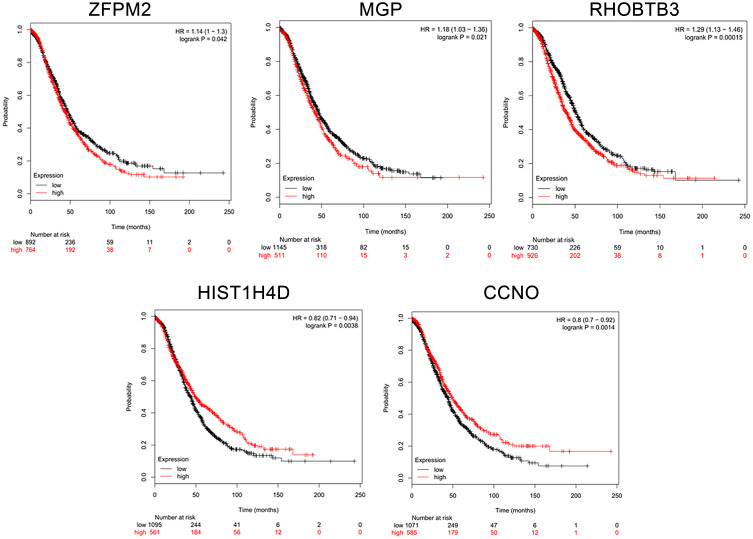
All samples were confirmed to be of high quality. A total of 109 DEGs were identified, and the top ten enriched GO terms and four KEGG pathways were obtained. Specifically, the PI3K-AKT signaling pathway and the Rap1 signaling pathway were identified as having significant roles in chemoresistance in HGSOC. Furthermore, based on the PPI network, KIT, FOXM1, FGF2, HIST1H4D, ZFPM2, IFIT2, CCNO, MGP, RHOBTB3, and CDC7 were identified as hub genes. Five of these hub genes could predict the prognosis of HGSOC patients. Positive immunostaining signals for MGP were observed in the chemoresistant samples.
Taken together, the findings of this study may provide novel insights into HGSOC chemoresistance and identify important therapeutic targets.
高级别浆液性卵巢癌(HGSOC)是妇科恶性肿瘤死亡的主要原因。这主要归因于其高化疗耐药率。迄今为止,很少有研究调查卵巢癌患者这种治疗耐药的分子机制。在本研究中,我们旨在通过生物信息学分析探索这些分子机制。
我们分析了基因芯片数据集GSE51373,其中包括16个铂敏感的HGSOC样本和12个铂耐药对照样本。使用RStudio鉴定差异表达基因(DEG)。使用DAVID进行基因本体论(GO)和京都基因与基因组百科全书(KEGG)通路富集分析,并使用STRING构建DEG相关的蛋白质 - 蛋白质相互作用(PPI)网络。鉴定PPI网络中的枢纽基因,并评估前十个枢纽基因的预后价值。枢纽基因之一的MGP通过免疫组织化学进行验证。
所有样本均被确认为高质量。共鉴定出109个DEG,并获得了前十个富集的GO术语和四条KEGG通路。具体而言,PI3K - AKT信号通路和Rap1信号通路被确定在HGSOC的化疗耐药中起重要作用。此外,基于PPI网络,鉴定出KIT、FOXM1、FGF2、HIST1H4D、ZFPM2、IFIT2、CCNO、MGP、RHOBTB3和CDC7为枢纽基因。其中五个枢纽基因可以预测HGSOC患者的预后。在化疗耐药样本中观察到MGP的阳性免疫染色信号。
综上所述,本研究结果可能为HGSOC化疗耐药提供新的见解,并确定重要的治疗靶点。