• 文献检索
  • 文档翻译
  • 深度研究
  • 学术资讯
  • Suppr Zotero 插件Zotero 插件
  • 邀请有礼
  • 套餐&价格
  • 历史记录
应用&插件
Suppr Zotero 插件Zotero 插件浏览器插件Mac 客户端Windows 客户端微信小程序
定价
高级版会员购买积分包购买API积分包
服务
文献检索文档翻译深度研究API 文档MCP 服务
关于我们
关于 Suppr公司介绍联系我们用户协议隐私条款
关注我们

Suppr 超能文献

核心技术专利:CN118964589B侵权必究
粤ICP备2023148730 号-1Suppr @ 2026

文献检索

告别复杂PubMed语法,用中文像聊天一样搜索,搜遍4000万医学文献。AI智能推荐,让科研检索更轻松。

立即免费搜索

文件翻译

保留排版,准确专业,支持PDF/Word/PPT等文件格式,支持 12+语言互译。

免费翻译文档

深度研究

AI帮你快速写综述,25分钟生成高质量综述,智能提取关键信息,辅助科研写作。

立即免费体验

CRISPR-Cas9介导的强直性肌营养不良CTG重复序列切除中的意外突变及CRISPR干扰作为替代方法的应用

Unexpected Mutations by CRISPR-Cas9 CTG Repeat Excision in Myotonic Dystrophy and Use of CRISPR Interference as an Alternative Approach.

作者信息

Ikeda Miki, Taniguchi-Ikeda Mariko, Kato Takema, Shinkai Yasuko, Tanaka Sonoko, Hagiwara Hiroki, Sasaki Naomichi, Masaki Toshihiro, Matsumura Kiichiro, Sonoo Masahiro, Kurahashi Hiroki, Saito Fumiaki

机构信息

Department of Neurology, School of Medicine, Teikyo University, Tokyo 1738606, Japan.

Department of Clinical Genetics, Fujita Health University Hospital, Aichi 4701192, Japan.

出版信息

Mol Ther Methods Clin Dev. 2020 May 22;18:131-144. doi: 10.1016/j.omtm.2020.05.024. eCollection 2020 Sep 11.

DOI:10.1016/j.omtm.2020.05.024
PMID:32637445
原文链接:https://pmc.ncbi.nlm.nih.gov/articles/PMC7321784/
Abstract

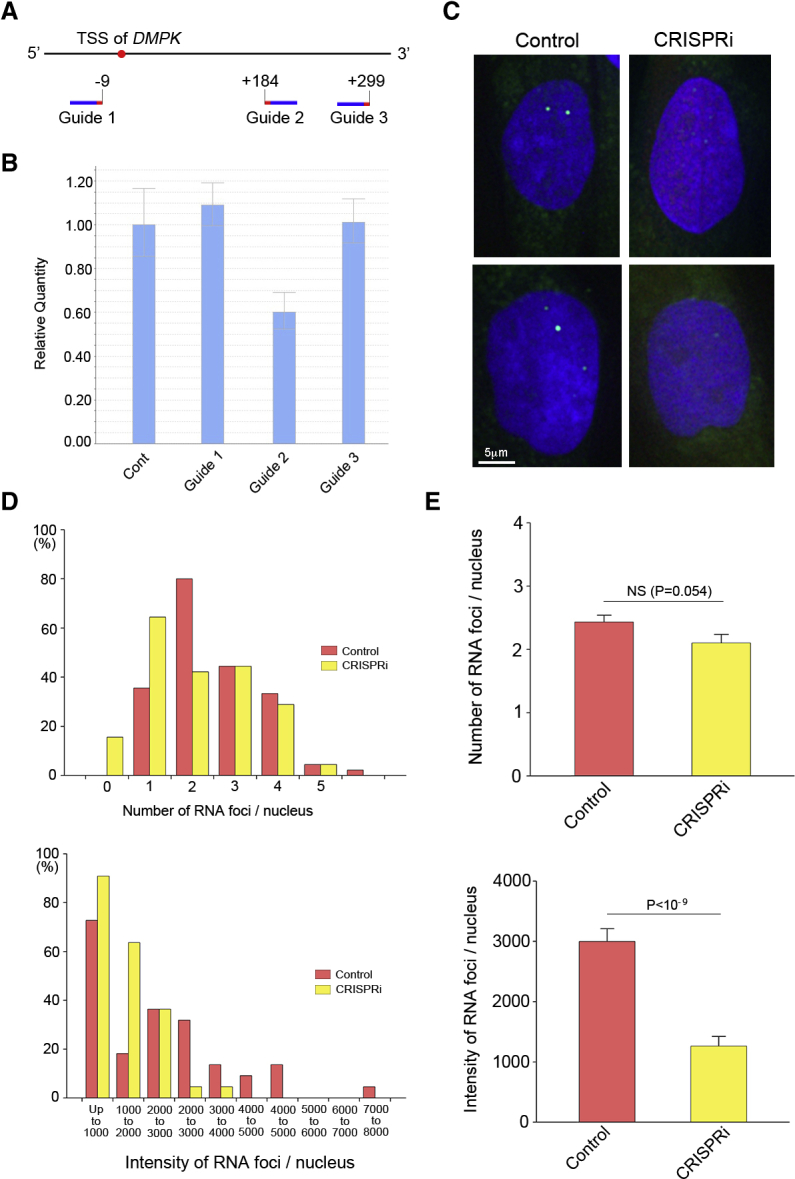
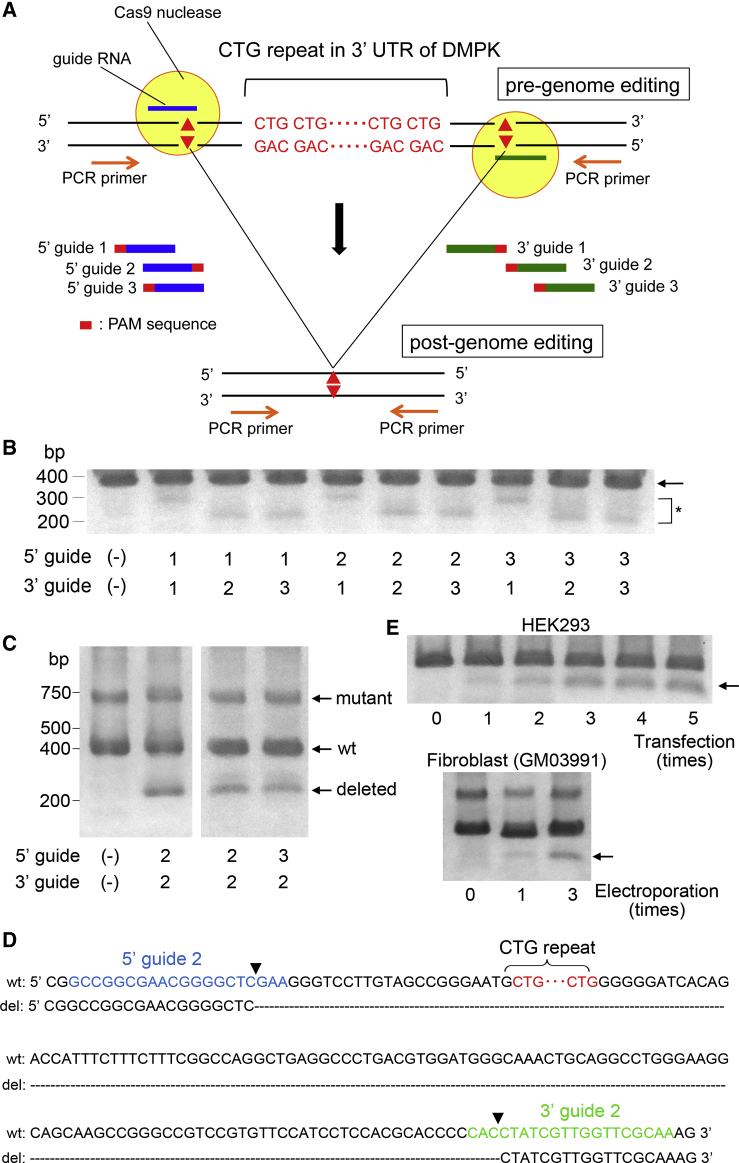
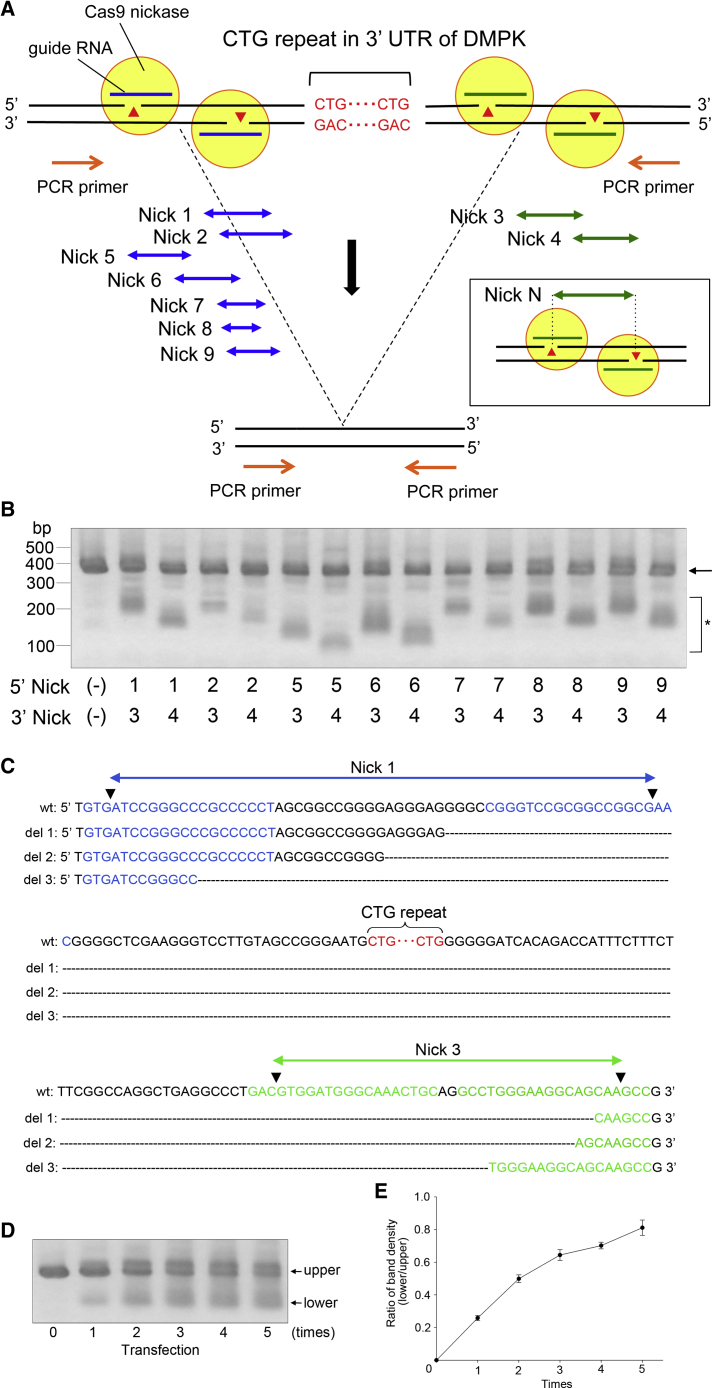
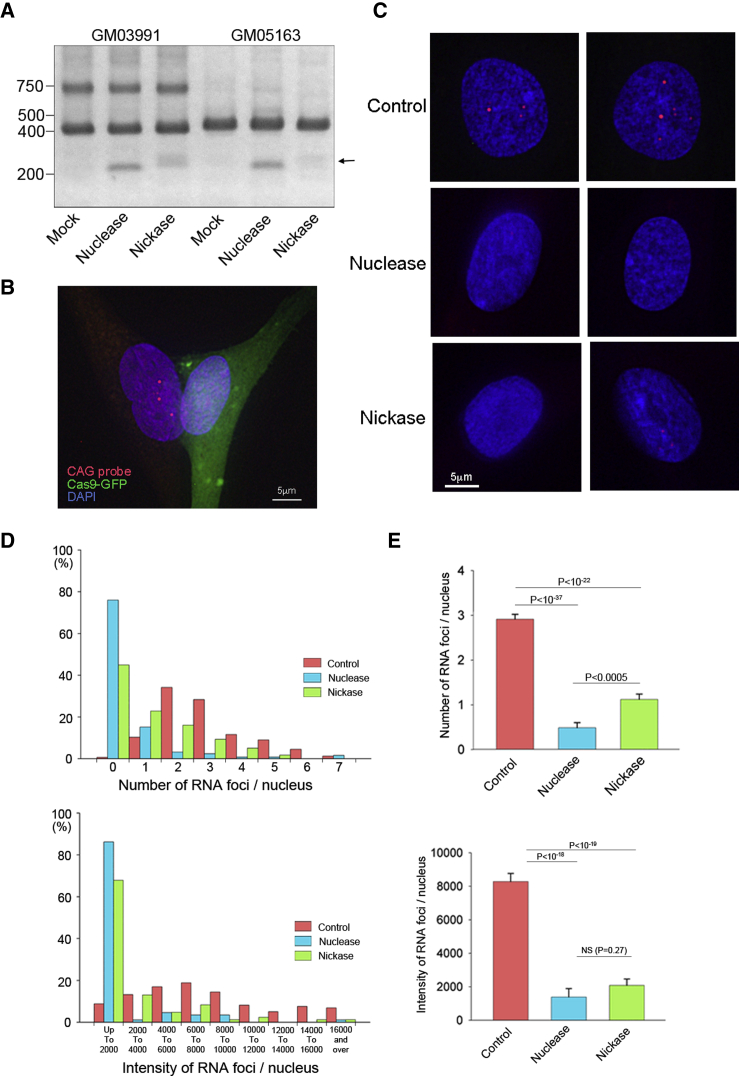
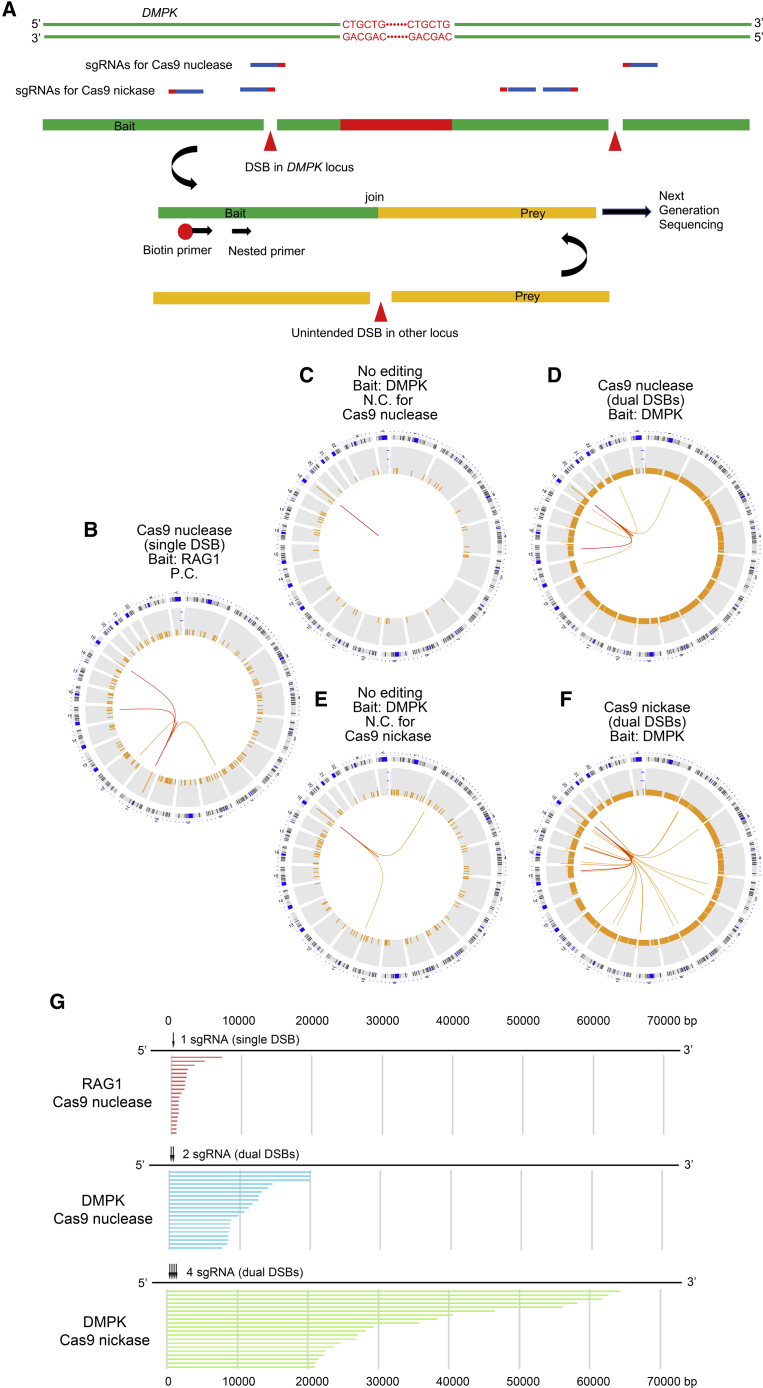
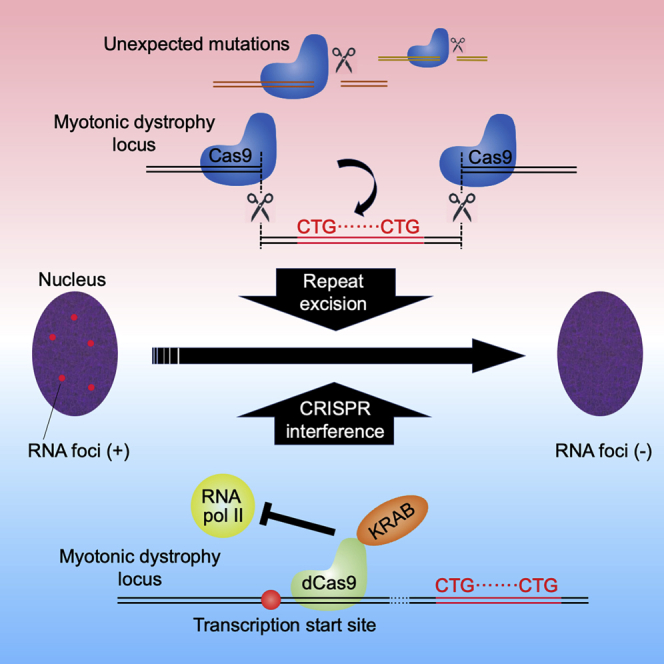
Myotonic dystrophy type 1 is the most common type of adult-onset muscular dystrophy. This is an autosomal dominant disorder and caused by the expansion of the CTG repeat in the 3' untranslated region of the dystrophia myotonica protein kinase () gene. Messenger RNAs containing these expanded repeats form aggregates as nuclear RNA foci. Then, RNA binding proteins, including muscleblind-like 1, are sequestered to the RNA foci, leading to systemic abnormal RNA splicing. In this study, we used CRISPR-Cas9 genome editing to excise this CTG repeat. Dual cleavage at the 5' and 3' regions of the repeat using a conventional Cas9 nuclease and a double nicking with Cas9 nickase successfully excised the CTG repeat. Subsequently, the formation of the RNA foci was markedly reduced in patient-derived fibroblasts. However, contrary to expectations, a considerable amount of off-target digestions and on-target genomic rearrangements were observed using high-throughput genome-wide translocation sequencing. Finally, the suppression of transcripts using CRISPR interference significantly decreased the intensity of RNA foci. Our results indicate that close attention should be paid to the unintended mutations when double-strand breaks are generated by CRISPR-Cas9 for therapeutic purposes. Alternative approaches independent of double-strand breaks, including CRISPR interference, may be considered.

摘要

1型强直性肌营养不良是成人发病的最常见的肌营养不良类型。这是一种常染色体显性疾病,由肌强直性营养不良蛋白激酶()基因3'非翻译区CTG重复序列的扩增引起。含有这些扩增重复序列的信使核糖核酸形成聚集体,作为核RNA病灶。然后,包括类肌肉blind样蛋白1在内的RNA结合蛋白被隔离到RNA病灶中,导致全身性异常RNA剪接。在本研究中,我们使用CRISPR-Cas9基因组编辑技术切除该CTG重复序列。使用传统的Cas9核酸酶在重复序列的5'和3'区域进行双切割以及使用Cas9切口酶进行双切口成功切除了CTG重复序列。随后,在患者来源的成纤维细胞中,RNA病灶的形成明显减少。然而,与预期相反,使用高通量全基因组易位测序观察到了大量的脱靶切割和靶上基因组重排。最后,使用CRISPR干扰抑制转录本显著降低了RNA病灶的强度。我们的结果表明,当为治疗目的通过CRISPR-Cas9产生双链断裂时,应密切关注意外突变。可以考虑采用包括CRISPR干扰在内的独立于双链断裂的替代方法。
https://cdn.ncbi.nlm.nih.gov/pmc/blobs/90cf/7321784/6f2c2b188be7/gr5.jpg
https://cdn.ncbi.nlm.nih.gov/pmc/blobs/90cf/7321784/6bebb1cd0e91/fx1.jpg
https://cdn.ncbi.nlm.nih.gov/pmc/blobs/90cf/7321784/e3fec2d5e009/gr1.jpg
https://cdn.ncbi.nlm.nih.gov/pmc/blobs/90cf/7321784/2116e2e42ab4/gr2.jpg
https://cdn.ncbi.nlm.nih.gov/pmc/blobs/90cf/7321784/9b4ca30b770c/gr3.jpg
https://cdn.ncbi.nlm.nih.gov/pmc/blobs/90cf/7321784/7850463d44cb/gr4.jpg
https://cdn.ncbi.nlm.nih.gov/pmc/blobs/90cf/7321784/6f2c2b188be7/gr5.jpg
https://cdn.ncbi.nlm.nih.gov/pmc/blobs/90cf/7321784/6bebb1cd0e91/fx1.jpg
https://cdn.ncbi.nlm.nih.gov/pmc/blobs/90cf/7321784/e3fec2d5e009/gr1.jpg
https://cdn.ncbi.nlm.nih.gov/pmc/blobs/90cf/7321784/2116e2e42ab4/gr2.jpg
https://cdn.ncbi.nlm.nih.gov/pmc/blobs/90cf/7321784/9b4ca30b770c/gr3.jpg
https://cdn.ncbi.nlm.nih.gov/pmc/blobs/90cf/7321784/7850463d44cb/gr4.jpg
https://cdn.ncbi.nlm.nih.gov/pmc/blobs/90cf/7321784/6f2c2b188be7/gr5.jpg

相似文献

1
Unexpected Mutations by CRISPR-Cas9 CTG Repeat Excision in Myotonic Dystrophy and Use of CRISPR Interference as an Alternative Approach.CRISPR-Cas9介导的强直性肌营养不良CTG重复序列切除中的意外突变及CRISPR干扰作为替代方法的应用
Mol Ther Methods Clin Dev. 2020 May 22;18:131-144. doi: 10.1016/j.omtm.2020.05.024. eCollection 2020 Sep 11.
2
CRISPR/Cas9-Mediated Deletion of CTG Expansions Recovers Normal Phenotype in Myogenic Cells Derived from Myotonic Dystrophy 1 Patients.CRISPR/Cas9介导的CTG重复序列缺失可恢复强直性肌营养不良1型患者来源的成肌细胞的正常表型。
Mol Ther Nucleic Acids. 2017 Dec 15;9:337-348. doi: 10.1016/j.omtn.2017.10.006. Epub 2017 Oct 14.
3
Application of CRISPR-Cas9-Mediated Genome Editing for the Treatment of Myotonic Dystrophy Type 1.CRISPR-Cas9 介导的基因组编辑在 1 型肌强直性营养不良治疗中的应用。
Mol Ther. 2020 Dec 2;28(12):2527-2539. doi: 10.1016/j.ymthe.2020.10.005. Epub 2020 Oct 14.
4
Genome Editing of Expanded CTG Repeats within the Human DMPK Gene Reduces Nuclear RNA Foci in the Muscle of DM1 Mice.人类 DMPK 基因内扩增 CTG 重复序列的基因组编辑减少了 DM1 小鼠肌肉中的核 RNA 焦点。
Mol Ther. 2019 Aug 7;27(8):1372-1388. doi: 10.1016/j.ymthe.2019.05.021. Epub 2019 Jun 5.
5
Time-controlled and muscle-specific CRISPR/Cas9-mediated deletion of CTG-repeat expansion in the gene.通过时间控制和肌肉特异性的CRISPR/Cas9介导的该基因中CTG重复序列扩增的缺失。
Mol Ther Nucleic Acids. 2021 Nov 29;27:184-199. doi: 10.1016/j.omtn.2021.11.024. eCollection 2022 Mar 8.
6
Efficient CRISPR/Cas9-mediated editing of trinucleotide repeat expansion in myotonic dystrophy patient-derived iPS and myogenic cells.高效的 CRISPR/Cas9 介导的肌强直性营养不良患者来源的 iPS 和肌源性细胞中的三核苷酸重复扩展编辑。
Nucleic Acids Res. 2018 Sep 19;46(16):8275-8298. doi: 10.1093/nar/gky548.
7
CRISPR/Cas9-Induced (CTG⋅CAG) Repeat Instability in the Myotonic Dystrophy Type 1 Locus: Implications for Therapeutic Genome Editing.CRISPR/Cas9诱导的1型强直性肌营养不良基因座中(CTG⋅CAG)重复序列不稳定性:对治疗性基因组编辑的启示
Mol Ther. 2017 Jan 4;25(1):24-43. doi: 10.1016/j.ymthe.2016.10.014.
8
Therapeutic Genome Editing for Myotonic Dystrophy Type 1 Using CRISPR/Cas9.使用 CRISPR/Cas9 治疗 1 型肌强直性营养不良症的基因组编辑
Mol Ther. 2018 Nov 7;26(11):2617-2630. doi: 10.1016/j.ymthe.2018.09.003. Epub 2018 Sep 11.
9
CRISPR/Cas Applications in Myotonic Dystrophy: Expanding Opportunities.CRISPR/Cas 技术在强直性肌营养不良症中的应用:拓展机遇
Int J Mol Sci. 2019 Jul 27;20(15):3689. doi: 10.3390/ijms20153689.
10
Myotonic dystrophy associated expanded CUG repeat muscleblind positive ribonuclear foci are not toxic to Drosophila.强直性肌营养不良相关的扩展CUG重复序列肌盲阳性核糖核蛋白病灶对果蝇无毒。
Hum Mol Genet. 2005 Mar 15;14(6):873-83. doi: 10.1093/hmg/ddi080. Epub 2005 Feb 9.

引用本文的文献

1
Muscle-specific gene editing improves molecular and phenotypic defects in a mouse model of myotonic dystrophy type 1.肌肉特异性基因编辑改善了1型强直性肌营养不良小鼠模型中的分子和表型缺陷。
Clin Transl Med. 2025 Feb;15(2):e70227. doi: 10.1002/ctm2.70227.
2
Precise editing of pathogenic nucleotide repeat expansions in iPSCs using paired prime editor.利用配对先导编辑精确编辑 iPS 细胞中的致病性核苷酸重复扩展。
Nucleic Acids Res. 2024 Jun 10;52(10):5792-5803. doi: 10.1093/nar/gkae310.
3
Epigenetic editing for autosomal dominant neurological disorders.

本文引用的文献

1
CRISPR-Based Therapeutic Genome Editing: Strategies and In Vivo Delivery by AAV Vectors.基于 CRISPR 的治疗性基因组编辑:策略和 AAV 载体的体内递送。
Cell. 2020 Apr 2;181(1):136-150. doi: 10.1016/j.cell.2020.03.023.
2
Extracellular nanovesicles for packaging of CRISPR-Cas9 protein and sgRNA to induce therapeutic exon skipping.用于包装 CRISPR-Cas9 蛋白和 sgRNA 的细胞外纳米囊泡,以诱导治疗性外显子跳跃。
Nat Commun. 2020 Mar 13;11(1):1334. doi: 10.1038/s41467-020-14957-y.
3
Genome Editing of Expanded CTG Repeats within the Human DMPK Gene Reduces Nuclear RNA Foci in the Muscle of DM1 Mice.
常染色体显性神经疾病的表观遗传编辑
Front Genome Ed. 2024 Mar 6;6:1304110. doi: 10.3389/fgeed.2024.1304110. eCollection 2024.
4
Mechanistic and Therapeutic Insights into Ataxic Disorders with Pentanucleotide Expansions.五核苷酸重复扩展相关共济失调障碍的发病机制和治疗学新见解。
Cells. 2022 May 6;11(9):1567. doi: 10.3390/cells11091567.
5
Molecular Therapies for Myotonic Dystrophy Type 1: From Small Drugs to Gene Editing.肌强直性营养不良 1 型的分子治疗:从小分子药物到基因编辑。
Int J Mol Sci. 2022 Apr 21;23(9):4622. doi: 10.3390/ijms23094622.
6
Time-controlled and muscle-specific CRISPR/Cas9-mediated deletion of CTG-repeat expansion in the gene.通过时间控制和肌肉特异性的CRISPR/Cas9介导的该基因中CTG重复序列扩增的缺失。
Mol Ther Nucleic Acids. 2021 Nov 29;27:184-199. doi: 10.1016/j.omtn.2021.11.024. eCollection 2022 Mar 8.
7
Repeat RNA expansion disorders of the nervous system: post-transcriptional mechanisms and therapeutic strategies.神经系统重复 RNA 扩展障碍:转录后机制和治疗策略。
Crit Rev Biochem Mol Biol. 2021 Feb;56(1):31-53. doi: 10.1080/10409238.2020.1841726. Epub 2020 Nov 10.
人类 DMPK 基因内扩增 CTG 重复序列的基因组编辑减少了 DM1 小鼠肌肉中的核 RNA 焦点。
Mol Ther. 2019 Aug 7;27(8):1372-1388. doi: 10.1016/j.ymthe.2019.05.021. Epub 2019 Jun 5.
4
Microhomologies are prevalent at Cas9-induced larger deletions.微同源序列在 Cas9 诱导的较大缺失中普遍存在。
Nucleic Acids Res. 2019 Aug 22;47(14):7402-7417. doi: 10.1093/nar/gkz459.
5
Identification of on-target mutagenesis during correction of a beta-thalassemia splice mutation in iPS cells with optimised CRISPR/Cas9-double nickase reveals potential safety concerns.在利用优化的CRISPR/Cas9双切口酶对诱导多能干细胞中的β地中海贫血剪接突变进行校正过程中对靶向诱变的鉴定揭示了潜在的安全问题。
APL Bioeng. 2018 Dec 3;2(4):046103. doi: 10.1063/1.5048625. eCollection 2018 Dec.
6
Long-term evaluation of AAV-CRISPR genome editing for Duchenne muscular dystrophy.AAV-CRISPR 基因组编辑治疗杜氏肌营养不良症的长期评估。
Nat Med. 2019 Mar;25(3):427-432. doi: 10.1038/s41591-019-0344-3. Epub 2019 Feb 18.
7
Therapeutic Genome Editing for Myotonic Dystrophy Type 1 Using CRISPR/Cas9.使用 CRISPR/Cas9 治疗 1 型肌强直性营养不良症的基因组编辑
Mol Ther. 2018 Nov 7;26(11):2617-2630. doi: 10.1016/j.ymthe.2018.09.003. Epub 2018 Sep 11.
8
Large deletions induced by Cas9 cleavage.由Cas9切割诱导的大片段缺失。
Nature. 2018 Aug;560(7717):E8-E9. doi: 10.1038/s41586-018-0380-z. Epub 2018 Aug 8.
9
Repair of double-strand breaks induced by CRISPR-Cas9 leads to large deletions and complex rearrangements.CRISPR-Cas9 诱导的双链断裂的修复会导致大片段缺失和复杂重排。
Nat Biotechnol. 2018 Sep;36(8):765-771. doi: 10.1038/nbt.4192. Epub 2018 Jul 16.
10
Efficient CRISPR/Cas9-mediated editing of trinucleotide repeat expansion in myotonic dystrophy patient-derived iPS and myogenic cells.高效的 CRISPR/Cas9 介导的肌强直性营养不良患者来源的 iPS 和肌源性细胞中的三核苷酸重复扩展编辑。
Nucleic Acids Res. 2018 Sep 19;46(16):8275-8298. doi: 10.1093/nar/gky548.