Department of Biomedical Engineering, Amirkabir University of Technology, Tehran 159163, Iran.
Electrical and Computer Engineering Department, Semnan University, Semnan 35131, Iran.
Sensors (Basel). 2020 Jul 6;20(13):3784. doi: 10.3390/s20133784.
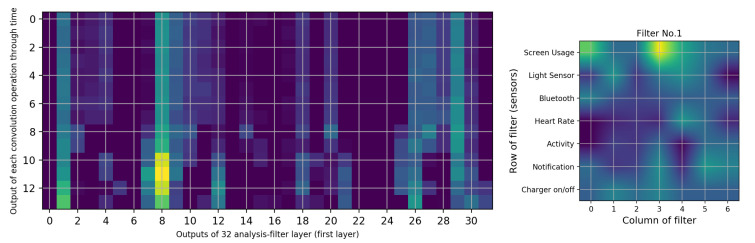
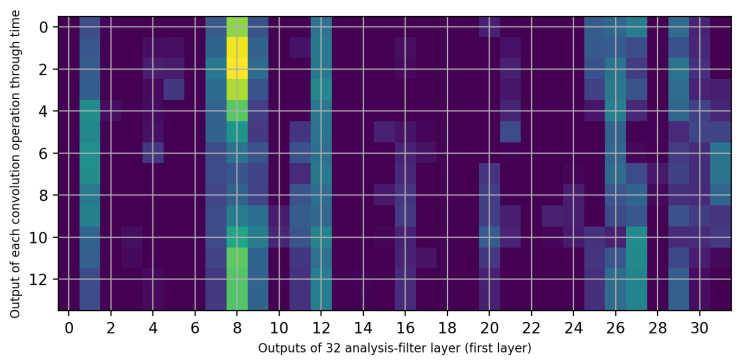
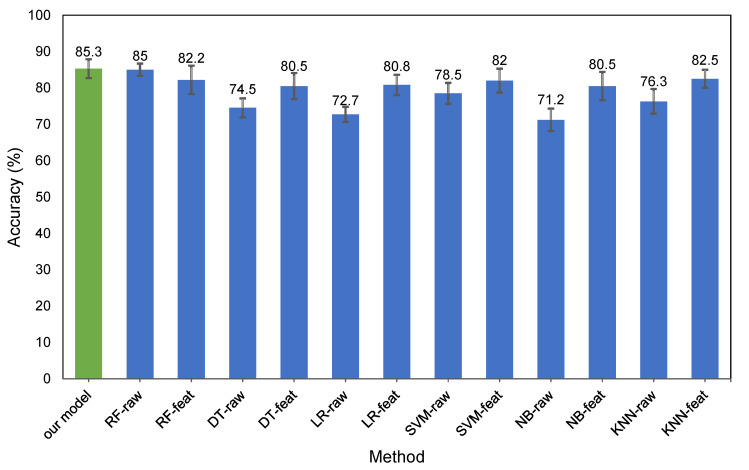
Smartwatch battery limitations are one of the biggest hurdles to their acceptability in the consumer market. To our knowledge, despite promising studies analyzing smartwatch battery data, there has been little research that has analyzed the battery usage of a diverse set of smartwatches in a real-world setting. To address this challenge, this paper utilizes a smartwatch dataset collected from 832 real-world users, including different smartwatch brands and geographic locations. First, we employ clustering to identify common patterns of smartwatch battery utilization; second, we introduce a transparent low-parameter convolutional neural network model, which allows us to identify the latent patterns of smartwatch battery utilization. Our model converts the battery consumption rate into a binary classification problem; i.e., low and high consumption. Our model has 85.3% accuracy in predicting high battery discharge events, outperforming other machine learning algorithms that have been used in state-of-the-art research. Besides this, it can be used to extract information from filters of our deep learning model, based on learned filters of the feature extractor, which is impossible for other models. Third, we introduce an indexing method that includes a longitudinal study to quantify smartwatch battery quality changes over time. Our novel findings can assist device manufacturers, vendors and application developers, as well as end-users, to improve smartwatch battery utilization.
智能手表电池的局限性是其在消费者市场中被接受的最大障碍之一。据我们所知,尽管有一些有前景的研究分析了智能手表电池数据,但很少有研究在真实环境中分析各种智能手表的电池使用情况。为了应对这一挑战,本文利用从 832 名实际用户收集的智能手表数据集,包括不同的智能手表品牌和地理位置。首先,我们采用聚类方法来识别智能手表电池使用的常见模式;其次,我们引入了一种透明的低参数卷积神经网络模型,该模型允许我们识别智能手表电池使用的潜在模式。我们的模型将电池消耗率转换为二进制分类问题,即低消耗和高消耗。我们的模型在预测高电池放电事件方面的准确率达到 85.3%,优于其他在最先进的研究中使用的机器学习算法。此外,它可以用于从我们的深度学习模型的过滤器中提取信息,这是基于特征提取器的学习过滤器,其他模型无法做到这一点。第三,我们引入了一种索引方法,包括一项纵向研究,以量化智能手表电池质量随时间的变化。我们的新发现可以帮助设备制造商、供应商和应用程序开发人员以及最终用户提高智能手表电池的利用率。