Research Laboratory, Botswana Harvard AIDS Institute Partnership, Gaborone 0000, Botswana.
Division of Human Genetics, Department of Pathology, Faculty of Health Sciences, University of Cape Town, Cape Town 7925, South Africa.
Viruses. 2020 Jul 6;12(7):731. doi: 10.3390/v12070731.
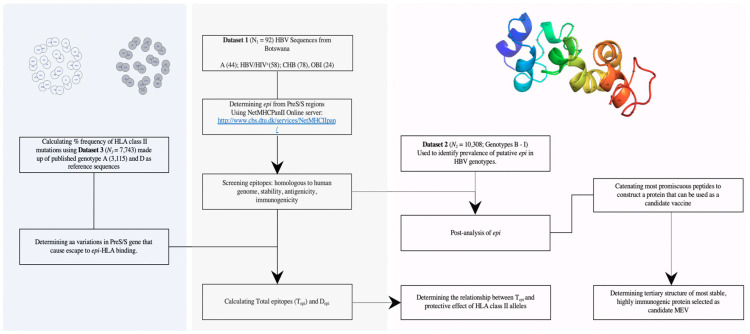
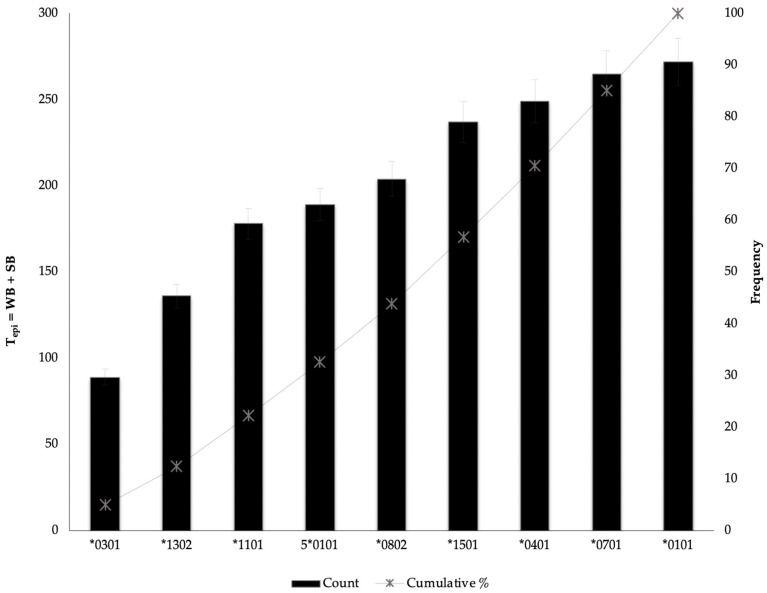
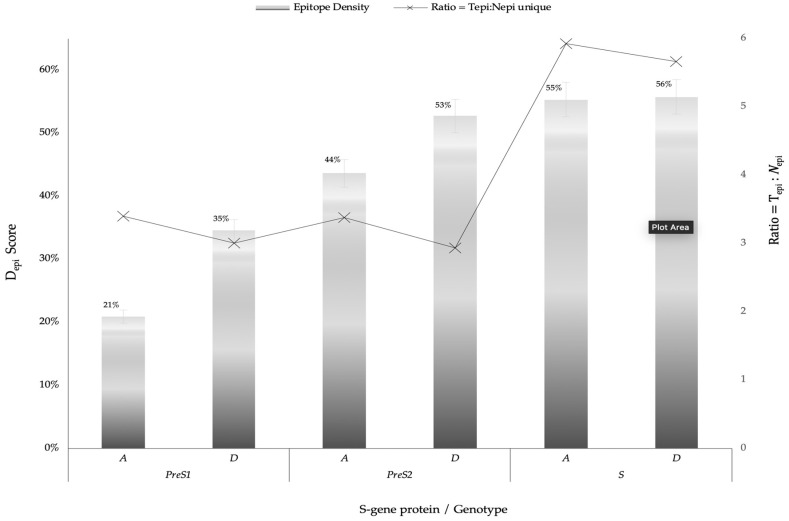
Hepatitis B virus (HBV) is the primary cause of liver-related malignancies worldwide, and there is no effective cure for chronic HBV infection (CHB) currently. Strong immunological responses induced by T cells are associated with HBV clearance during acute infection; however, the repertoire of epitopes () presented by major histocompatibility complexes (MHCs) to elicit these responses in various African populations is not well understood. In silico approaches were used to map and investigate 15-mers HBV peptides restricted to 9 HLA class II alleles with high population coverage in Botswana. Sequences from 44 HBV genotype A and 48 genotype D surface genes () from Botswana were used. Of the 1819 bindings predicted, 20.2% were strong binders (SB), and none of the putative bind to all the 9 alleles suggesting that multi-epitope, genotype-based, population-based vaccines will be more effective against HBV infections as opposed to previously proposed broad potency epitope-vaccines which were assumed to work for all alleles. In total, there were 297 unique predicted from the 3 proteins and amongst, S regions had the highest number of (n = 186). Epitope-densities (D) between genotypes A and D were similar. A number of mutations that hindered HLA-peptide binding were observed. We also identified antigenic and genotype-specific peptides with characteristics that are well suited for the development of sensitive diagnostic kits. This study identified candidate peptides that can be used for developing multi-epitope vaccines and highly sensitive diagnostic kits against HBV infection in an African population. Our results suggest that viral variability may hinder HBV peptide-MHC binding, required to initiate a cascade of immunological responses against infection.
乙型肝炎病毒(HBV)是全球与肝脏相关恶性肿瘤的主要病因,目前尚无针对慢性乙型肝炎病毒感染(CHB)的有效治疗方法。在急性感染期间,T 细胞诱导的强烈免疫应答与 HBV 清除有关;然而,在各种非洲人群中,主要组织相容性复合物(MHC)呈递的表位()引发这些应答的 repertoire 尚未得到很好的理解。本研究采用计算机方法对博茨瓦纳具有高人群覆盖率的 9 种 HLA Ⅱ类等位基因限制的 15 聚体 HBV 肽进行了定位和研究。使用了来自博茨瓦纳的 44 种 HBV 基因型 A 和 48 种基因型 D 表面基因()。在预测的 1819 个结合中,20.2%为强结合(SB),没有一个假定的结合物能与所有 9 个等位基因结合,这表明多表位、基于基因型、基于人群的疫苗将比以前提出的针对所有等位基因的广谱效力表位疫苗更有效针对 HBV 感染。总共从 3 种蛋白中预测了 297 个独特的 ,其中 S 区的 数量最多(n = 186)。A 型和 D 型基因型之间的表位密度(D)相似。观察到一些阻碍 HLA-肽结合的突变。我们还鉴定了具有适合开发敏感诊断试剂盒的特征的抗原和基因型特异性肽。本研究鉴定了候选肽,可用于开发针对非洲人群中乙型肝炎病毒感染的多表位疫苗和高度敏感的诊断试剂盒。我们的结果表明,病毒变异性可能会阻碍乙型肝炎病毒肽-MHC 结合,这是针对感染引发免疫应答级联反应所必需的。