State Key Laboratory for Diagnosis and Treatment of Infectious Diseases, National Clinical Research Center for Infectious Diseases, Collaborative Innovation Center for Diagnosis and Treatment of Infectious Diseases, The First Affiliated Hospital, College of Medicine, Zhejiang University, Hangzhou, China.
Infect Dis Poverty. 2020 Jul 8;9(1):85. doi: 10.1186/s40249-020-00710-6.
The outbreak of coronavirus disease 2019 (COVID-19) is now becoming an enormous threat to public health. The clinical spectrum of COVID-19 is extensive, of which critical cases are with rapid disease progression and high mortality. The aim of our study is to summarize the characteristics of different subtypes and explore risk factors of illness severity for early identification and prompt treatment.
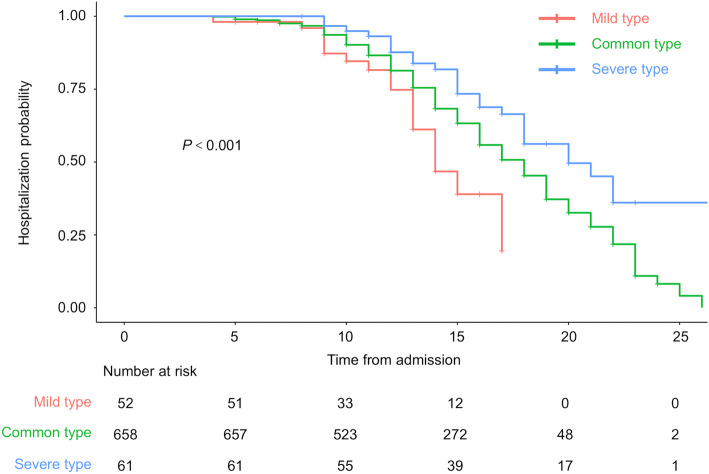
In this retrospective study, we collected data of patients confirmed COVID-19 in Zhejiang Province from 17 January to 12 February 2020. According to the definition of clinical classification, we divided confirmed cases into four types, and summarize epidemiological and clinical characteristics, laboratory and radiograph findings, treatments, and outcomes, respectively. Moreover, we used univariate and multivariate ordinal logistic regression models to explore risk factors for the severity of illness in patients with COVID-19.
A total of 788 patients were enrolled in our study, of whom 52 cases (6.6%) were mild type, 658 cases (83.5%) were common type, 61 cases (7.2%) were severe type, and 17 cases (2.2%) were critical type. Multivariate ordinal logistic regression demonstrated increasing odds of the severity of illness in patients with COVID-19 associated with male (odds ratio [OR] = 1.7, 95% confidence interval [CI]: 1.2-2.6 P = 0.008), fever (OR = 3.6, 95% CI: 2.1-6.3, P < 0.001), cough (OR = 1.7, 95% CI: 1.0-2.9, P = 0.041), hemoptysis (OR = 3.4, 95% CI: 1.1-10.3, P = 0.032), gastrointestinal symptoms (OR = 1.9, 95% CI: 1.0-3.5, P = 0.047), hypertension (OR = 2.6, 95% CI: 1.2-5.6, P = 0.013). With the increase of age-grading, risk for the severity of illness was gradually higher (≤ 18 years [OR = 1.0], 19-40 years [OR = 12.7, 95% CI: 4.5-36.0, P < 0.001], 41-65 years [OR = 14.8, 95% CI: 5.2-42.1, P < 0.001], ≥ 66 years [OR = 56.5, 95% CI: 17.1-186.5, P < 0.001]).
Clinicians should pay close attention to these features in patients with COVID-19 including older age, male, fever, cough, hemoptysis, gastrointestinal symptoms and hypertension to identify the severity of illness as early as possible.
2019 年冠状病毒病(COVID-19)的爆发现在对公众健康构成了巨大威胁。COVID-19 的临床谱广泛,其中重症病例疾病进展迅速,死亡率高。我们研究的目的是总结不同亚型的特征,并探讨疾病严重程度的危险因素,以便早期识别和及时治疗。
在这项回顾性研究中,我们收集了 2020 年 1 月 17 日至 2 月 12 日期间浙江省确诊的 COVID-19 患者的数据。根据临床分类的定义,我们将确诊病例分为四种类型,分别总结流行病学和临床特征、实验室和影像学检查结果、治疗方法和转归。此外,我们使用单变量和多变量有序逻辑回归模型探讨 COVID-19 患者疾病严重程度的危险因素。
本研究共纳入 788 例患者,其中 52 例(6.6%)为轻症,658 例(83.5%)为普通型,61 例(7.2%)为重型,17 例(2.2%)为危重型。多变量有序逻辑回归显示,COVID-19 患者疾病严重程度的可能性与男性(比值比[OR] = 1.7,95%置信区间[CI]:1.2-2.6,P = 0.008)、发热(OR = 3.6,95% CI:2.1-6.3,P < 0.001)、咳嗽(OR = 1.7,95% CI:1.0-2.9,P = 0.041)、咯血(OR = 3.4,95% CI:1.1-10.3,P = 0.032)、胃肠道症状(OR = 1.9,95% CI:1.0-3.5,P = 0.047)、高血压(OR = 2.6,95% CI:1.2-5.6,P = 0.013)相关。随着年龄分级的增加,疾病严重程度的风险逐渐升高(≤ 18 岁[OR = 1.0],19-40 岁[OR = 12.7,95% CI:4.5-36.0,P <0.001],41-65 岁[OR = 14.8,95% CI:5.2-42.1,P < 0.001],≥ 66 岁[OR = 56.5,95% CI:17.1-186.5,P < 0.001])。
临床医生应密切关注 COVID-19 患者的这些特征,包括年龄较大、男性、发热、咳嗽、咯血、胃肠道症状和高血压,以便尽早识别疾病严重程度。