Division of Cancer Biology, Institute for Genetic Medicine, Hokkaido University, Sapporo, Japan.
National Institute of Dental and Craniofacial Research, National Institutes of Health, Bethesda, MD, USA.
Cell Death Dis. 2020 Jul 8;11(7):517. doi: 10.1038/s41419-020-2724-5.
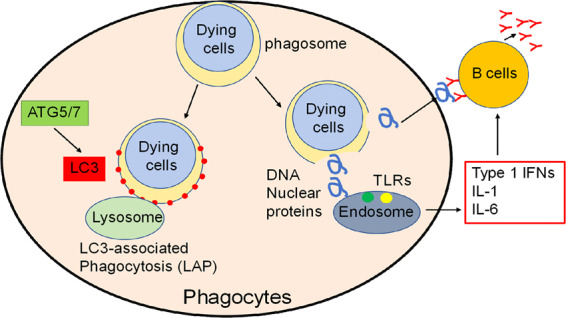
The balance between cell death and survival is a critical parameter in the regulation of cells and the maintenance of homeostasis in vivo. Three major mechanisms for cell death have been identified in mammalian cells: apoptosis (type I), autophagic cell death (type II), and necrosis (type III). These three mechanisms have been suggested to engage in cross talk with each other. Among them, autophagy was originally characterized as a cell survival mechanism for amino acid recycling during starvation. Whether autophagy functions primarily in cell survival or cell death is a critical question yet to be answered. Here, we present a comprehensive review of the cell death-related events that take place during autophagy and their underlying mechanisms in cancer and autoimmune disease development.
细胞死亡与存活之间的平衡是调节细胞和维持体内内稳态的关键参数。哺乳动物细胞中已经确定了三种主要的细胞死亡机制:细胞凋亡(I 型)、自噬性细胞死亡(II 型)和坏死(III 型)。这三种机制被认为相互之间存在串扰。其中,自噬最初被描述为在饥饿期间氨基酸回收时的细胞存活机制。自噬主要是在细胞存活还是细胞死亡中起作用是一个尚未解决的关键问题。在这里,我们全面回顾了自噬过程中发生的与细胞死亡相关的事件及其在癌症和自身免疫性疾病发展中的潜在机制。