Muller Paul A, Schneeberger Marc, Matheis Fanny, Wang Putianqi, Kerner Zachary, Ilanges Anoj, Pellegrino Kyle, Del Mármol Josefina, Castro Tiago B R, Furuichi Munehiro, Perkins Matthew, Han Wenfei, Rao Arka, Pickard Amanda J, Cross Justin R, Honda Kenya, de Araujo Ivan, Mucida Daniel
Laboratory of Mucosal Immunology, The Rockefeller University, New York, NY, USA.
Kallyope Inc., New York, NY, USA.
Nature. 2020 Jul;583(7816):441-446. doi: 10.1038/s41586-020-2474-7. Epub 2020 Jul 8.
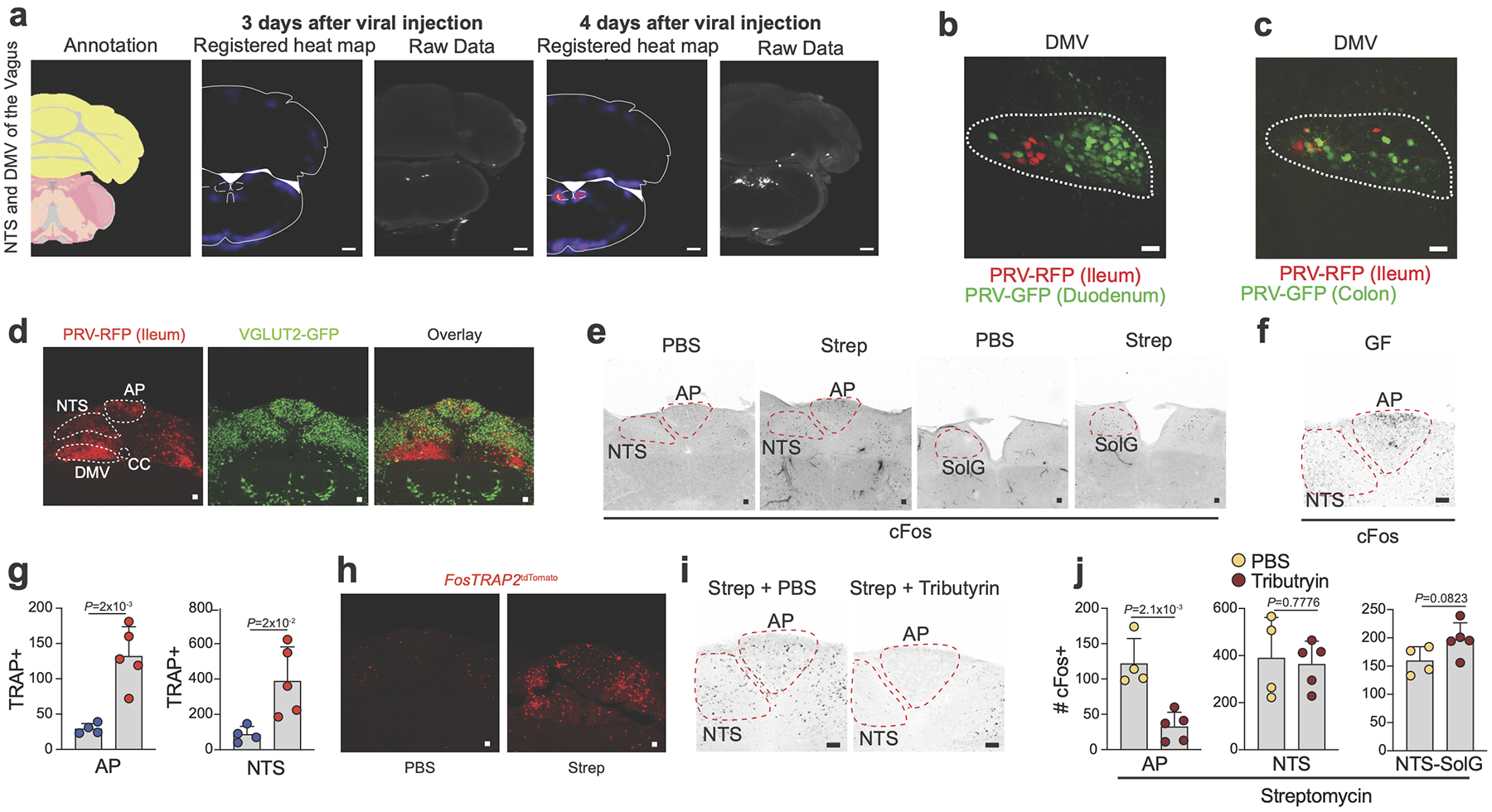
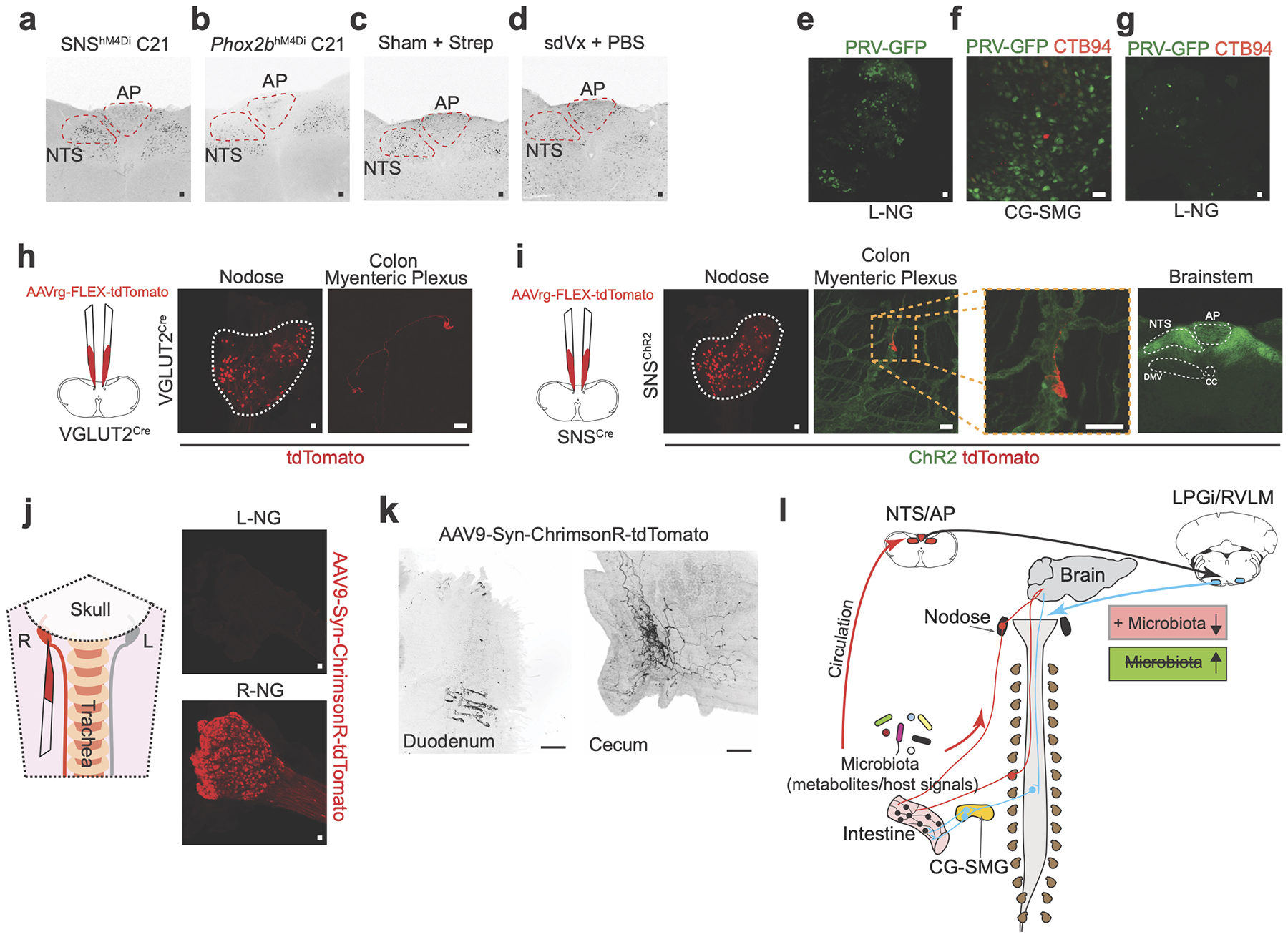
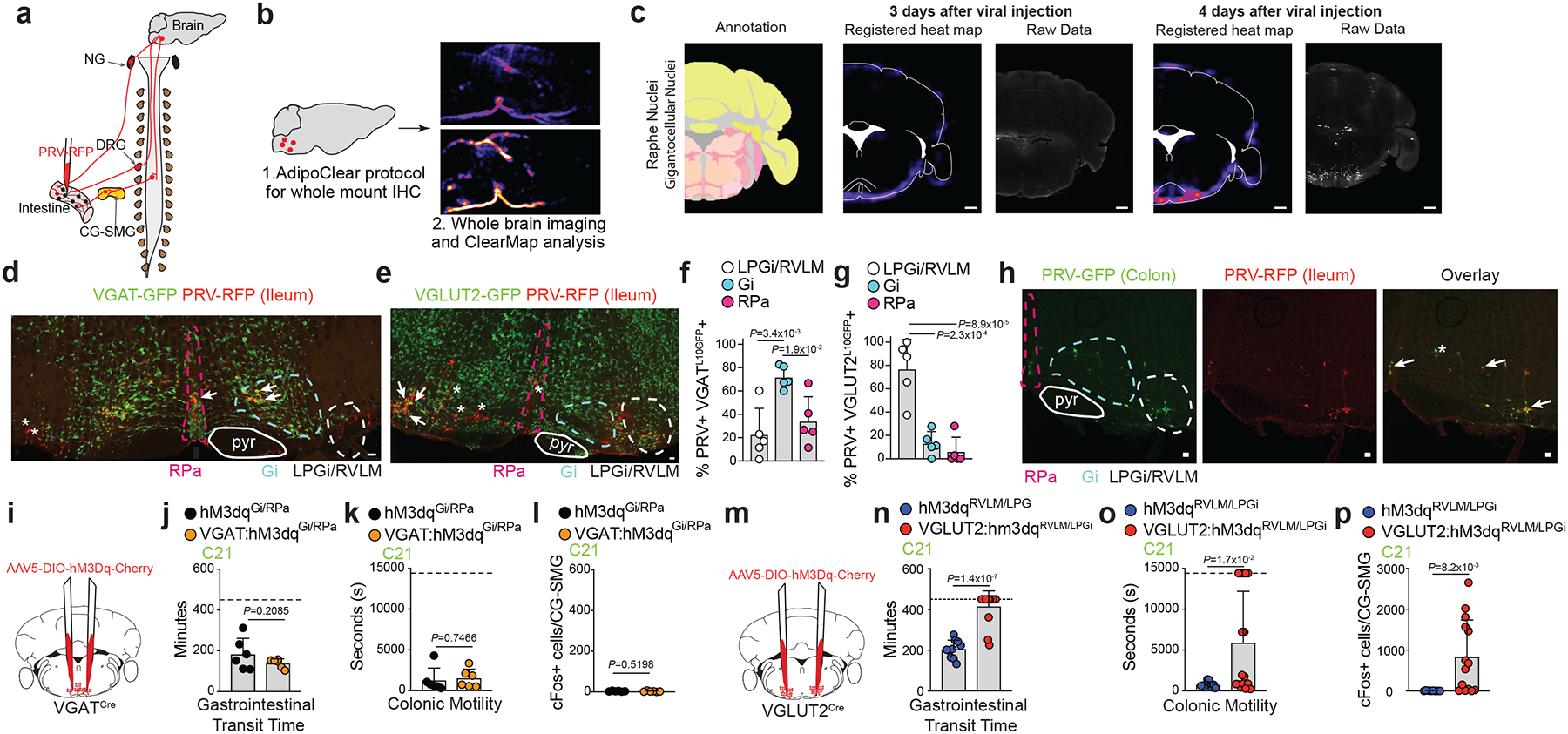
Connections between the gut and brain monitor the intestinal tissue and its microbial and dietary content, regulating both physiological intestinal functions such as nutrient absorption and motility, and brain-wired feeding behaviour. It is therefore plausible that circuits exist to detect gut microorganisms and relay this information to areas of the central nervous system that, in turn, regulate gut physiology. Here we characterize the influence of the microbiota on enteric-associated neurons by combining gnotobiotic mouse models with transcriptomics, circuit-tracing methods and functional manipulations. We find that the gut microbiome modulates gut-extrinsic sympathetic neurons: microbiota depletion leads to increased expression of the neuronal transcription factor cFos, and colonization of germ-free mice with bacteria that produce short-chain fatty acids suppresses cFos expression in the gut sympathetic ganglia. Chemogenetic manipulations, translational profiling and anterograde tracing identify a subset of distal intestine-projecting vagal neurons that are positioned to have an afferent role in microbiota-mediated modulation of gut sympathetic neurons. Retrograde polysynaptic neuronal tracing from the intestinal wall identifies brainstem sensory nuclei that are activated during microbial depletion, as well as efferent sympathetic premotor glutamatergic neurons that regulate gastrointestinal transit. These results reveal microbiota-dependent control of gut-extrinsic sympathetic activation through a gut-brain circuit.
肠道与大脑之间的连接会监测肠道组织及其微生物和饮食成分,调节诸如营养吸收和蠕动等生理肠道功能以及与大脑相连的进食行为。因此,存在检测肠道微生物并将此信息传递到中枢神经系统区域(进而调节肠道生理功能)的神经回路是合理的。在此,我们通过将无菌小鼠模型与转录组学、神经回路追踪方法及功能操作相结合,来描述微生物群对肠相关神经元的影响。我们发现肠道微生物群可调节肠道外的交感神经元:微生物群缺失会导致神经元转录因子cFos的表达增加,而用产生短链脂肪酸的细菌对无菌小鼠进行定殖则会抑制肠道交感神经节中cFos的表达。化学遗传学操作、翻译谱分析和顺行追踪确定了一组投射至远端肠道的迷走神经元,它们在微生物群介导的肠道交感神经元调节中起传入作用。从肠壁进行逆行多突触神经元追踪可确定在微生物缺失期间被激活的脑干感觉核,以及调节胃肠运输的传出交感运动前谷氨酸能神经元。这些结果揭示了通过肠 - 脑回路对肠道外交感神经激活的微生物群依赖性控制。