Ye Yishan, Ricard Laure, Siblany Lama, Stocker Nicolas, De Vassoigne Frédéric, Brissot Eolia, Lamarthée Baptiste, Mekinian Arsène, Mohty Mohamad, Gaugler Béatrice, Malard Florent
Sorbonne Université, INSERM, Centre de Recherche Saint-Antoine (CRSA), Paris F-75012, France.
Bone Marrow Transplantation Center, the First Affiliated Hospital, School of Medicine, Zhejiang University, Hangzhou 310003, China.
Acta Pharm Sin B. 2020 Jun;10(6):1061-1072. doi: 10.1016/j.apsb.2020.01.016. Epub 2020 Jan 31.
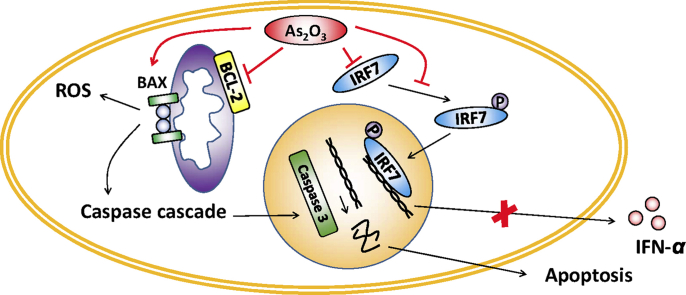
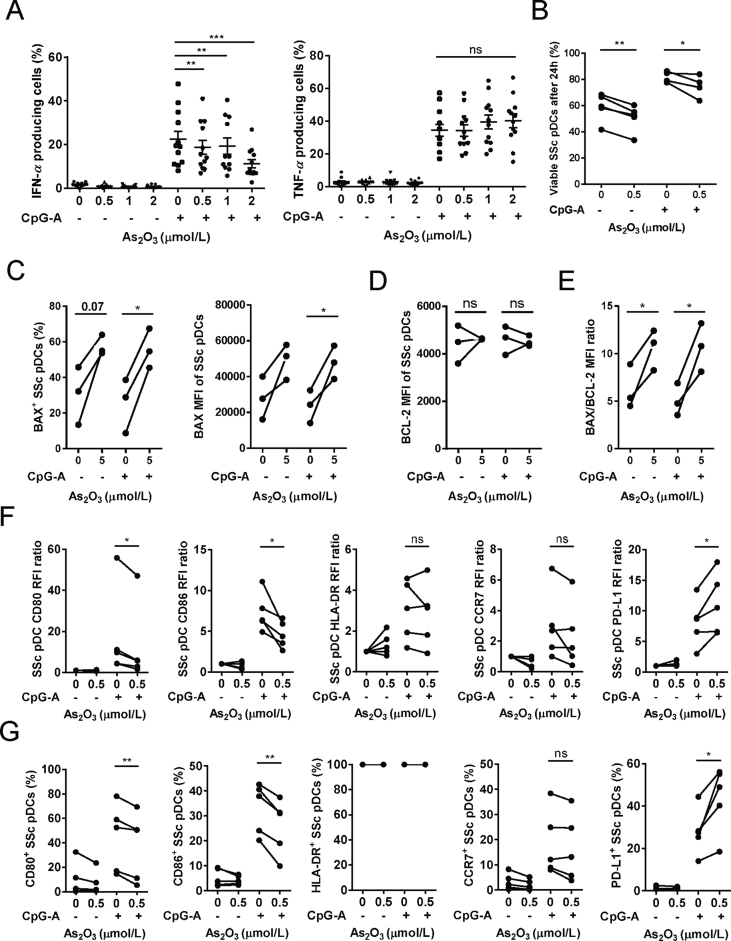
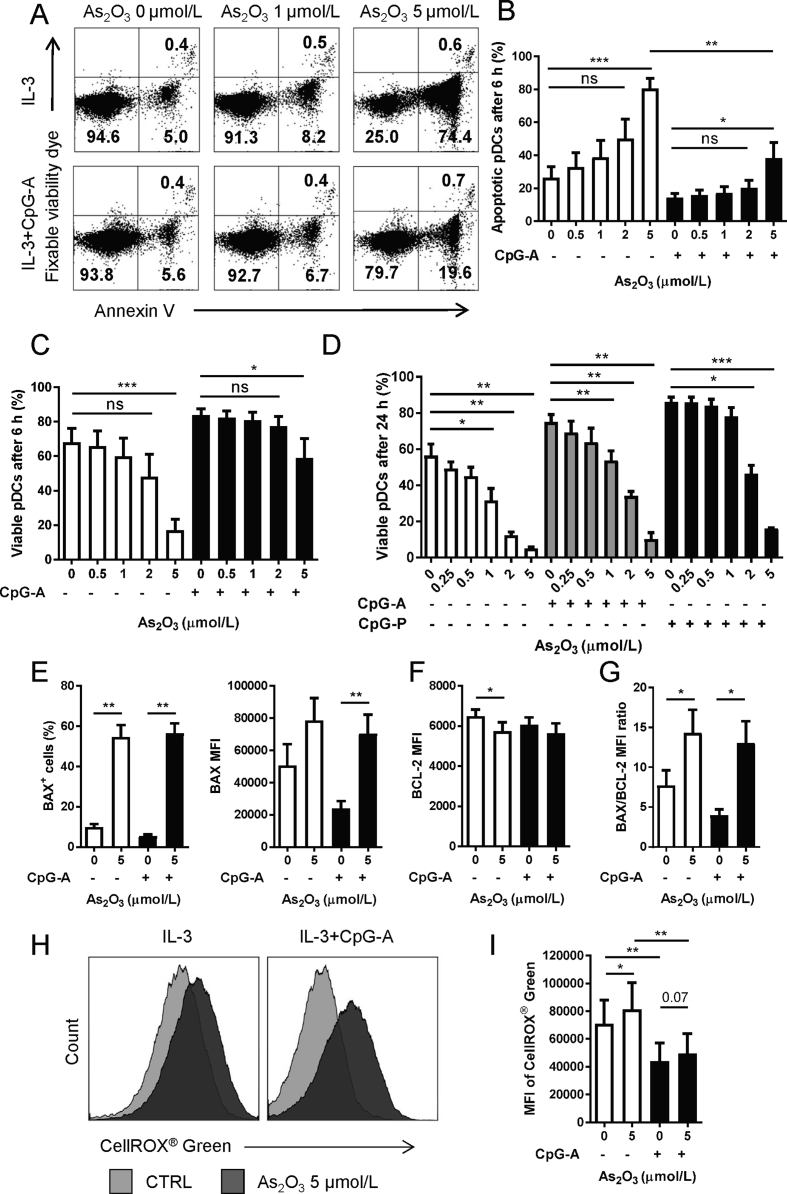
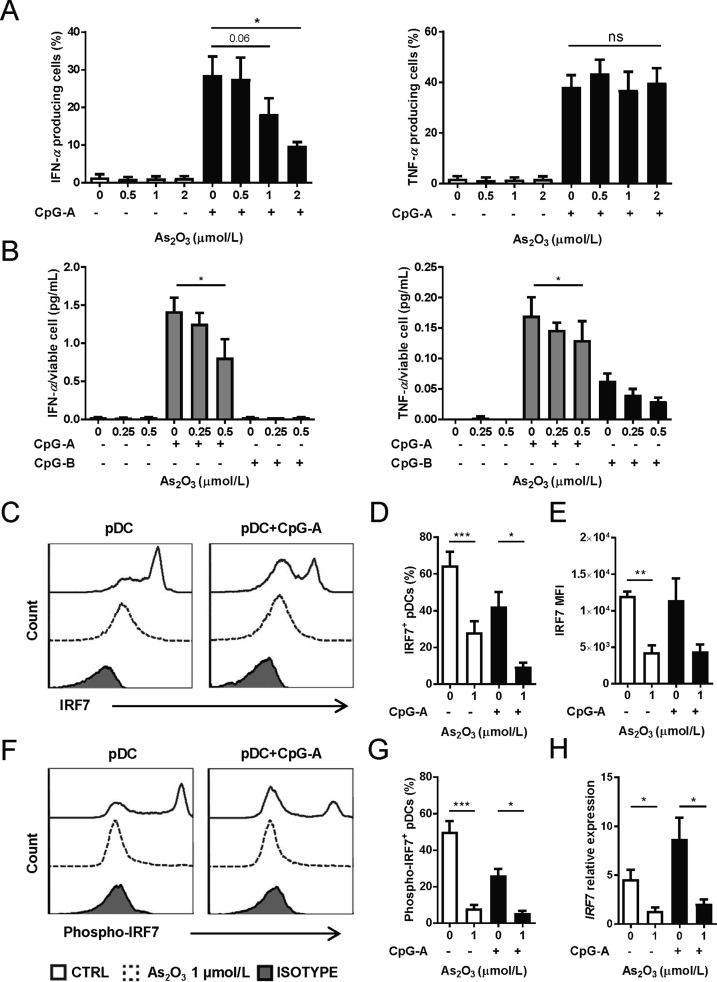
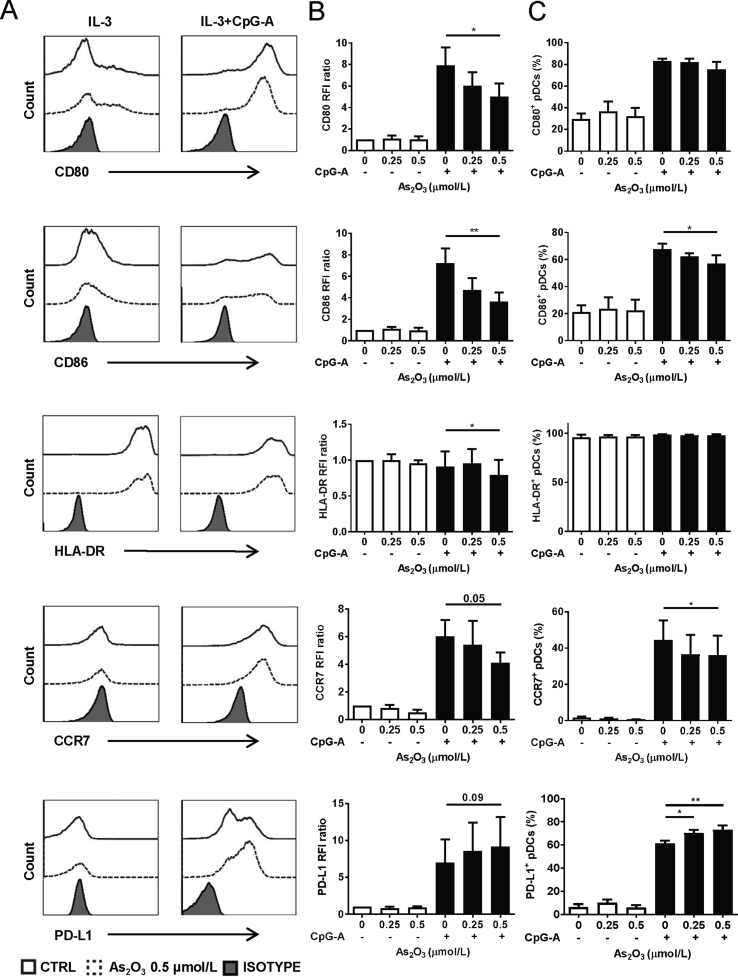
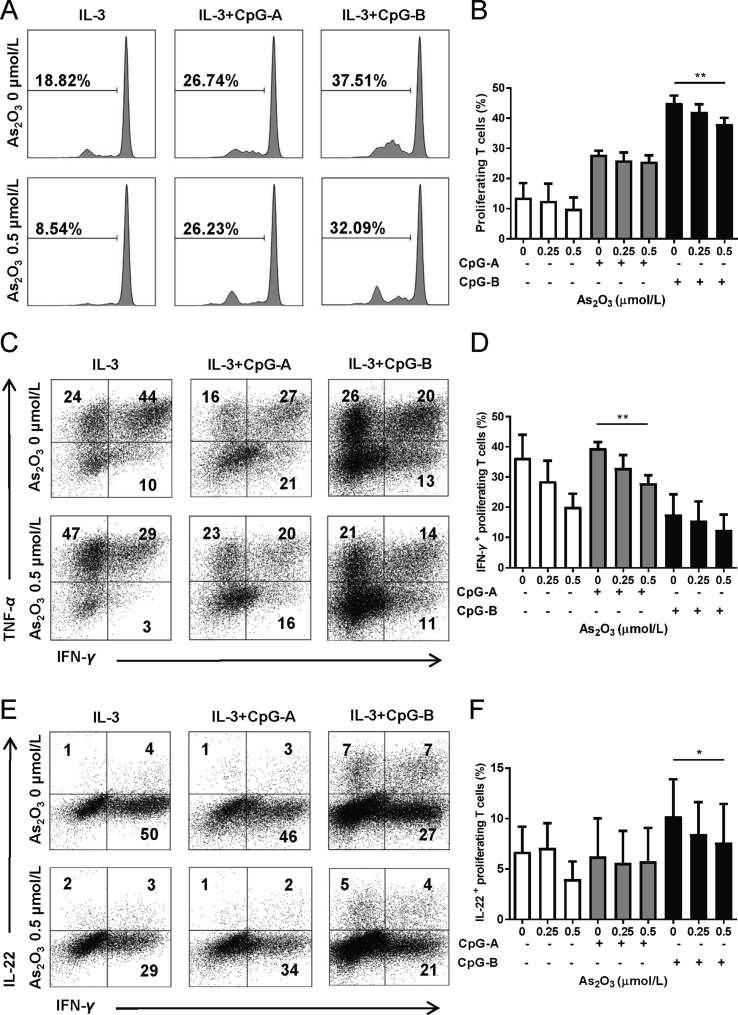
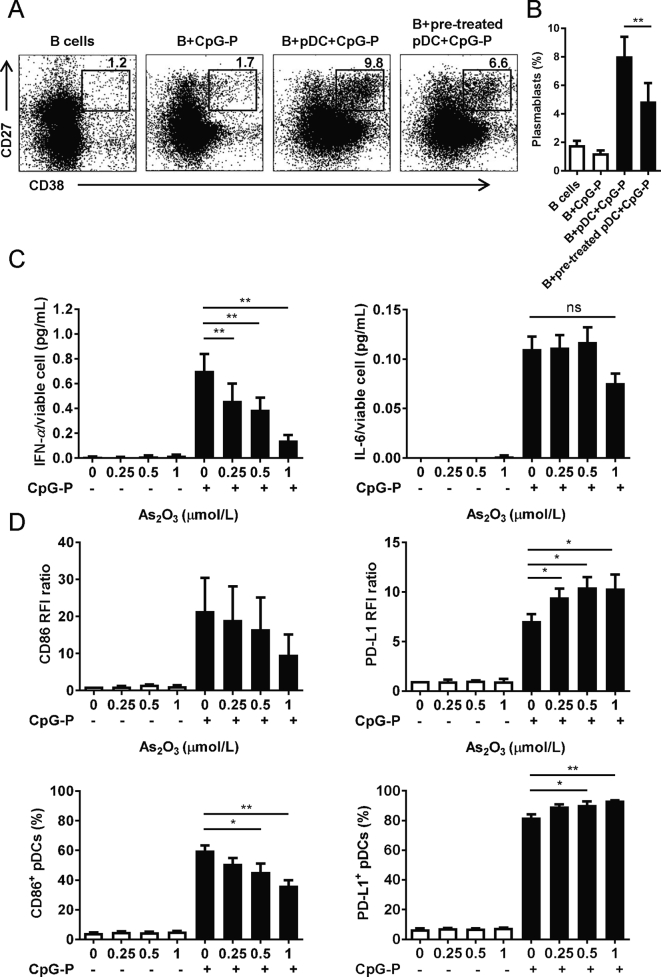
Arsenic trioxide (AsO) is recently found to have therapeutic potential in systemic sclerosis (SSc), a life-threatening multi-system fibrosing autoimmune disease with type I interferon (IFN-I) signature. Chronically activated plasmacytoid dendritic cells (pDCs) are responsible for IFN-I secretion and are closely related with fibrosis establishment in SSc. In this study, we showed that high concentrations of AsO induced apoptosis of pDCs mitochondrial pathway with increased BAX/BCL-2 ratio, while independent of reactive oxygen species generation. Notably, at clinical relevant concentrations, AsO preferentially inhibited IFN- secretion as compared to other cytokines such as TNF-, probably due to potent down-regulation of the total protein and mRNA expression, as well as phosphorylation of the interferon regulatory factor 7 (IRF7). In addition, AsO induced a suppressive phenotype, and in combination with cytokine inhibition, it down-regulated pDCs' capacity to induce CD4 T cell proliferation, Th1/Th22 polarization, and B cell differentiation towards plasmablasts. Moreover, chronically activated pDCs from SSc patients were not resistant to the selective IFN- inhibition, and regulatory phenotype induced by AsO. Collectively, our data suggest that AsO could target pDCs and exert its treatment efficacy in SSc, and more autoimmune disorders with IFN-I signature.
三氧化二砷(AsO)最近被发现对系统性硬化症(SSc)具有治疗潜力,SSc是一种危及生命的多系统纤维化自身免疫性疾病,具有I型干扰素(IFN-I)特征。慢性活化的浆细胞样树突状细胞(pDCs)负责IFN-I的分泌,并且与SSc中的纤维化形成密切相关。在本研究中,我们表明高浓度的AsO通过增加BAX/BCL-2比值诱导pDCs通过线粒体途径凋亡,而与活性氧的产生无关。值得注意的是,在临床相关浓度下,与其他细胞因子如TNF-相比,AsO优先抑制IFN-的分泌,这可能是由于其对总蛋白和mRNA表达以及干扰素调节因子7(IRF7)磷酸化的有效下调。此外,AsO诱导一种抑制性表型,并且与细胞因子抑制相结合,它下调pDCs诱导CD4 T细胞增殖、Th1/Th22极化以及B细胞向浆母细胞分化的能力。此外,来自SSc患者的慢性活化pDCs对选择性IFN-抑制和AsO诱导的调节表型不具有抗性。总体而言,我们的数据表明AsO可以靶向pDCs并在SSc以及更多具有IFN-I特征的自身免疫性疾病中发挥其治疗效果。