Han Xi, Ning Wenbo, Ma Xiaoqiang, Wang Xiaonan, Zhou Kang
Department of Chemical and Biomolecular Engineering, National University of Singapore, 117585, Singapore.
Disruptive & Sustainable Technologies for Agricultural Precision, Singapore-MIT Alliance for Research and Technology, 138602, Singapore.
Metab Eng Commun. 2020 Jun 22;11:e00138. doi: 10.1016/j.mec.2020.e00138. eCollection 2020 Dec.
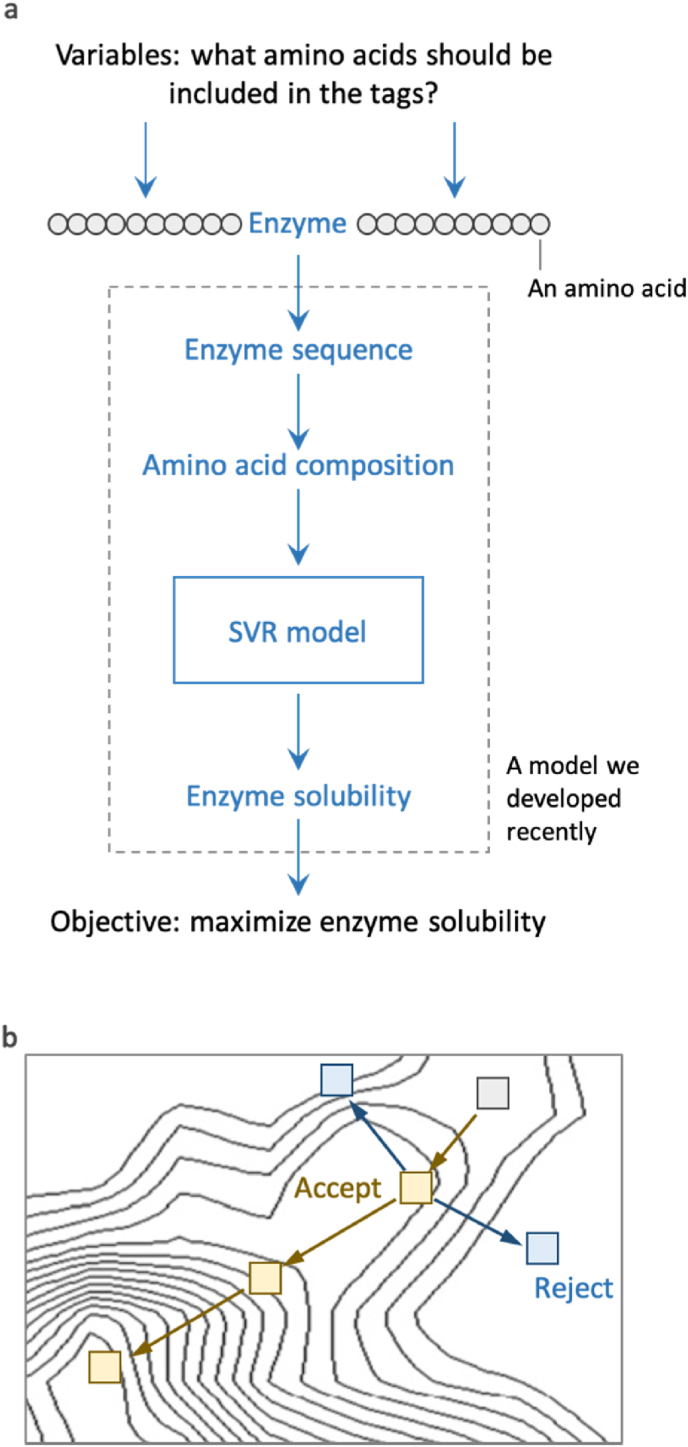
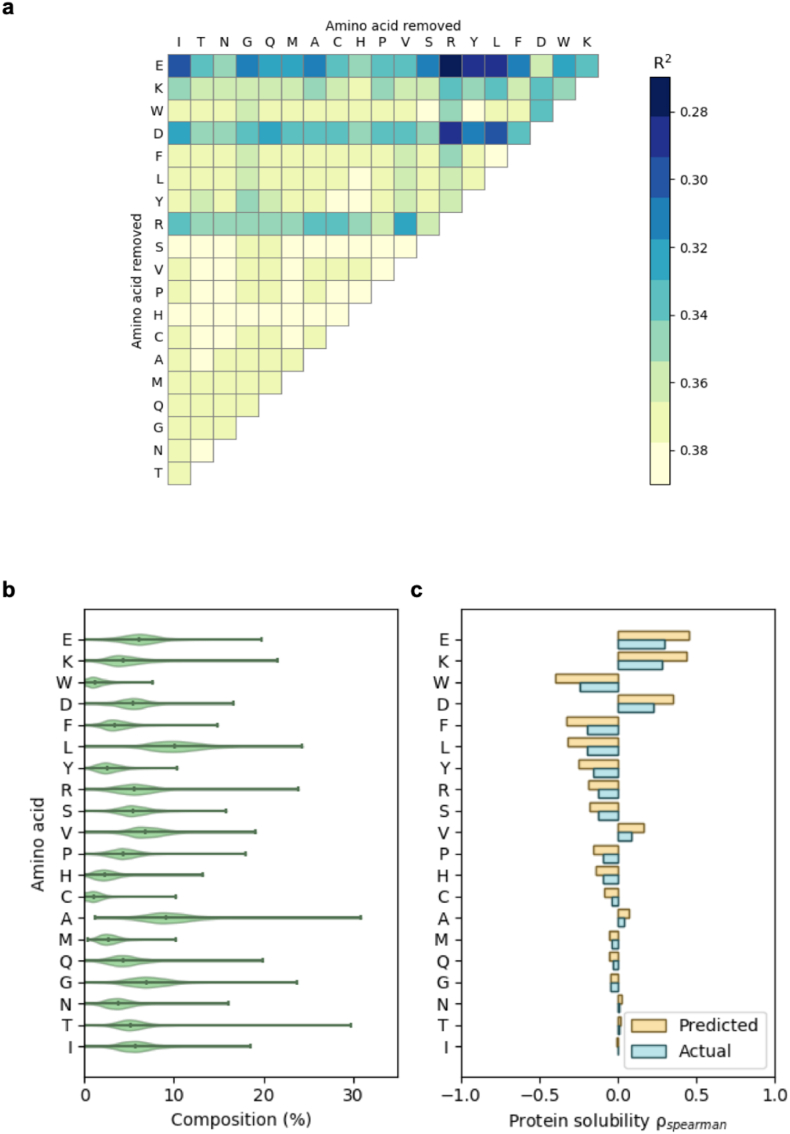
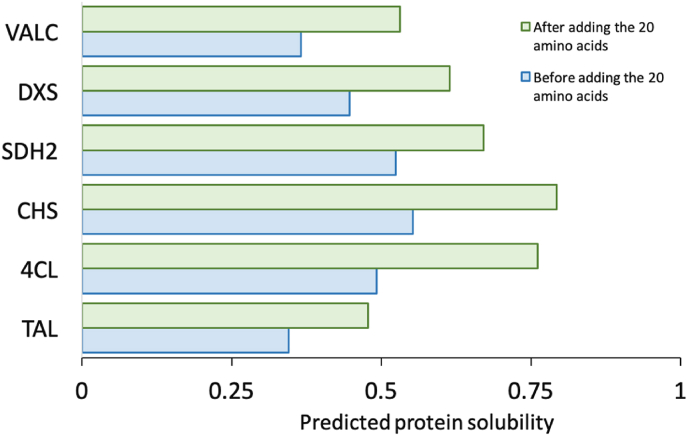
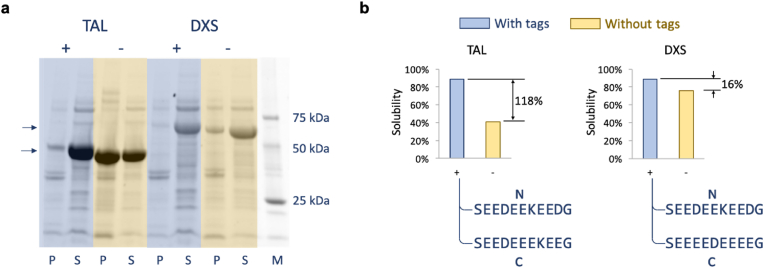
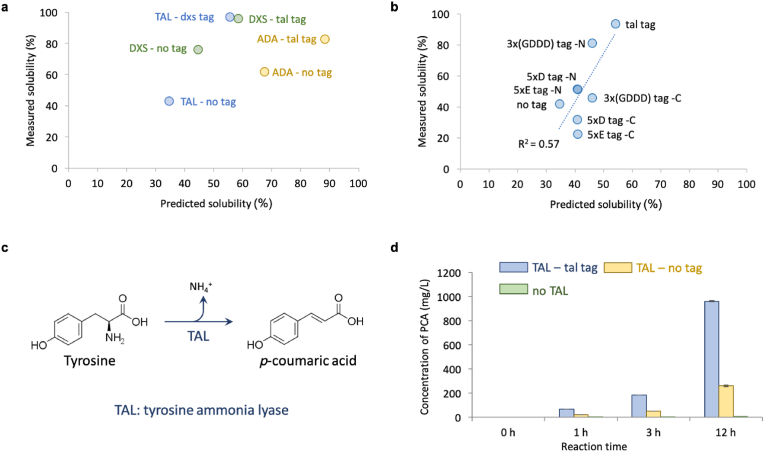
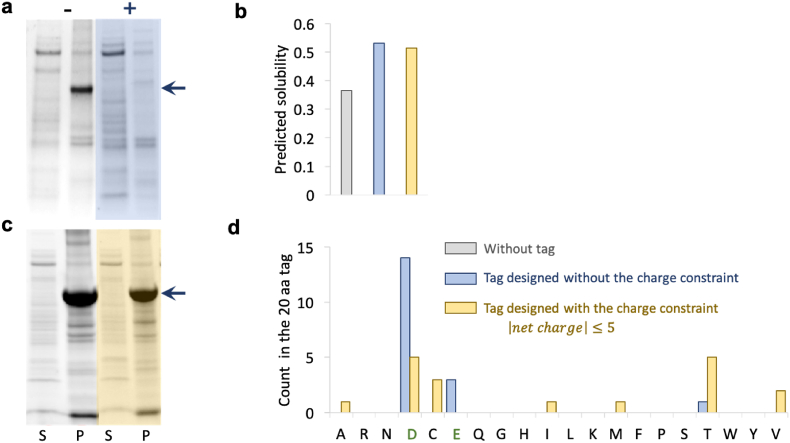
Improving catalytic ability of enzymes is critical to the success of many metabolic engineering projects, but the search space of possible protein mutants is too large to explore exhaustively through experiments. To some extent, highly soluble enzymes tend to exhibit high activity due to their better folding quality. Here, we demonstrate that an optimization algorithm based on a regression model can effectively design short peptide tags to improve solubility of a few model enzymes. Based on the protein sequence information, a support vector regression model we recently developed was used to evaluate protein solubility after small peptide tags were introduced to a target protein. The optimization algorithm guided the sequences of the tags to evolve towards variants that had higher solubility. The optimization results were validated successfully by measuring solubility and activity of the model enzyme with and without the identified tags. The solubility of one protein (tyrosine ammonia lyase) was more than doubled and its activity was improved by 250%. This strategy successfully increased solubility of another two enzymes (aldehyde dehydrogenase and 1-deoxy-D-xylulose-5-phosphate synthase) we tested. The presented optimization methodology thus provides a valuable tool for improving enzyme performance for metabolic engineering and other biotechnology projects.
提高酶的催化能力对于许多代谢工程项目的成功至关重要,但可能的蛋白质突变体的搜索空间太大,无法通过实验进行详尽探索。在某种程度上,高度可溶的酶由于其更好的折叠质量往往表现出高活性。在此,我们证明基于回归模型的优化算法可以有效地设计短肽标签以提高几种模型酶的溶解度。基于蛋白质序列信息,我们最近开发的支持向量回归模型用于评估在将小肽标签引入目标蛋白质后蛋白质的溶解度。优化算法引导标签序列朝着具有更高溶解度的变体进化。通过测量带有和不带有已鉴定标签的模型酶的溶解度和活性,成功验证了优化结果。一种蛋白质(酪氨酸解氨酶)的溶解度增加了一倍多,其活性提高了250%。该策略成功提高了我们测试的另外两种酶(醛脱氢酶和1-脱氧-D-木酮糖-5-磷酸合酶)的溶解度。因此,所提出的优化方法为改善代谢工程和其他生物技术项目的酶性能提供了一种有价值的工具。