De Leeuw Beverly I, Van Baarsen Kirsten M, Snijders Tom J, Robe Pierre A J T
Department of Neurology and Neurosurgery, Brain Center, University Medical Center Utrecht, Utrecht, The Netherlands.
Department of Neurosurgery, Alder Hey Children's NHS Foundation Trust, Liverpool, UK.
Neurooncol Adv. 2019 Oct 1;1(1):vdz032. doi: 10.1093/noajnl/vdz032. eCollection 2019 May-Dec.
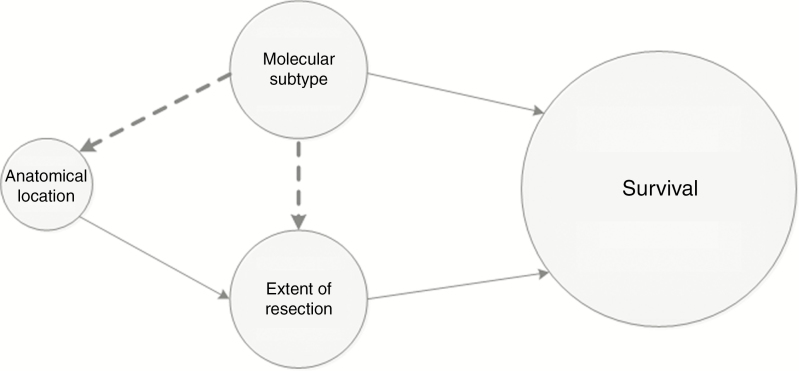
The introduction of the 2016 WHO Classification of Tumors of the Central Nervous System has resulted in tumor groupings with improved prognostic value for diffuse glioma patients. Molecular subtype, primarily based on IDH-mutational status and 1p/19q-status, is a strong predictor of survival. It is unclear to what extent this finding may be mediated by differences in anatomical location and surgical resectability among molecular subgroups. Our aim was to elucidate possible correlations between (1) molecular subtype and anatomical location and (2) molecular subtype and extent of resection.
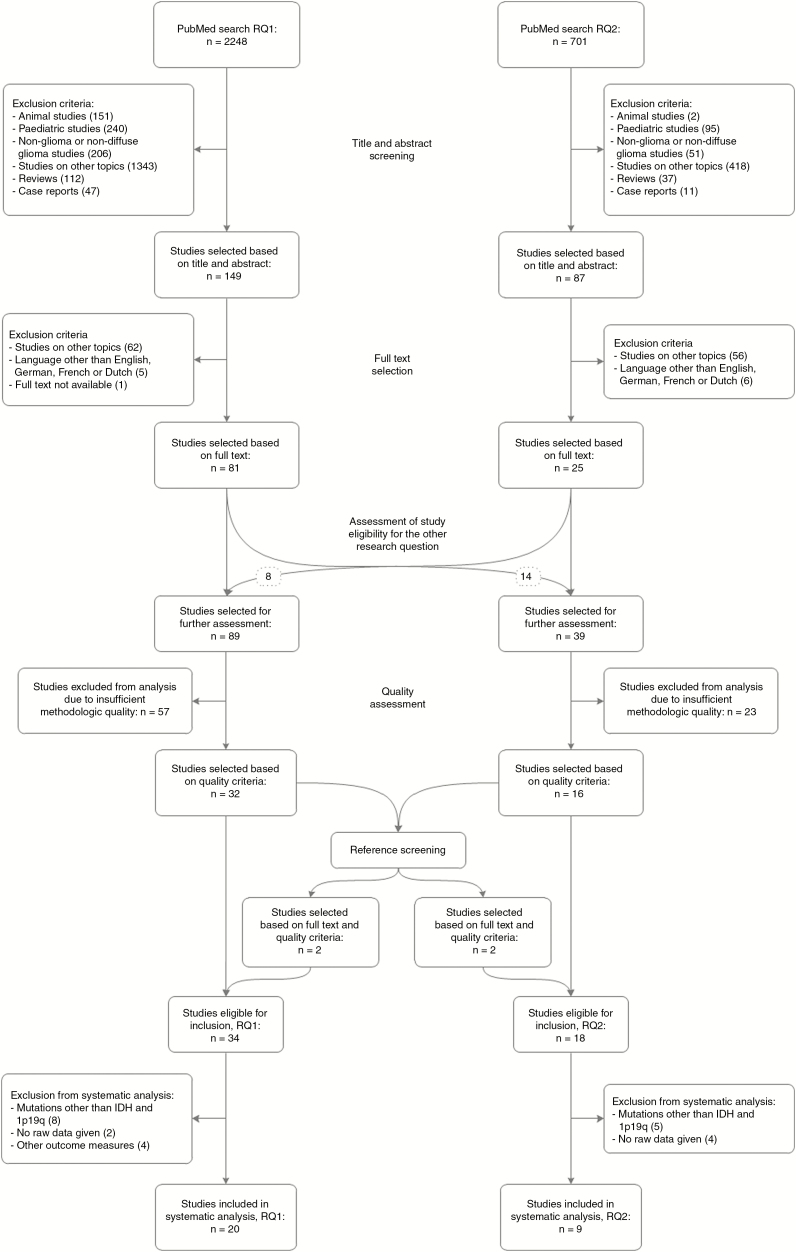
We performed a systematic review of literature searching for studies on molecular subtype in relation to anatomical location and extent of resection. Only original data concerning adult participants suffering from cerebral diffuse glioma were included. Studies adopting similar outcomes measures were included in our meta-analysis.
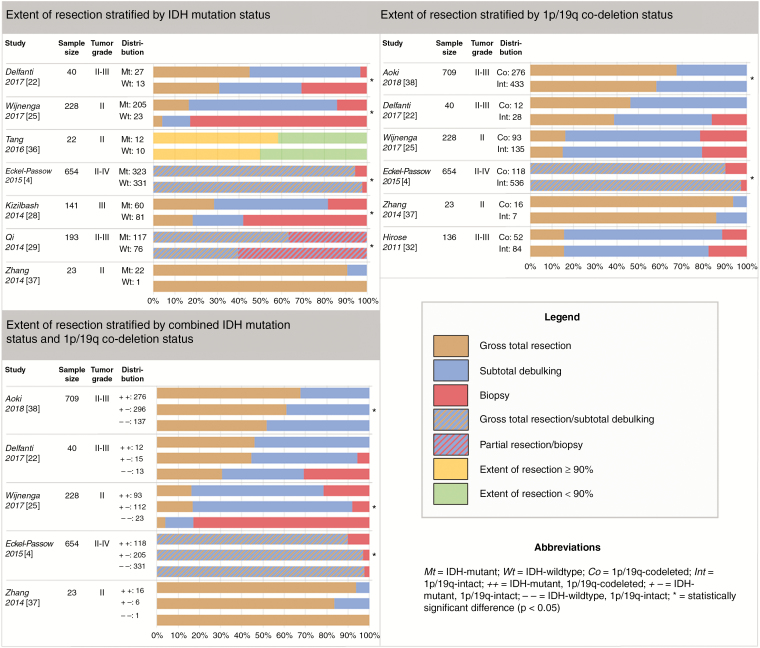
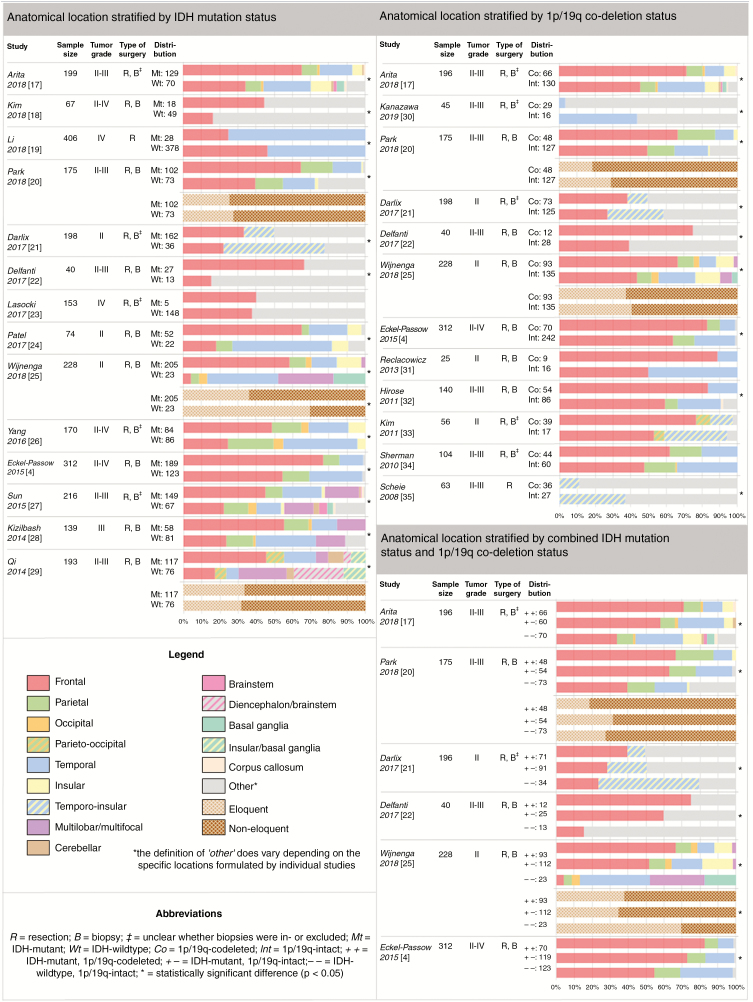
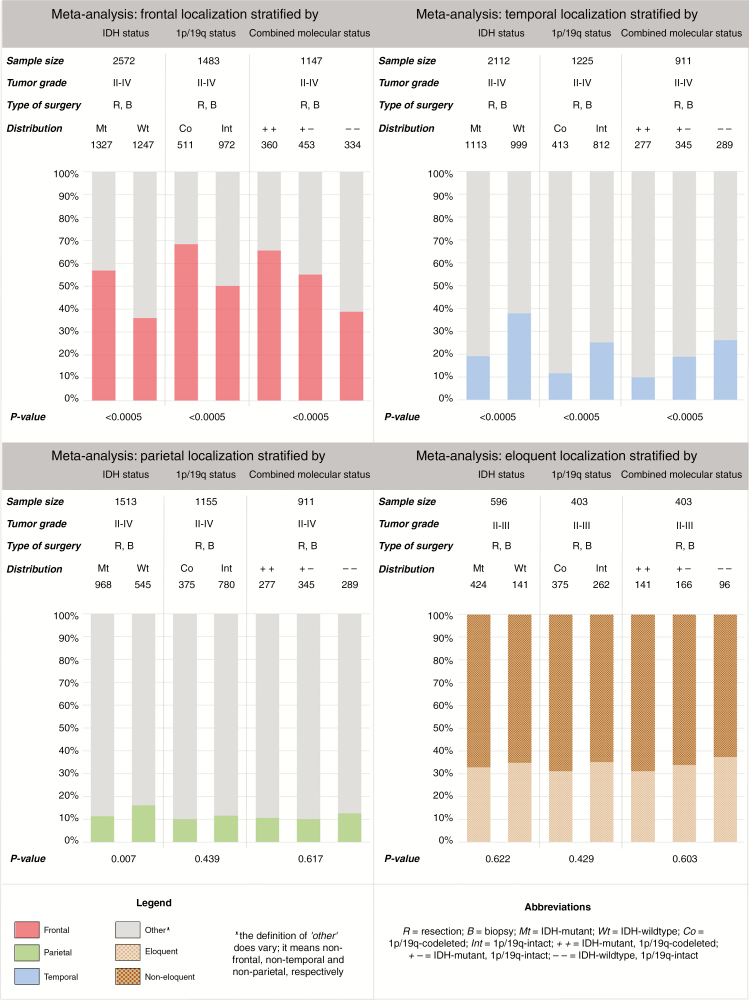
In the systematic analysis for research questions 1 and 2, totals of 20 and 9 studies were included, respectively. Study findings demonstrated that IDH-mutant tumors were significantly more frequently located in the frontal lobe and less often in the temporal lobe compared with IDH-wildtype gliomas. Within the IDH-mutant group, 1p/19q-codeleted tumors were associated with more frequent frontal and less frequent temporal localization compared with 1p/19q-intact tumors. In IDH-mutant gliomas, greater extent of resection was achieved than in IDH-wildtype tumors.
Genetic profile of diffuse cerebral glioma influences their anatomical location and seems to affect tumor resectability.
2016年世界卫生组织中枢神经系统肿瘤分类的引入,使得弥漫性胶质瘤患者的肿瘤分组具有了更高的预后价值。分子亚型主要基于异柠檬酸脱氢酶(IDH)突变状态和1p/19q状态,是生存的有力预测指标。目前尚不清楚这一发现多大程度上可能是由分子亚组之间解剖位置和手术可切除性的差异所介导的。我们的目的是阐明(1)分子亚型与解剖位置之间以及(2)分子亚型与切除范围之间可能存在的相关性。
我们对文献进行了系统综述,以寻找关于分子亚型与解剖位置和切除范围关系的研究。仅纳入了有关成年脑弥漫性胶质瘤患者的原始数据。采用相似结局指标的研究被纳入我们的荟萃分析。
在针对研究问题1和2的系统分析中,分别纳入了20项和9项研究。研究结果表明,与IDH野生型胶质瘤相比,IDH突变型肿瘤更常位于额叶,而较少位于颞叶。在IDH突变组中,与1p/19q完整的肿瘤相比,1p/19q共缺失的肿瘤额叶定位更频繁,颞叶定位更少见。在IDH突变型胶质瘤中,切除范围比IDH野生型肿瘤更大。
脑弥漫性胶质瘤的基因特征影响其解剖位置,且似乎会影响肿瘤的可切除性。