Department of Trauma and Orthopaedics, Addenbrooke's-Cambridge University Hospitals NHS Foundation Trust, Box 37, Hills Road, Cambridge, CB2 0QQ, UK.
Department of Orthopaedic Surgery, Kobe University Graduate School of Medicine, 7-5-1 Kusunoki-cho, Chuo-ku, Kobe, 650-0017, Japan.
Int Orthop. 2020 Oct;44(10):1971-2007. doi: 10.1007/s00264-020-04607-9. Epub 2020 Jul 8.
Although total knee replacement (TKR) is an effective intervention for end-stage arthritis of the knee, a significant number of patients remain dissatisfied following this procedure. Our aim was to identify and assess the factors affecting patient satisfaction following a TKR.
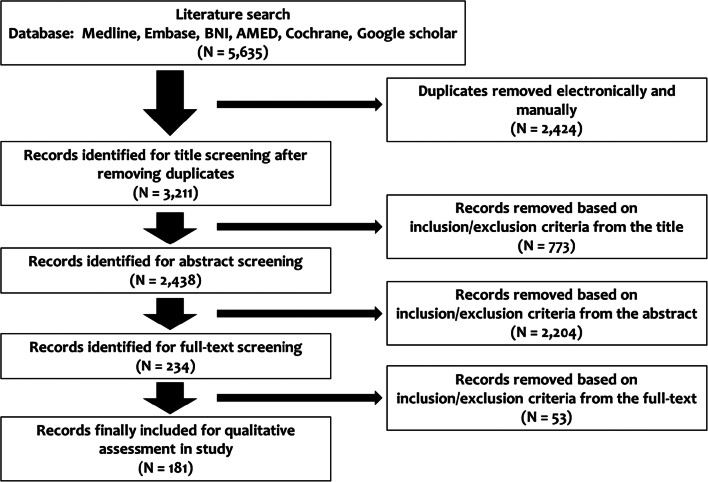
In accordance with the PRISMA guidelines, two reviewers searched the online databases for literature describing factors affecting patient satisfaction following a TKR. The research question and eligibility criteria were established a priori. Any clinical outcome study that described factors relating to overall satisfaction after primary TKR was included. Quality assessment for the included studies was performed by two accredited orthopaedic surgeons experienced in clinical research.
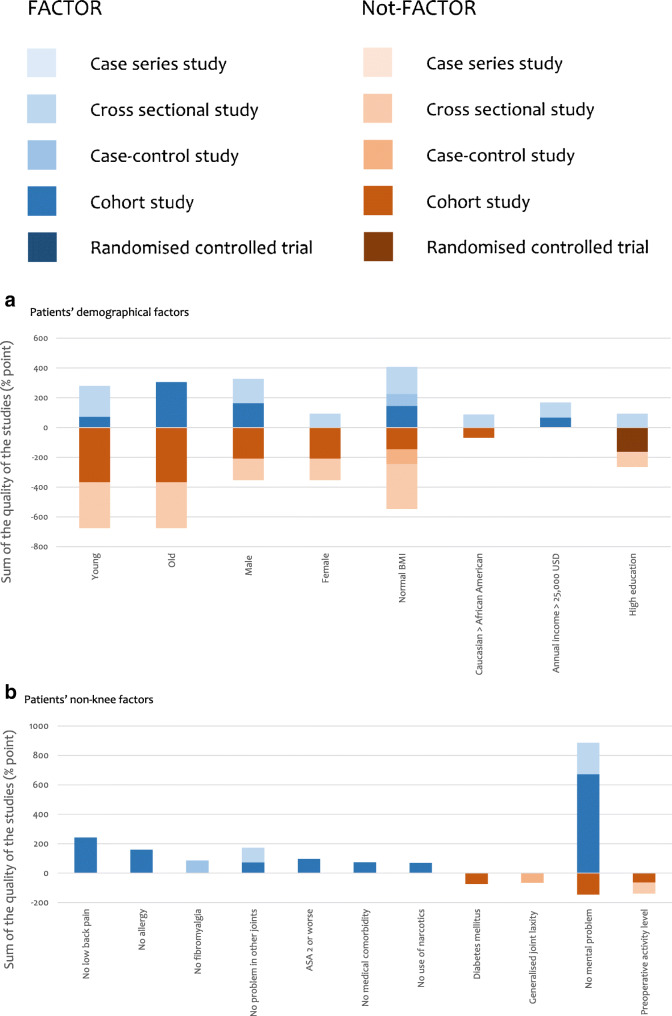
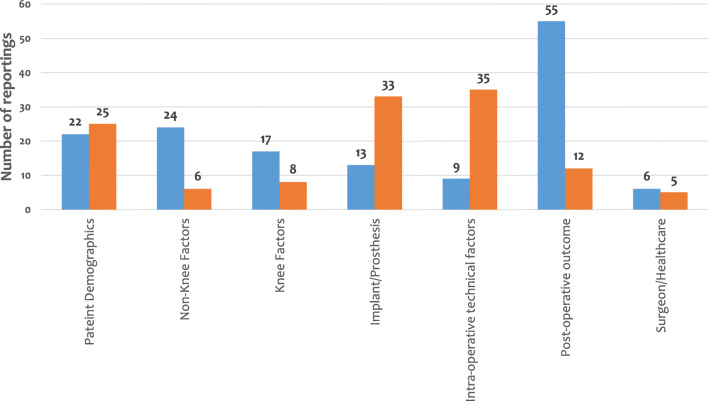
The systematic review identified 181 relevant articles in total. A history of mental health problems was the most frequently reported factor affecting patient satisfaction (13 reportings). When the results of the quality assessment were taken into consideration, a negative history of mental health problems, use of a mobile-bearing insert, patellar resurfacing, severe pre-operative radiological degenerative change, negative history of low back pain, no/less post-operative pain, good post-operative physical function and pre-operative expectations being met were considered to be important factors leading to better patient satisfaction following a TKR.
Surgeons performing a TKR should take these factors into consideration prior to deciding whether a patient is suitable for a TKR. Secondarily, a detailed explanation of these factors should form part of the process of informed consent to achieve better patient satisfaction following TKR. There is a great need for a unified approach to assessing satisfaction following a TKR and also the time at which satisfaction is assessed.
尽管全膝关节置换术(TKR)是治疗膝关节晚期关节炎的有效方法,但仍有相当数量的患者对该手术不满意。我们的目的是确定并评估影响 TKR 术后患者满意度的因素。
根据 PRISMA 指南,两位审查员搜索了在线数据库,以查找描述影响 TKR 术后患者满意度的因素的文献。预先确定了研究问题和纳入标准。任何描述与初次 TKR 后总体满意度相关的因素的临床结局研究均被纳入。由两位具有临床研究经验的认证骨科医生对纳入研究进行质量评估。
系统评价共确定了 181 篇相关文章。有心理健康问题史是报道最多的影响患者满意度的因素(13 项报告)。考虑到质量评估的结果,有心理健康问题史、使用活动平台假体、髌骨表面置换、术前严重影像学退行性改变、无/低腰痛史、术后无/少疼痛、术后良好的身体功能和术前期望得到满足被认为是导致 TKR 术后患者满意度提高的重要因素。
行 TKR 的外科医生在决定患者是否适合 TKR 之前应考虑这些因素。其次,详细解释这些因素应成为 TKR 后知情同意过程的一部分,以提高患者满意度。需要制定一种统一的方法来评估 TKR 后的满意度,同时还需要确定评估满意度的时间。