MMWR Morb Mortal Wkly Rep. 2020 Jul 10;69(27):887-892. doi: 10.15585/mmwr.mm6927e2.
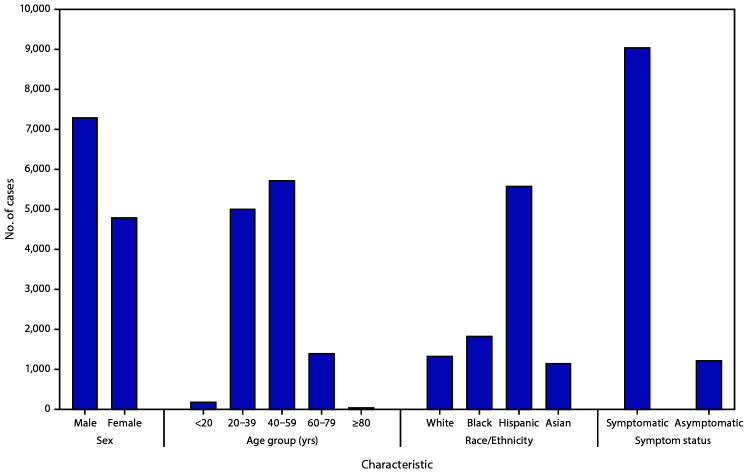
Meat and poultry processing facilities face distinctive challenges in the control of infectious diseases, including coronavirus disease 2019 (COVID-19) (1). COVID-19 outbreaks among meat and poultry processing facility workers can rapidly affect large numbers of persons. Assessment of COVID-19 cases among workers in 115 meat and poultry processing facilities through April 27, 2020, documented 4,913 cases and 20 deaths reported by 19 states (1). This report provides updated aggregate data from states regarding the number of meat and poultry processing facilities affected by COVID-19, the number and demographic characteristics of affected workers, and the number of COVID-19-associated deaths among workers, as well as descriptions of interventions and prevention efforts at these facilities. Aggregate data on confirmed COVID-19 cases and deaths among workers identified and reported through May 31, 2020, were obtained from 239 affected facilities (those with a laboratory-confirmed COVID-19 case in one or more workers) in 23 states.* COVID-19 was confirmed in 16,233 workers, including 86 COVID-19-related deaths. Among 14 states reporting the total number of workers in affected meat and poultry processing facilities (112,616), COVID-19 was diagnosed in 9.1% of workers. Among 9,919 (61%) cases in 21 states with reported race/ethnicity, 87% occurred among racial and ethnic minority workers. Commonly reported interventions and prevention efforts at facilities included implementing worker temperature or symptom screening and COVID-19 education, mandating face coverings, adding hand hygiene stations, and adding physical barriers between workers. Targeted workplace interventions and prevention efforts that are appropriately tailored to the groups most affected by COVID-19 are critical to reducing both COVID-19-associated occupational risk and health disparities among vulnerable populations. Implementation of these interventions and prevention efforts across meat and poultry processing facilities nationally could help protect workers in this critical infrastructure industry.
肉类和家禽加工设施在传染病控制方面面临独特的挑战,包括 2019 年冠状病毒病(COVID-19)(1)。肉类和家禽加工设施工人中的 COVID-19 暴发可能会迅速影响大量人员。截至 2020 年 4 月 27 日,对 115 个肉类和家禽加工设施中工人的 COVID-19 病例进行评估,记录了 19 个州报告的 4913 例病例和 20 例死亡(1)。本报告提供了各州关于受 COVID-19 影响的肉类和家禽加工设施数量、受影响工人的数量和人口统计学特征以及工人中与 COVID-19 相关的死亡人数的最新综合数据,以及这些设施的干预措施和预防工作的描述。截至 2020 年 5 月 31 日,通过识别和报告获得了来自 23 个州的 239 个受影响设施(一个或多个工人实验室确认 COVID-19 病例的设施)的工人中 COVID-19 确诊病例和死亡的综合数据*。在 16233 名工人中确认了 COVID-19,包括 86 例与 COVID-19 相关的死亡。在报告受影响的肉类和家禽加工设施中工人总数的 14 个州中(112616 人),9.1%的工人被诊断出患有 COVID-19。在 21 个报告种族/族裔的州中,有 9919 例(61%)病例发生在种族和族裔少数群体工人中。设施中常见的干预措施和预防措施包括实施工人体温或症状筛查和 COVID-19 教育、强制戴口罩、增加手部卫生站以及在工人之间增加物理屏障。针对受 COVID-19 影响最大的人群的有针对性的工作场所干预措施和预防措施对于降低 COVID-19 相关职业风险和脆弱人群中的健康差距至关重要。在全国范围内实施这些干预措施和预防措施可以帮助保护这个关键基础设施行业的工人。