Servicio de Medicina Intensiva, Hospital Universitari Joan XXIII, URV/IISPV, Tarragona, España.
Servicio de Medicina Intensiva, Hospital Universitari Joan XXIII, URV/IISPV, Tarragona, España.
Med Intensiva (Engl Ed). 2021 Jan-Feb;45(1):42-55. doi: 10.1016/j.medin.2020.06.006. Epub 2020 Jun 17.
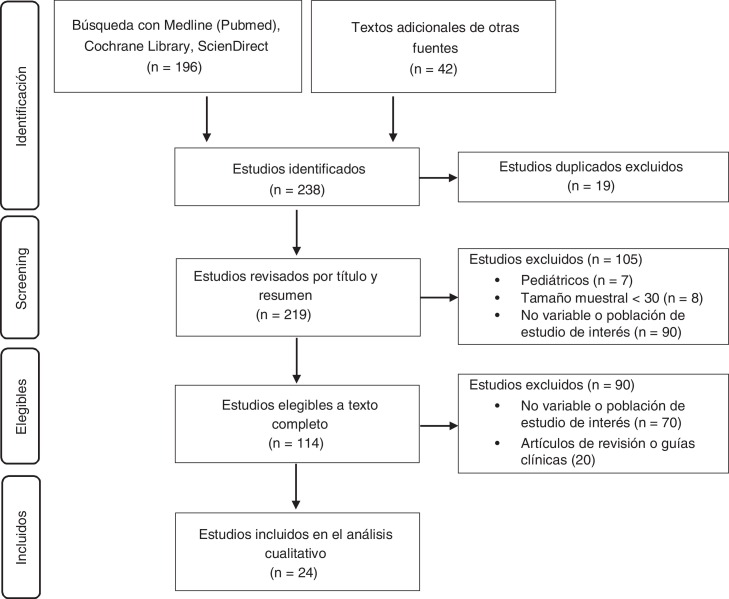
During the new pandemic caused by SARS-CoV-2, there is short knowledge regarding the management of different disease areas, such as coagulopathy and interpretation of D-dimer levels, its association with disseminated intravascular coagulation (DIC) and controversy about the benefit of anticoagulation. Thus, a systematic review has been performed to define the role of D-dimer in the disease, the prevalence of DIC and the usefulness of anticoagulant treatment in these patients. A literature search was performed to analyze the studies of COVID-19 patients. Four recommendations were drawn based on expert opinion and scientific knowledge, according to the Grading of Recommendations Assessment, Development and Evaluation (GRADE) approach. The present review suggests the presence of higher levels of D-dimer in those with worse prognosis, there may be an overdiagnosis of DIC in the course of the disease and there is no evidence on the benefit of starting anticoagulant treatment based only on isolated laboratory data.
在由 SARS-CoV-2 引起的新大流行期间,关于不同疾病领域的管理知识有限,例如凝血病和 D-二聚体水平的解读,其与弥散性血管内凝血(DIC)的关系以及抗凝治疗的益处存在争议。因此,进行了系统评价以确定 D-二聚体在疾病中的作用、DIC 的患病率以及这些患者抗凝治疗的有用性。进行了文献检索以分析 COVID-19 患者的研究。根据推荐评估、制定和评估(GRADE)方法,根据专家意见和科学知识制定了四项建议。本综述表明,预后较差的患者 D-二聚体水平较高,疾病过程中可能存在 DIC 的过度诊断,并且仅基于孤立的实验室数据开始抗凝治疗没有益处的证据。