Department of Periodontics, The University of Iowa College of Dentistry, Iowa City, IA 52242, United States of America.
Department of Periodontics, The University of Illinois at Chicago College of Dentistry, Chicago, IL 60612, United States of America.
Biomed Mater. 2020 Nov 21;15(6):062001. doi: 10.1088/1748-605X/aba446.
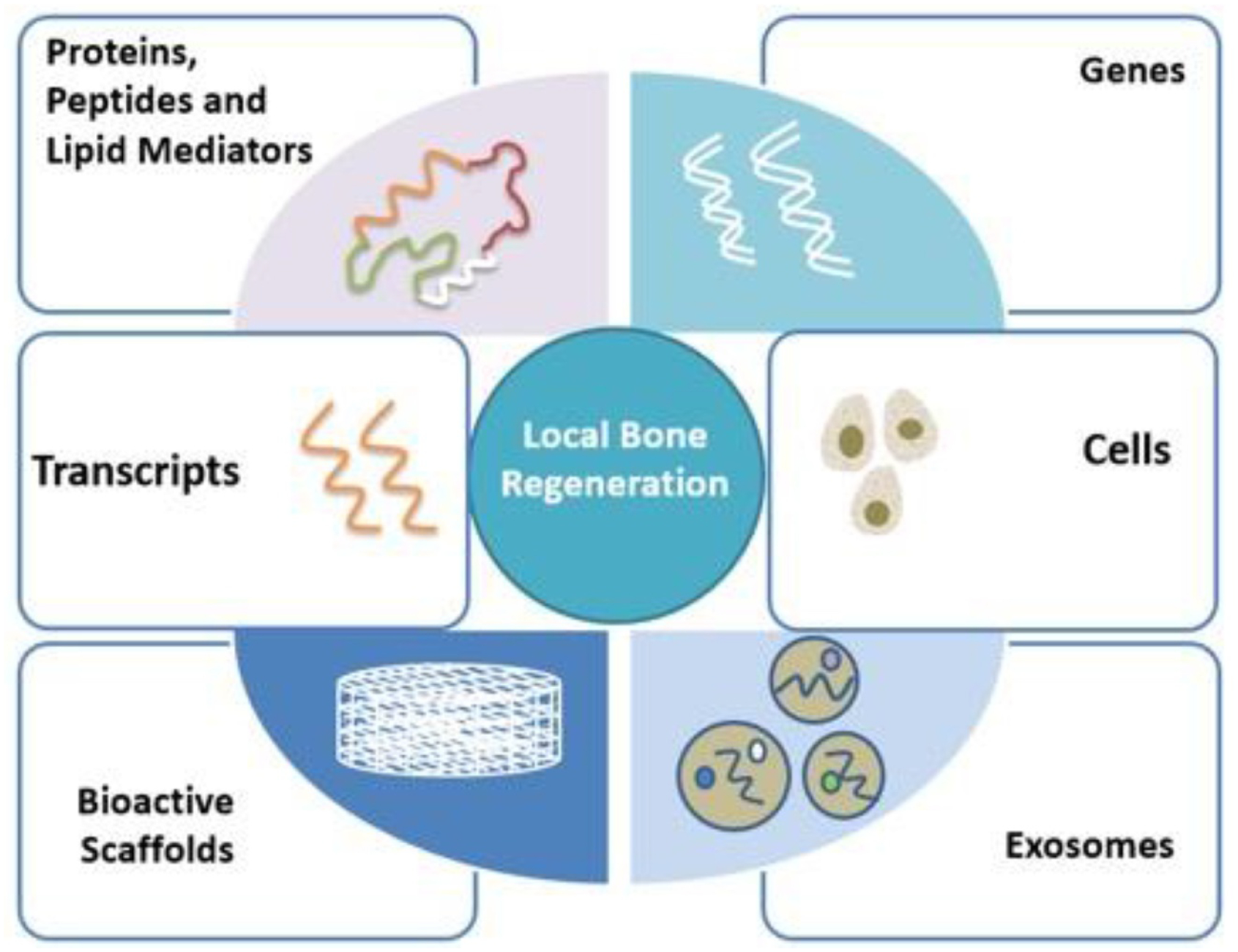
In orthopedics and dentistry there is an increasing need for novel biomaterials and clinical strategies to achieve predictable bone regeneration. These novel molecular strategies have the potential to eliminate the limitations of currently available approaches. Specifically, they have the potential to reduce or eliminate the need to harvest autogenous bone, and the overall complexity of the clinical procedures. In this review, emerging tissue engineering strategies that have been, or are currently being, developed based on the current understanding of bone biology, development and wound healing will be discussed. In particular, protein/peptide based approaches, DNA/RNA therapeutics, cell therapy, and the use of exosomes will be briefly covered. The review ends with a summary of the current status of these approaches, their clinical translational potentials and their challenges.
在矫形和牙科领域,人们越来越需要新型生物材料和临床策略来实现可预测的骨再生。这些新型分子策略有可能消除目前可用方法的局限性。具体来说,它们有可能减少或消除对自体骨的需求,以及临床操作的整体复杂性。在这篇综述中,将讨论基于目前对骨生物学、发育和伤口愈合的理解而开发或正在开发的新兴组织工程策略。特别地,将简要介绍基于蛋白质/肽的方法、DNA/RNA 疗法、细胞疗法和外泌体的使用。综述最后总结了这些方法的现状、它们的临床转化潜力及其面临的挑战。