Sorbonne Universités - UPMC Paris 6 - CNRS, UMR8256 - IBPS, Photobiology Research Group, 7 Quai St. Bernard, 75005, Paris, France.
Department of Biomedical and Chemical Engineering and Science, Florida Institute of Technology, 150W University Blvd, Melbourne, Fl, 32901, USA.
Sci Rep. 2020 Jul 9;10(1):11260. doi: 10.1038/s41598-020-67165-5.
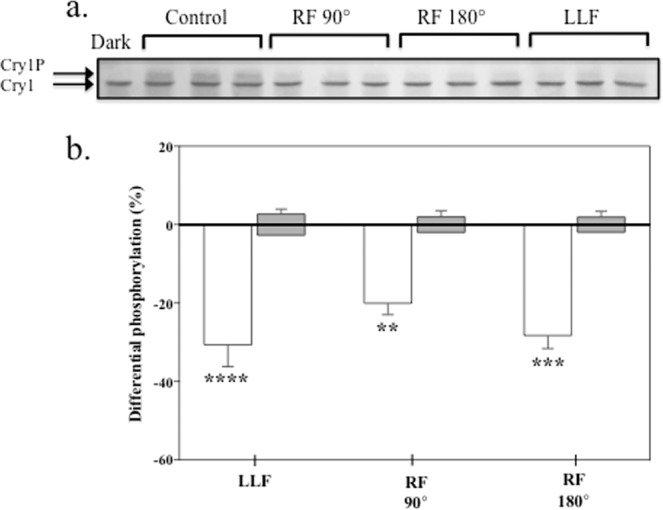
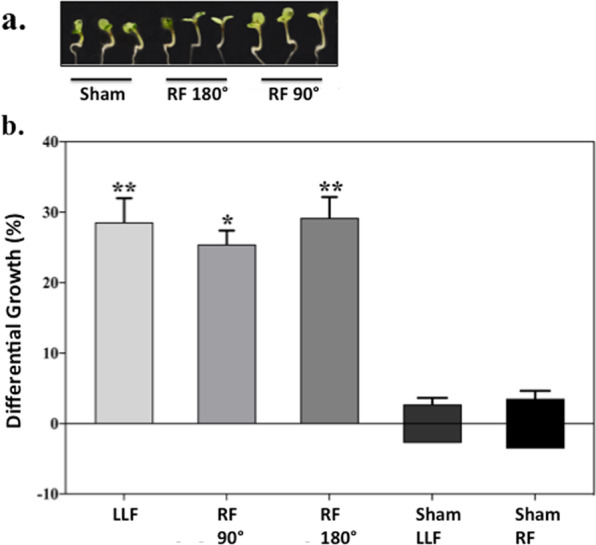
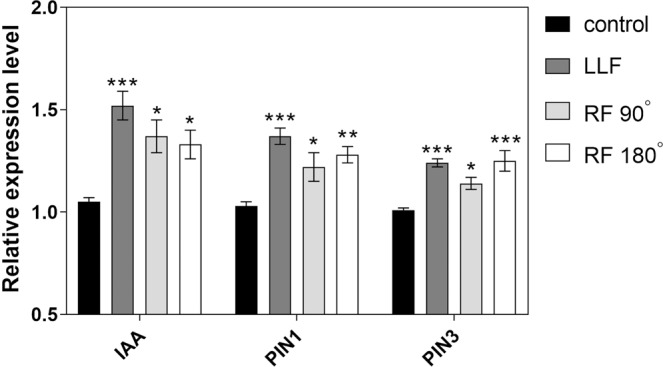
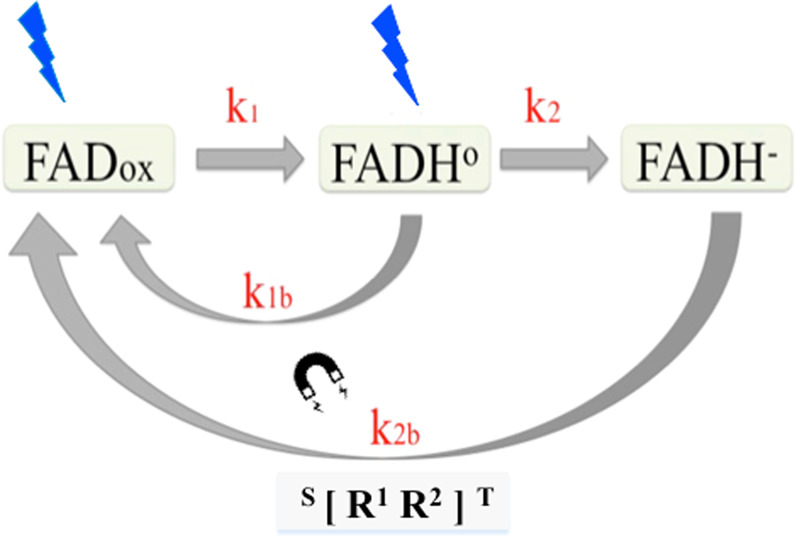
How living systems respond to weak electromagnetic fields represents one of the major unsolved challenges in sensory biology. Recent evidence has implicated cryptochrome, an evolutionarily conserved flavoprotein receptor, in magnetic field responses of organisms ranging from plants to migratory birds. However, whether cryptochromes fulfill the criteria to function as biological magnetosensors remains to be established. Currently, theoretical predictions on the underlying mechanism of chemical magnetoreception have been supported by experimental observations that exposure to radiofrequency (RF) in the MHz range disrupt bird orientation and mammalian cellular respiration. Here we show that, in keeping with certain quantum physical hypotheses, a weak 7 MHz radiofrequency magnetic field significantly reduces the biological responsivity to blue light of the cryptochrome receptor cry1 in Arabidopsis seedlings. Using an in vivo phosphorylation assay that specifically detects activated cryptochrome, we demonstrate that RF exposure reduces conformational changes associated with biological activity. RF exposure furthermore alters cryptochrome-dependent plant growth responses and gene expression to a degree consistent with theoretical predictions. To our knowledge this represents the first demonstration of a biological receptor responding to RF exposure, providing important new implications for magnetosensing as well as possible future applications in biotechnology and medicine.
生物系统对弱电磁场的反应是感觉生物学中尚未解决的主要挑战之一。最近的证据表明,隐花色素作为一种进化上保守的黄素蛋白受体,参与了从植物到候鸟等生物的磁场反应。然而,隐花色素是否符合作为生物磁传感器的标准还有待确定。目前,关于化学磁感觉潜在机制的理论预测得到了实验观察的支持,这些观察表明,暴露在兆赫兹范围内的射频(RF)会干扰鸟类的定向和哺乳动物的细胞呼吸。在这里,我们表明,与某些量子物理假设一致,弱的 7MHz 射频磁场显著降低了拟南芥幼苗中隐花色素受体 cry1 对蓝光的生物反应性。我们使用一种体内磷酸化测定法,该方法专门检测激活的隐花色素,证明 RF 暴露会降低与生物活性相关的构象变化。RF 暴露还会改变依赖隐花色素的植物生长反应和基因表达,其程度与理论预测一致。据我们所知,这是第一个证明生物受体对 RF 暴露做出反应的例子,为磁感觉以及生物技术和医学领域的未来应用提供了重要的新启示。