German Center for Neurodegenerative Diseases (DZNE), Rostock, Germany.
Department of Psychosomatic Medicine, University of Rostock, Rostock, Germany.
Hum Brain Mapp. 2020 Oct 15;41(15):4219-4231. doi: 10.1002/hbm.25121. Epub 2020 Jul 10.
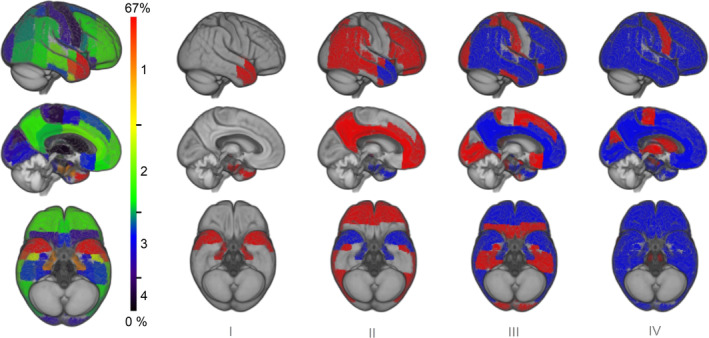
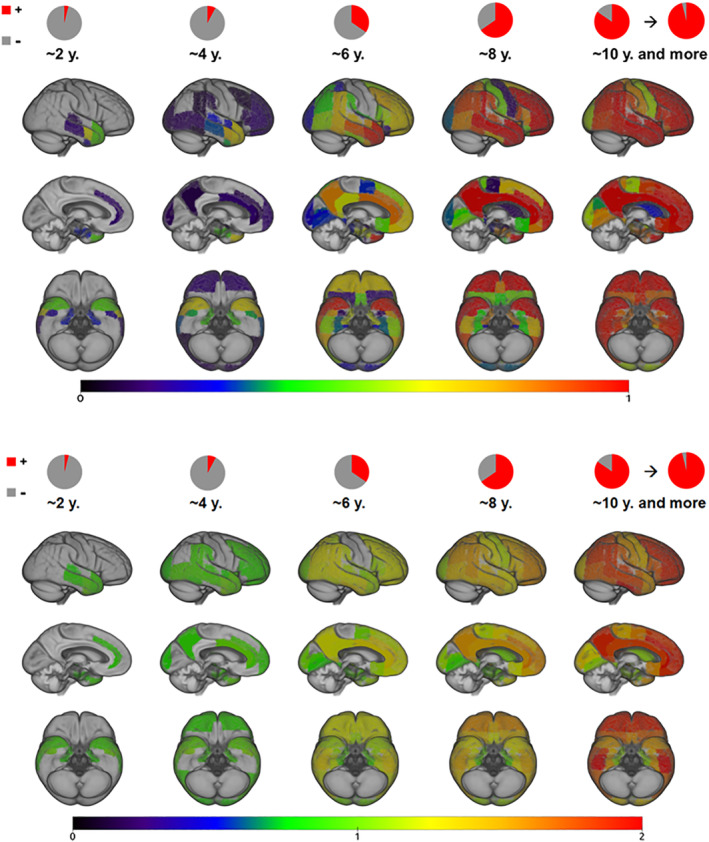
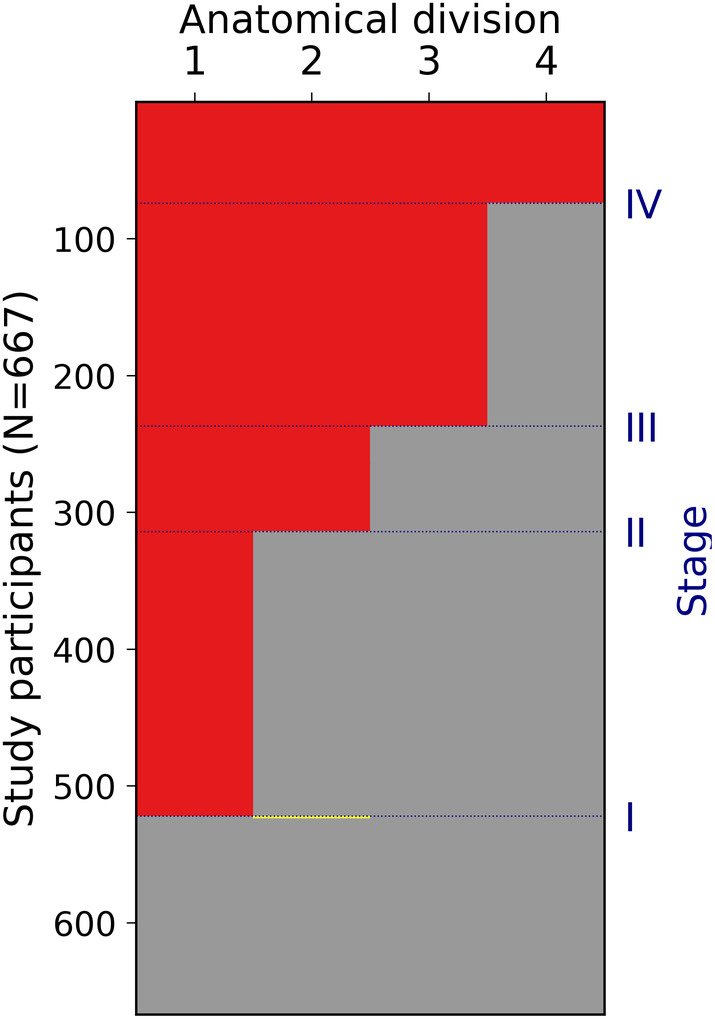
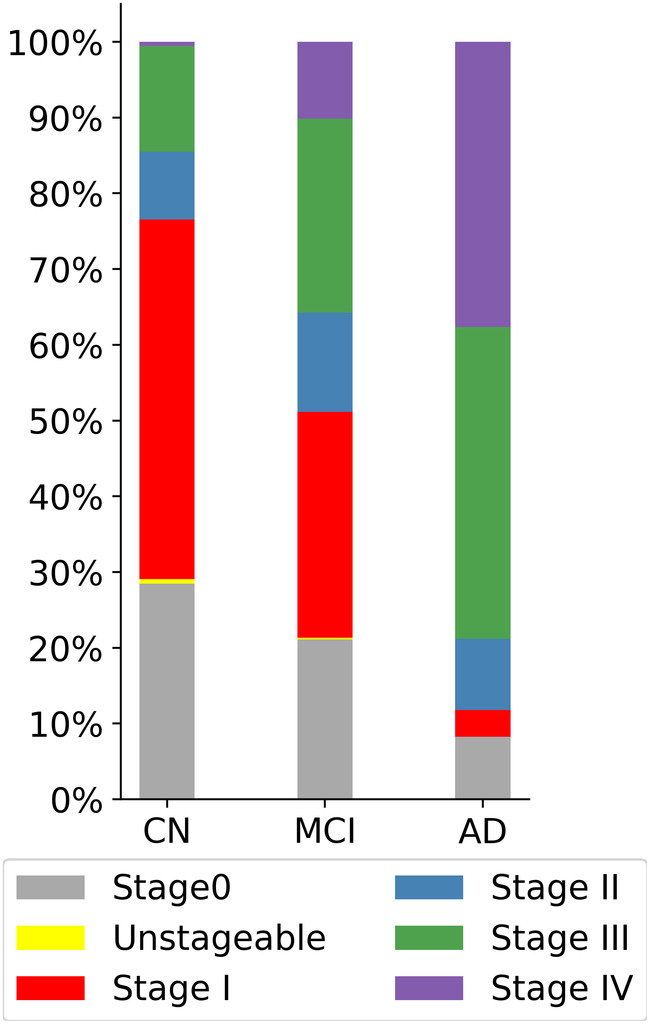
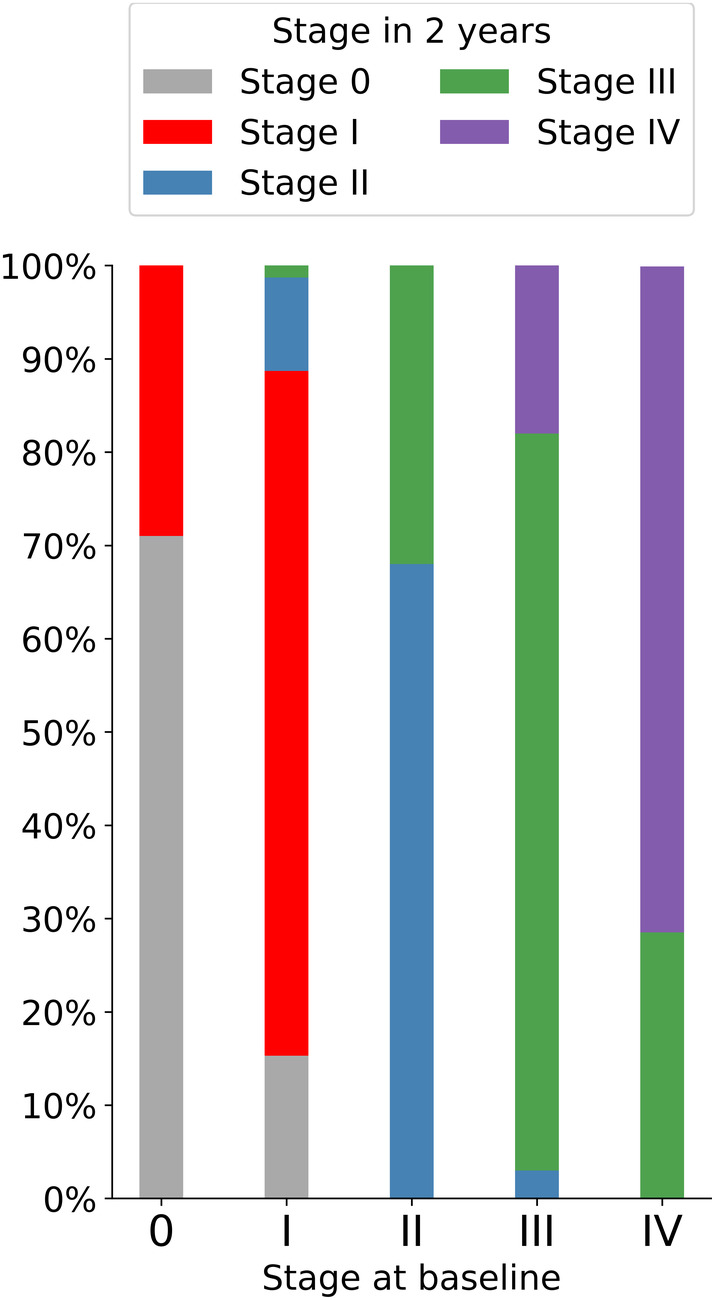
Positron emission tomography (PET)-based staging of regional amyloid deposition has recently emerged as a promising tool for sensitive detection and stratification of pathology progression in Alzheimer's Disease (AD). Here we present an updated methodological framework for PET-based amyloid staging using region-specific amyloid-positivity thresholds and assess its longitudinal validity using serial PET acquisitions. We defined region-specific thresholds of amyloid-positivity based on Florbetapir-PET data of 13 young healthy individuals (age ≤ 45y), applied these thresholds to Florbetapir-PET data of 179 cognitively normal older individuals to estimate a regional amyloid staging model, and tested this model in a larger sample of patients with mild cognitive impairment (N = 403) and AD dementia (N = 85). 2-year follow-up Florbetapir-PET scans from a subset of this sample (N = 436) were used to assess the longitudinal validity of the cross-sectional model based on individual stage transitions and data-driven longitudinal trajectory modeling. Results show a remarkable congruence between cross-sectionally estimated and longitudinally modeled trajectories of amyloid accumulation, beginning in anterior temporal areas, followed by frontal and medial parietal areas, the remaining associative neocortex, and finally primary sensory-motor areas and subcortical regions. Over 98% of individual amyloid deposition profiles and longitudinal stage transitions adhered to this staging scheme of regional pathology progression, which was further supported by corresponding changes in cerebrospinal fluid biomarkers. In conclusion, we provide a methodological refinement and longitudinal validation of PET-based staging of regional amyloid accumulation, which may help improving early detection and in-vivo stratification of pathologic disease progression in AD.
正电子发射断层扫描(PET)的区域淀粉样蛋白沉积分期最近已成为一种很有前途的工具,可用于敏感地检测和分层阿尔茨海默病(AD)的病理进展。在此,我们提出了一种基于特定区域淀粉样蛋白阳性阈值的 PET 淀粉样蛋白分期的更新方法框架,并使用连续的 PET 采集评估其纵向有效性。我们根据 13 名年轻健康个体(年龄≤45 岁)的 Florbetapir-PET 数据定义了区域淀粉样蛋白阳性的特定阈值,将这些阈值应用于 179 名认知正常的老年个体的 Florbetapir-PET 数据,以估计区域性淀粉样蛋白分期模型,并在更大的轻度认知障碍(MCI)患者样本(N=403)和 AD 痴呆患者样本(N=85)中测试该模型。从该样本的亚组(N=436)中获得了 2 年的随访 Florbetapir-PET 扫描,以基于个体阶段转变和数据驱动的纵向轨迹建模来评估基于横断面的模型的纵向有效性。结果显示,淀粉样蛋白积累的横断面估计和纵向模拟轨迹之间存在显著的一致性,从额下回开始,随后是额极和内侧顶叶区域、其余联合新皮层、最后是初级感觉运动区域和皮质下区域。超过 98%的个体淀粉样蛋白沉积图谱和纵向阶段转变符合该区域病理进展的分期方案,这一方案进一步得到了脑脊液生物标志物相应变化的支持。总之,我们提供了一种基于 PET 的区域淀粉样蛋白累积分期的方法改进和纵向验证,这可能有助于提高 AD 中病理疾病进展的早期检测和体内分层。