Department of Biomedical Engineering, The University of Texas at Austin, Austin, Texas.
Oden Institute for Computational and Engineering Sciences, The University of Texas at Austin, Austin, Texas.
Biotechnol Bioeng. 2020 Nov;117(11):3572-3590. doi: 10.1002/bit.27487. Epub 2020 Jul 21.
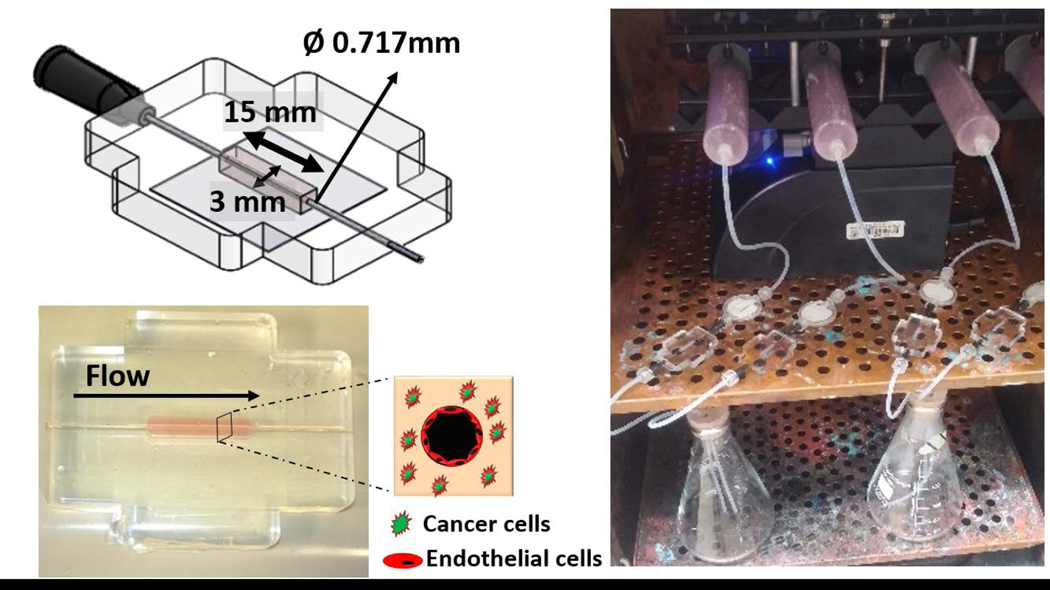
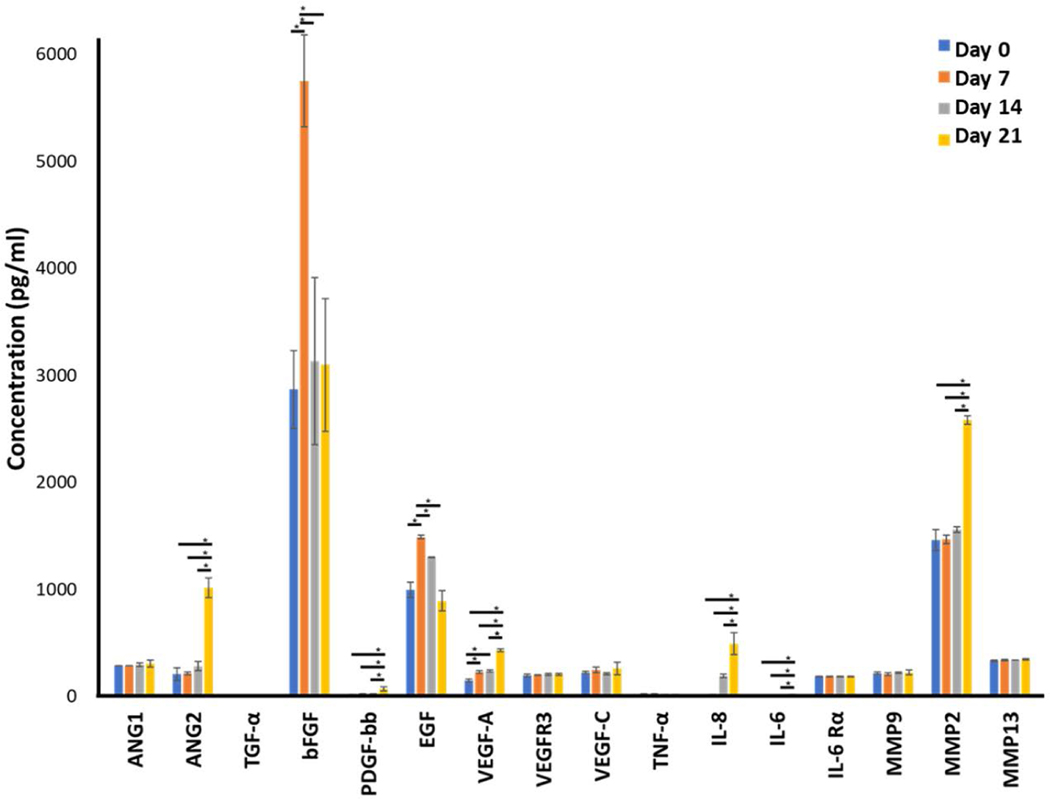
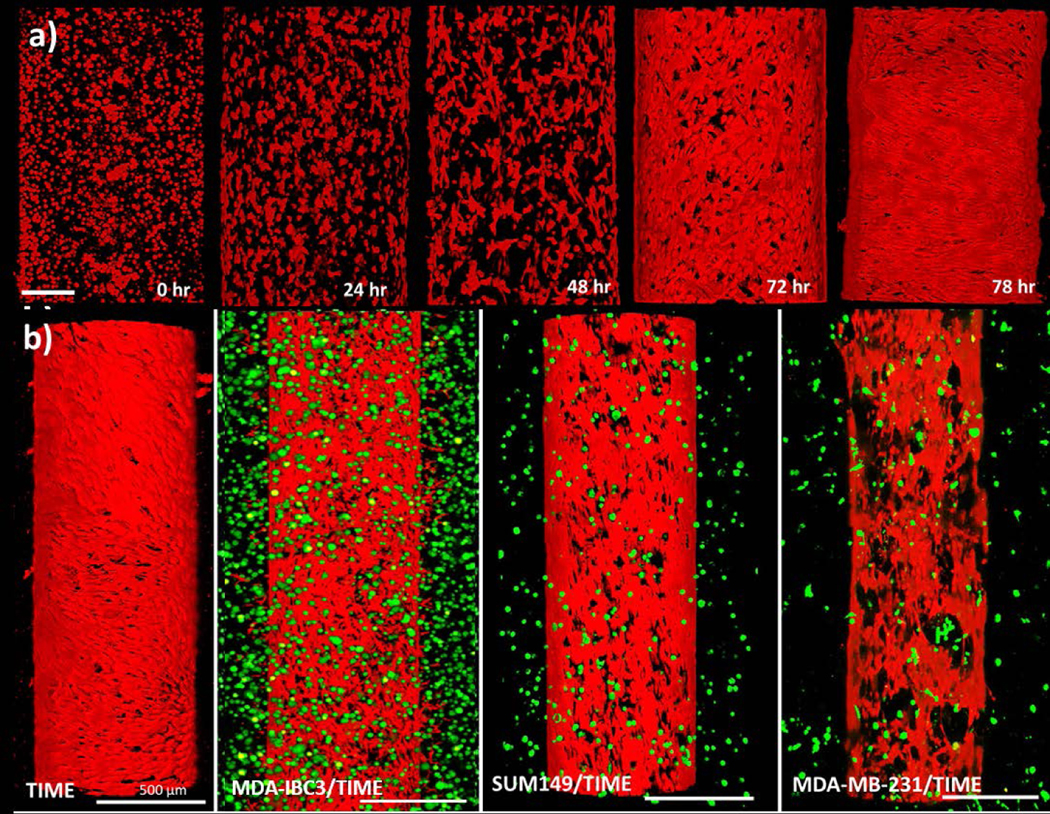
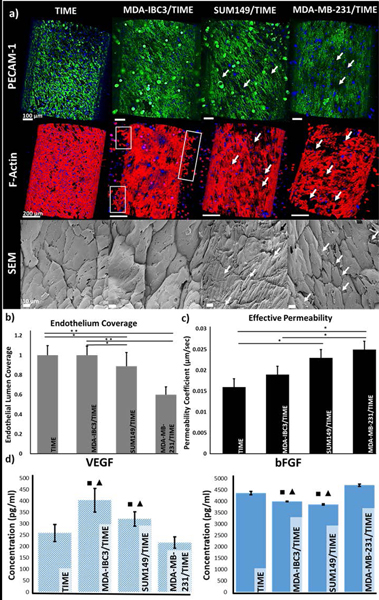
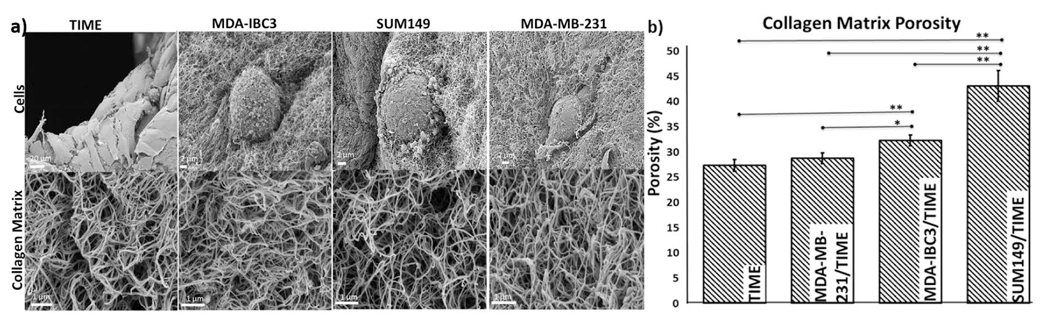
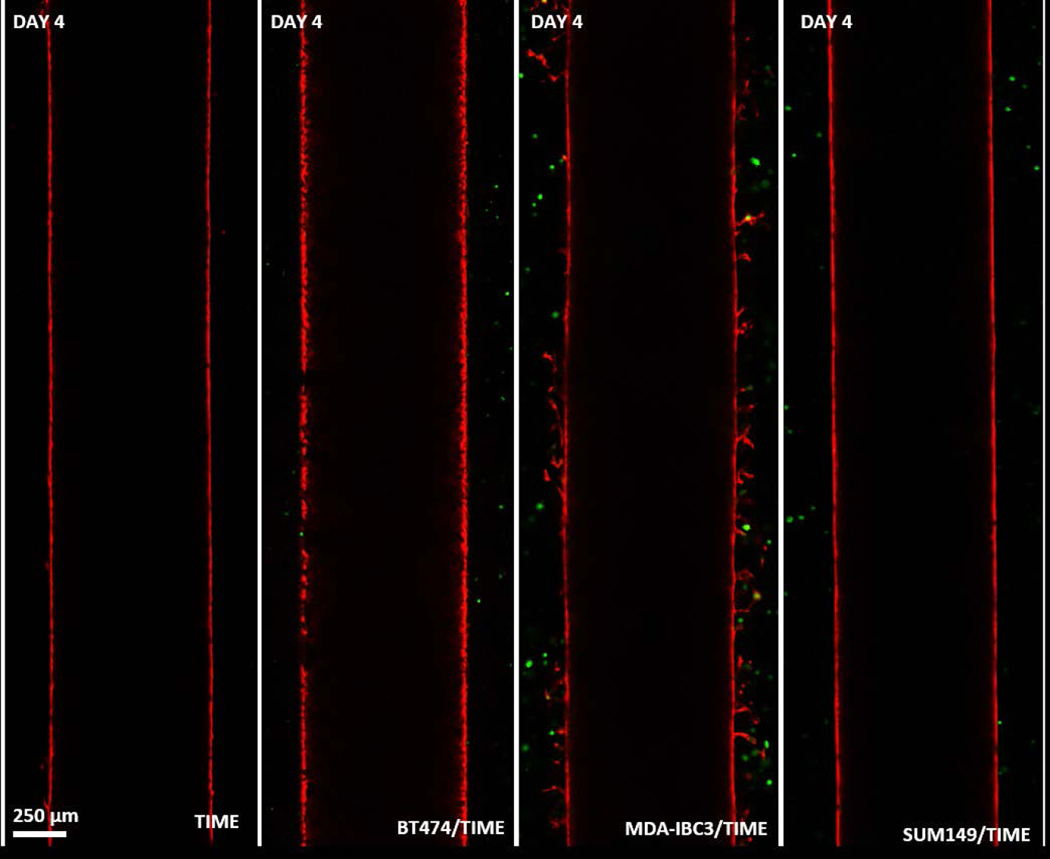
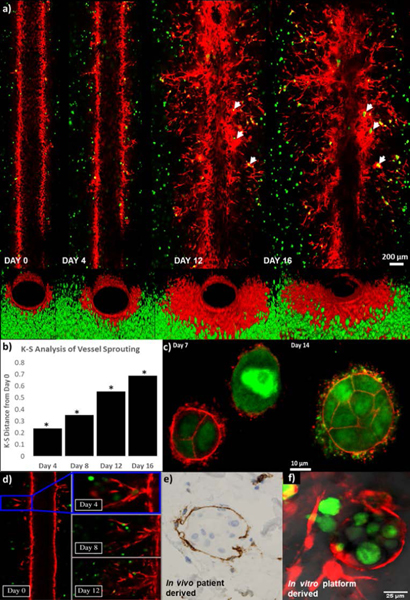
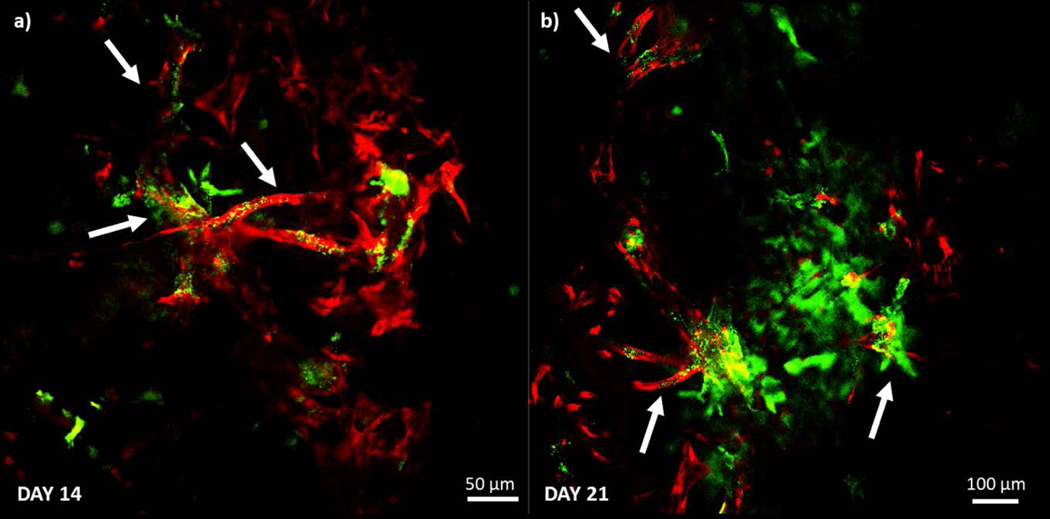
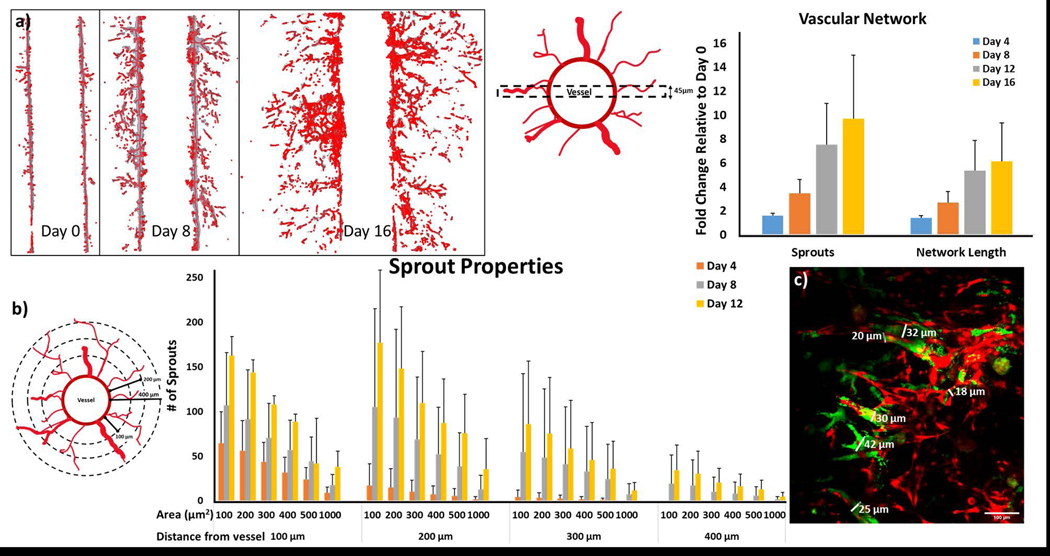
Inflammatory breast cancer (IBC), a rare form of breast cancer associated with increased angiogenesis and metastasis, is largely driven by tumor-stromal interactions with the vasculature and the extracellular matrix (ECM). However, there is currently a lack of understanding of the role these interactions play in initiation and progression of the disease. In this study, we developed the first three-dimensional, in vitro, vascularized, microfluidic IBC platform to quantify the spatial and temporal dynamics of tumor-vasculature and tumor-ECM interactions specific to IBC. Platforms consisting of collagen type 1 ECM with an endothelialized blood vessel were cultured with IBC cells, MDA-IBC3 (HER2+) or SUM149 (triple negative), and for comparison to non-IBC cells, MDA-MB-231 (triple negative). Acellular collagen platforms with endothelialized blood vessels served as controls. SUM149 and MDA-MB-231 platforms exhibited a significantly (p < .05) higher vessel permeability and decreased endothelial coverage of the vessel lumen compared to the control. Both IBC platforms, MDA-IBC3 and SUM149, expressed higher levels of vascular endothelial growth factor (p < .05) and increased collagen ECM porosity compared to non-IBCMDA-MB-231 (p < .05) and control (p < .01) platforms. Additionally, unique to the MDA-IBC3 platform, we observed progressive sprouting of the endothelium over time resulting in viable vessels with lumen. The newly sprouted vessels encircled clusters of MDA-IBC3 cells replicating a key feature of in vivo IBC. The IBC in vitro vascularized platforms introduced in this study model well-described in vivo and clinical IBC phenotypes and provide an adaptable, high throughput tool for systematically and quantitatively investigating tumor-stromal mechanisms and dynamics of tumor progression.
炎性乳腺癌(IBC)是一种罕见的乳腺癌,与血管生成和转移增加有关,主要由肿瘤-基质与脉管系统和细胞外基质(ECM)的相互作用驱动。然而,目前对于这些相互作用在疾病发生和进展中的作用还缺乏了解。在这项研究中,我们开发了第一个三维、体外、血管化、微流控的 IBC 平台,以量化 IBC 特有的肿瘤-脉管系统和肿瘤-ECM 相互作用的时空动力学。该平台由含有内皮化血管的胶原蛋白 I 型 ECM 组成,与 IBC 细胞 MDA-IBC3(HER2+)或 SUM149(三阴性)共培养,并与非 IBC 细胞 MDA-MB-231(三阴性)进行比较。带有内皮化血管的无细胞胶原蛋白平台作为对照。与对照组相比,SUM149 和 MDA-MB-231 平台表现出明显更高的血管通透性和血管内腔内皮细胞覆盖率降低(p < .05)。与非 IBC MDA-MB-231(p < .05)和对照组(p < .01)相比,两种 IBC 平台 MDA-IBC3 和 SUM149 表达更高水平的血管内皮生长因子(p < .05),并且胶原蛋白 ECM 孔隙率增加。此外,在 MDA-IBC3 平台上,我们观察到内皮细胞随着时间的推移逐渐发芽,导致有腔的存活血管。新发芽的血管环绕着 MDA-IBC3 细胞簇,复制了体内 IBC 的一个关键特征。本研究中引入的 IBC 体外血管化平台很好地模拟了体内和临床 IBC 的表型,并提供了一种适应性强、高通量的工具,可用于系统和定量地研究肿瘤-基质机制和肿瘤进展的动力学。