
动脉粥样硬化中的调节性T细胞代谢
Regulatory T Cell Metabolism in Atherosclerosis.
作者信息
Baardman Jeroen, Lutgens Esther
机构信息
Department of Medical Biochemistry, Experimental Vascular Biology, Amsterdam Cardiovascular Sciences, Amsterdam UMC, University of Amsterdam, 1105 AZ Amsterdam, The Netherlands.
Institute for Cardiovascular Prevention (IPEK), Klinikum der Universität München (KUM), Ludwig-Maximilians-Universität (LMU) München, 80336 Munich, Germany.
出版信息
Metabolites. 2020 Jul 8;10(7):279. doi: 10.3390/metabo10070279.
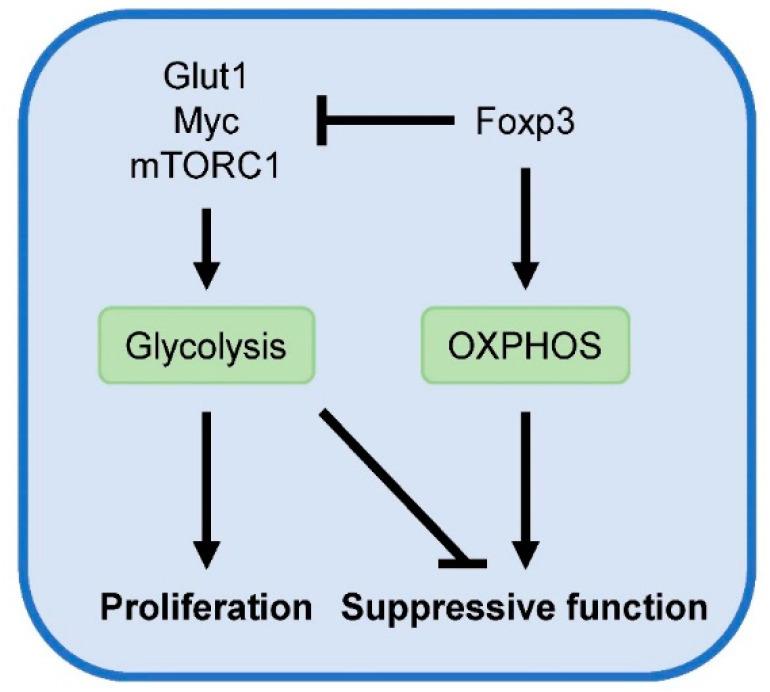
Regulatory T cells (Tregs) are capable of suppressing excessive immune responses to prevent autoimmunity and chronic inflammation. Decreased numbers of Tregs and impaired suppressive function are associated with the progression of atherosclerosis, a chronic inflammatory disease of the arterial wall and the leading cause of cardiovascular disease. Therefore, therapeutic strategies to improve Treg number or function could be beneficial to preventing atherosclerotic disease development. A growing body of evidence shows that intracellular metabolism of Tregs is a key regulator of their proliferation, suppressive function, and stability. Here we evaluate the role of Tregs in atherosclerosis, their metabolic regulation, and the links between their metabolism and atherosclerosis.
调节性T细胞(Tregs)能够抑制过度的免疫反应,以预防自身免疫和慢性炎症。Tregs数量减少和抑制功能受损与动脉粥样硬化的进展有关,动脉粥样硬化是一种动脉壁的慢性炎症性疾病,也是心血管疾病的主要原因。因此,改善Tregs数量或功能的治疗策略可能有助于预防动脉粥样硬化疾病的发展。越来越多的证据表明,Tregs的细胞内代谢是其增殖、抑制功能和稳定性的关键调节因子。在这里,我们评估Tregs在动脉粥样硬化中的作用、它们的代谢调节以及它们的代谢与动脉粥样硬化之间的联系。



 Zotero 插件