Freie Universität Berlin, Institute for Chemistry & Biochemistry, Laboratory of Protein Biochemistry, Thielallee 63, 14195, Berlin, Germany.
Institut Curie, PSL Research University, INSERM U932, Integrative analysis of T cell activation team, 26 rue d'Ulm, 75248, Paris Cedex 05, France.
Commun Biol. 2020 Jul 10;3(1):368. doi: 10.1038/s42003-020-1063-5.
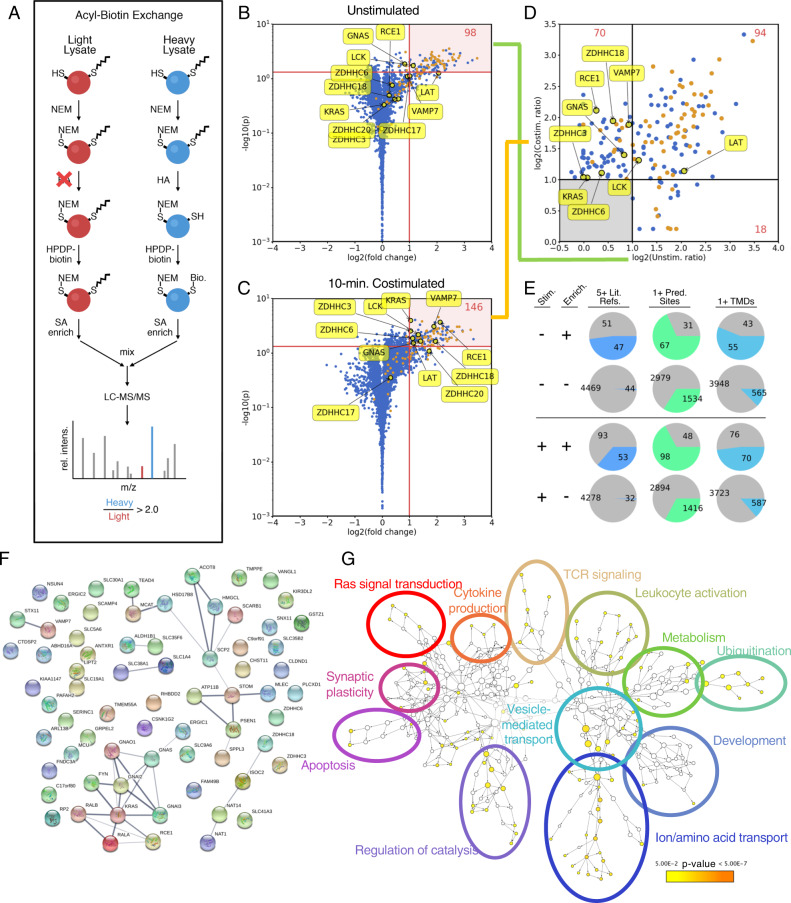
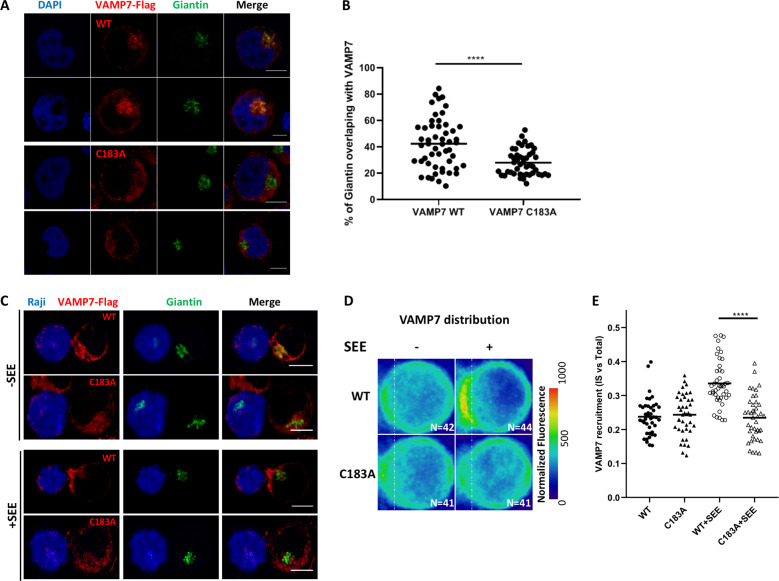
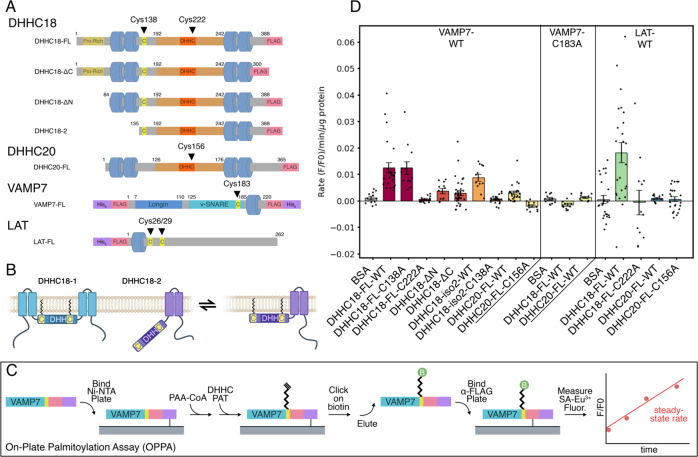
Palmitoylation is the reversible addition of palmitate to cysteine via a thioester linkage. The reversible nature of this modification makes it a prime candidate as a mechanism for regulating signal transduction in T-cell receptor signaling. Following stimulation of the T-cell receptor we find a number of proteins are newly palmitoylated, including those involved in vesicle-mediated transport and Ras signal transduction. Among these stimulation-dependent palmitoylation targets are the v-SNARE VAMP7, important for docking of vesicular LAT during TCR signaling, and the largely undescribed palmitoyl acyltransferase DHHC18 that is expressed in two isoforms in T cells. Using our newly developed On-Plate Palmitoylation Assay (OPPA), we show DHHC18 is capable of palmitoylating VAMP7 at Cys183. Cellular imaging shows that the palmitoylation-deficient protein fails to be retained at the Golgi and to localize to the immune synapse upon T cell activation.
棕榈酰化是通过硫酯键可逆地将棕榈酸添加到半胱氨酸上。这种修饰的可逆性使其成为调节 T 细胞受体信号转导中信号转导的机制的主要候选者。在刺激 T 细胞受体后,我们发现许多蛋白质被新棕榈酰化,包括参与囊泡介导的运输和 Ras 信号转导的蛋白质。在这些依赖于刺激的棕榈酰化靶标中,有 v-SNARE VAMP7,它对于 TCR 信号传导期间囊泡 LAT 的对接很重要,以及在 T 细胞中以两种同工型表达的尚未描述的棕榈酰基转移酶 DHHC18。使用我们新开发的板上棕榈酰化测定法 (OPPA),我们表明 DHHC18 能够在 Cys183 处棕榈酰化 VAMP7。细胞成像显示,棕榈酰化缺陷的蛋白质不能在高尔基体内保留,并且在 T 细胞激活时不能定位到免疫突触。